Why Skipping a Remaster Saved Red Dead Redemption for 2026
Red Dead Redemption PS5 review praises preservation over remake, highlighting its enduring open-world storytelling and legacy.
Three years ago, when Rockstar announced that Red Dead Redemption was heading to Switch and PS4 in its original form, the collective groan from fans could probably be heard from Armadillo to Saint Denis. Many had hoped for a full-blown remake using the Red Dead Redemption 2 engine, a modern-day resurrection of a beloved classic. Instead, we got what felt like a museum piece in a world obsessed with 4K textures and ray tracing. Now, in 2026, as I saddle up on my PS5 and ride once more through the dusty trails of New Austin, I can say with absolute conviction that the decision not to remaster Red Dead Redemption was the best possible outcome—not just for the game, but for its legacy.
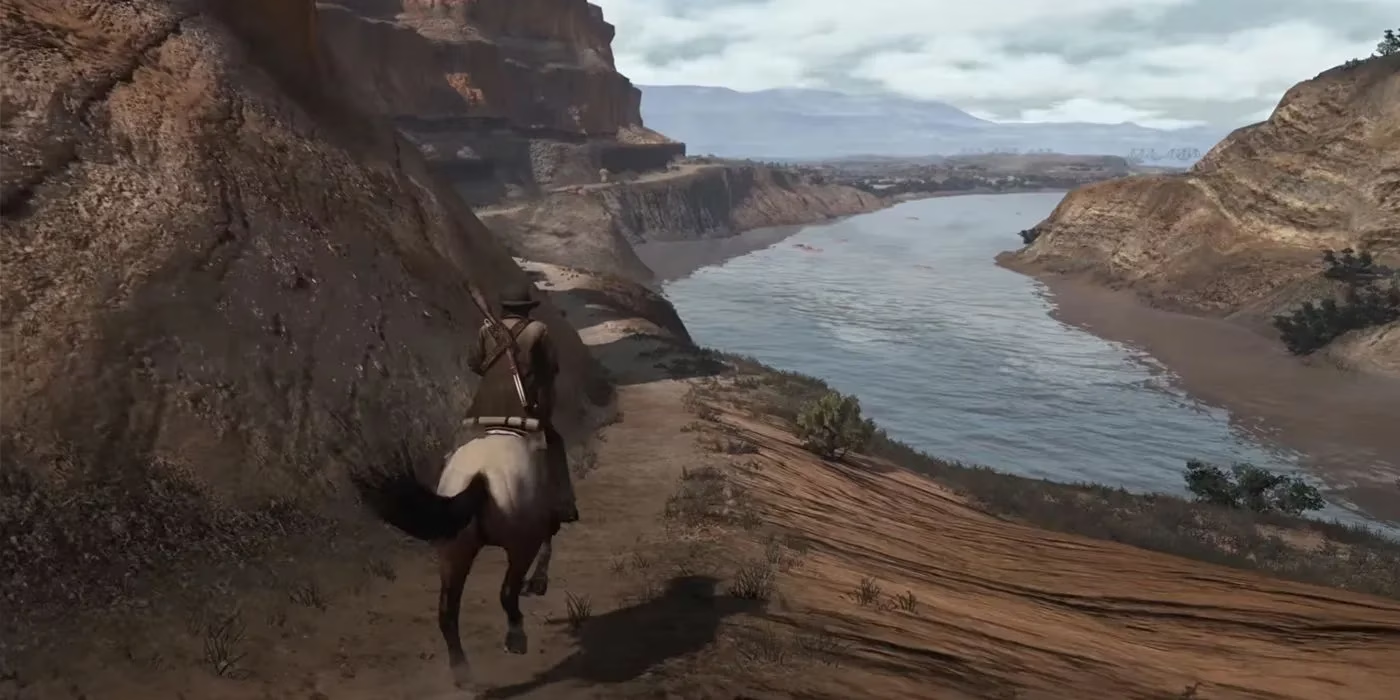
The rerelease landed in late 2023 like a vintage pocket watch that someone had carefully wound and polished without daring to replace its handcrafted gears with a quartz movement. The game didn’t need fixing; it needed preservation. Red Dead Redemption remains, even in 2026, a masterclass in open-world storytelling and atmosphere. The characters’ movements may still carry a hint of stiffness, but the environments are breathtakingly realized—vast skies bleeding orange at dusk, cacti casting long shadows, and the haunting stillness of a desert that feels alive. Playing it on modern hardware through backward compatibility, I’m struck by how little the core experience has aged. It’s a well-aged bourbon, its flavor deepened by time itself, not by an artificial infusion of high-res syrup.
Critics back then argued that Red Dead Redemption deserved the same lavish treatment as other modern remakes. But history has a cruel sense of irony. Rockstar’s previous foray into remastering classic games—the 2021 Grand Theft Auto: The Trilogy—was a disaster that still stings in memory. The altered art style drained the originals of their charm, glitches turned gameplay into slapstick comedy, and the infamous rain effect looked like someone had smeared Vaseline over the screen. That cautionary tale alone justifies the hands-off approach for Red Dead Redemption. Entrusting the simple port to Double Eleven Studios allowed the original game to stand on its own, untainted.
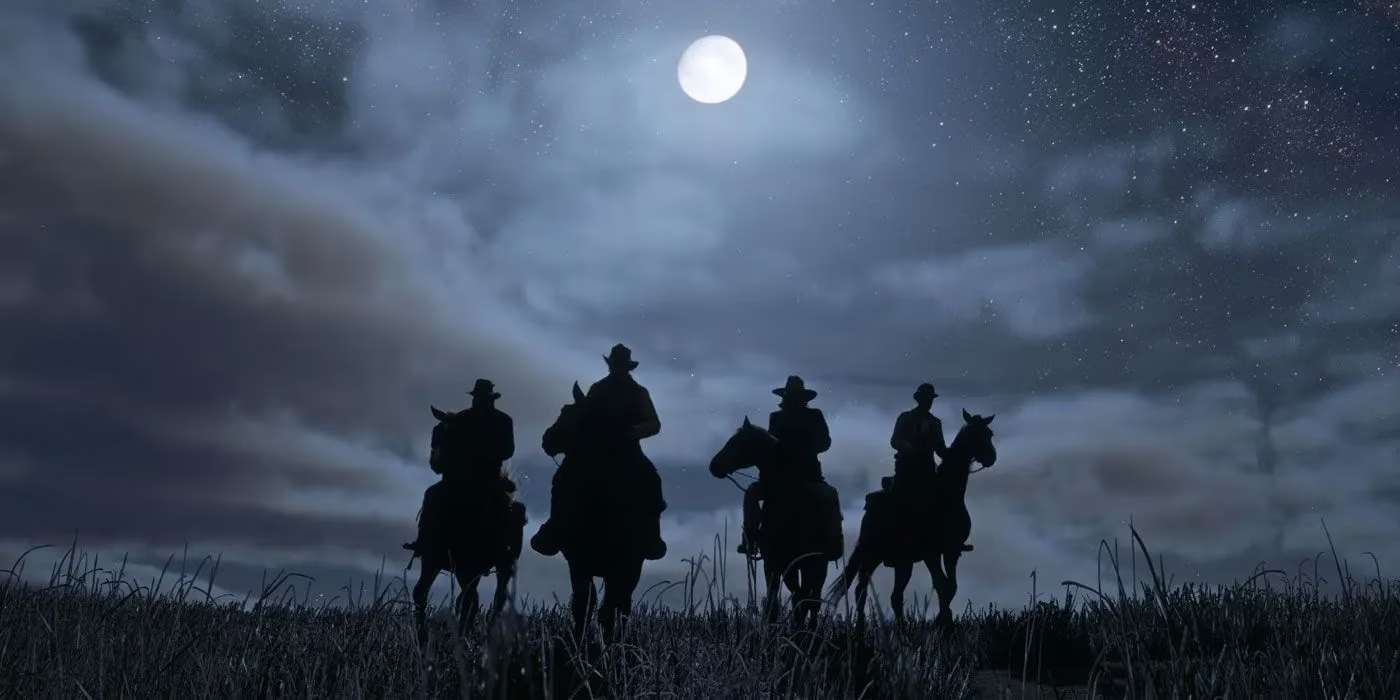
There’s also a broader philosophy at play here, something akin to teaching a hawk to walk on a leash—it would be absurd and destructive. Red Dead Redemption is a product of its time, yet it shaped everything that followed. It proved that the Grand Theft Auto formula could transcend urban crime and bloom into a lyrical Western epic. Adding modern frills from RDR2—the sluggish movement, the overly complex camp systems, the occasional clunkiness that plagues that otherwise magnificent sequel—would have been like grafting neon lights onto a campfire. The first game’s clean, focused design is its superpower. Every side quest, from shooting contests to herb gathering, drips with narrative weight. There’s no fat to trim and no space to cram in extra mechanics without diluting the perfection that already exists.
In 2026, we can also appreciate the pragmatic genius behind the decision. By the time the port arrived, Rockstar’s resources were already laser-focused on Grand Theft Auto VI, a game that, having launched in 2025, has redefined the open-world genre yet again. Trying to develop a full RDR remaster concurrently would have been a logistical nightmare, stretching the studio thin and likely delaying both projects. Instead, Rockstar placed a bet: let the original game breathe on new platforms while the team poured every ounce of creativity into GTA 6. That bet paid off spectacularly. Now, we have both a landmark new title and a pristine classic that introduces a fresh generation of players to John Marston’s journey without the noise of unnecessary modernization.
The rerelease also served as a cultural time capsule for younger audiences who might otherwise shy away from “old” games. I’ve watched friends who grew up on photorealistic titles pick up the controller and fall under its spell, marveling at how a 2010 game can still punch them in the gut emotionally. Undead Nightmare—that gloriously bizarre zombie expansion included in the port—feels even more endearing now, a reminder that the industry’s obsession with every game needing a zombie mode was once a charming, carefree trend rather than a cynical checklist item.
Of course, I’d be lying if I said the release was flawless. The initial price tag felt steep, and the lack of online features disappointed many. Yet these were surface-level issues. The game itself remained a beacon of what a well-crafted narrative experience should be—no always-online requirement, no microtransactions, just a man, his horse, and the dying myth of the frontier. In 2026, with Red Dead Redemption sitting comfortably in my library next to GTA 6, I realize that Rockstar’s restraint was a form of redemption in itself. Some classics are better left un-fixed, their magic as untouchable as a desert sunset. Skipping the remaster wasn’t a missed opportunity; it was a quiet act of respect, and three years later, that choice echoes louder than any graphical overhaul ever could.