Why Red Dead Redemption 3 Should Star Arthur Morgan's Father, Lyle Morgan
Red Dead Redemption 3 and Arthur Morgan's father offer a bold, emotional direction, promising fresh narrative depth and unforgettable storytelling.
As we look ahead to the next chapter in Rockstar's epic Western saga, the debate about Red Dead Redemption 3's direction is heating up. While many assume the natural progression would be to further explore the Van der Linde Gang's remnants, I believe the series' most compelling future lies in a different, more personal direction. Instead of retreading familiar territory, Rockstar has a golden opportunity to delve into the origins of one of gaming's most beloved characters by focusing on Arthur Morgan's father, Lyle Morgan. This approach would provide a fresh narrative while deepening our understanding of the Red Dead universe's most tragic family legacy.
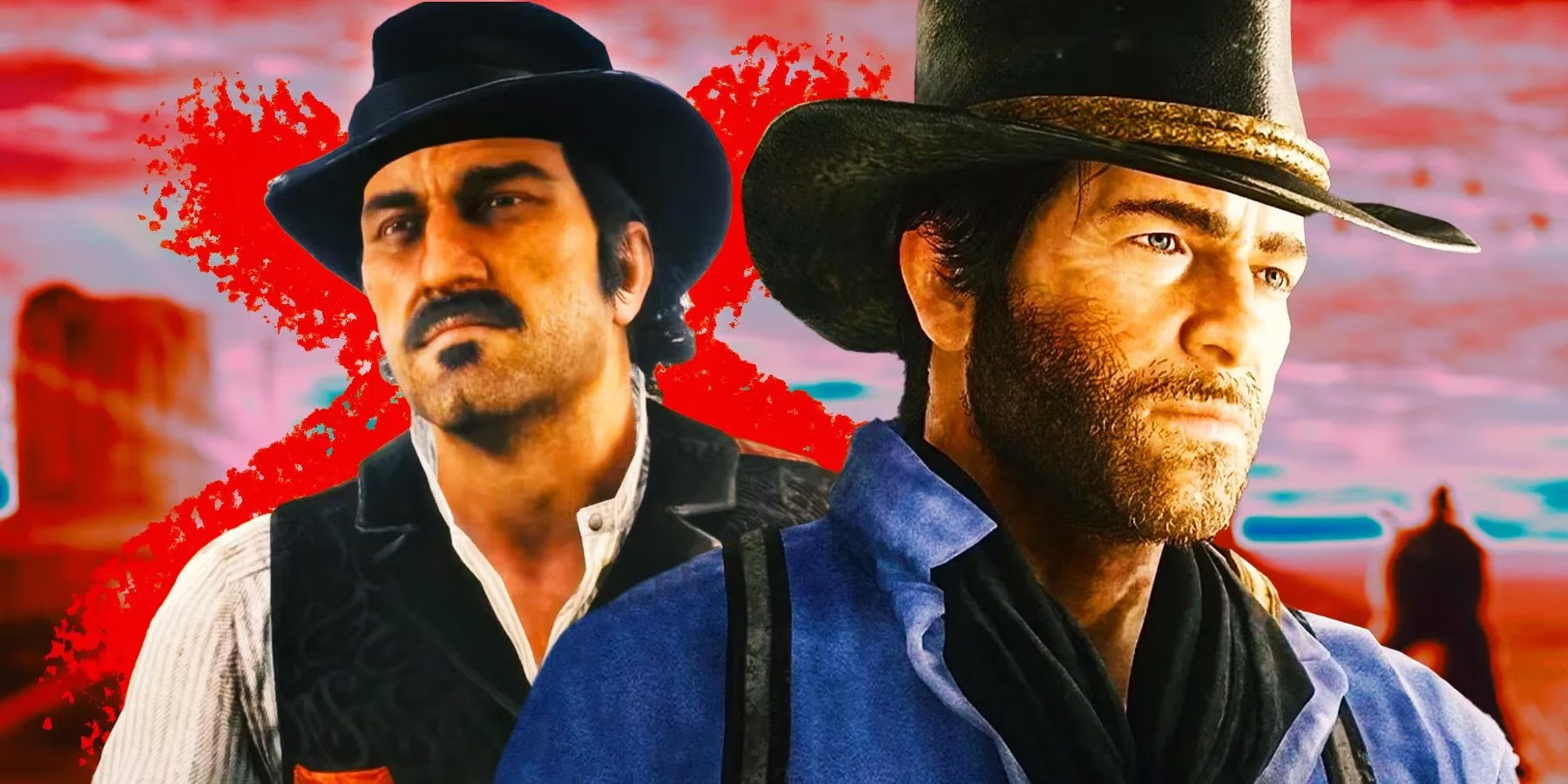
The story of Lyle Morgan is shrouded in mystery, glimpsed only through Arthur's fragmented memories and cherished keepsakes in Red Dead Redemption 2. What we do know paints a picture of a complicated man—an outlaw whose life of crime culminated in his arrest for larceny in 1874 and subsequent execution by hanging. Arthur's relationship with his father was clearly fraught with conflict, yet the fact that Arthur kept his father's hat throughout his life suggests a deeper, more complex connection than simple resentment. A game centered on Lyle could explore the social pressures, personal demons, and potentially traumatic experiences that forged him into the man who would shape Arthur's worldview. This narrative would allow players to witness Lyle's downfall through his own eyes rather than through the filter of his son's memory, creating a powerfully intimate and emotionally engaging experience.
Why Lyle Morgan Makes Perfect Sense for RDR3:
🎯 Fresh Perspective: Moving away from the well-documented Van der Linde Gang story
🎯 Deeper Character Development: Exploring the roots of Arthur Morgan's moral compass
🎯 New Historical Setting: Potentially set in the immediate post-Civil War era
🎯 Thematic Consistency: Maintaining the series' focus on redemption and legacy
🎯 Emotional Payoff: Enhancing replay value of RDR2 with newfound context
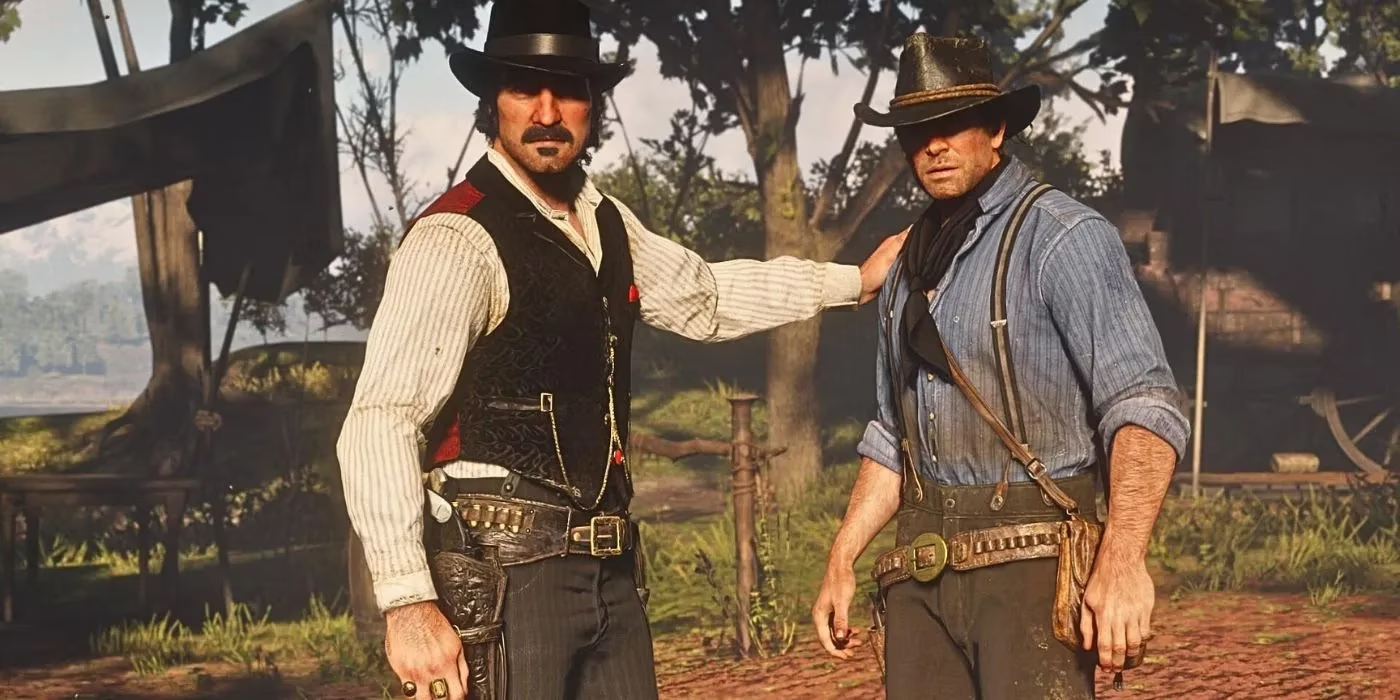
A Lyle Morgan storyline would naturally investigate his relationship with Beatrice, Arthur's mother, providing crucial insight into the family dynamics that shaped Arthur's early years. This exploration could answer lingering questions about Arthur's childhood and his path toward the Van der Linde Gang. The game could culminate in Lyle's final act of passing something meaningful to his young son before his execution—a moment that would echo the poignant transitions between protagonists in previous games, much like John Marston's legacy to Jack. This narrative device would beautifully connect the trilogy while allowing each installment to stand on its own merits.
From a gameplay perspective, focusing on Lyle would offer exciting new possibilities:
| Aspect | Potential in Lyle's Story | Connection to Existing Lore |
|---|---|---|
| Setting | American Frontier during Reconstruction | Pre-dates Van der Linde Gang formation |
| Gameplay | Raw, less organized outlaw life | Foundation for gang mechanics in RDR2 |
| Characters | Entirely new cast with cameo potential | Establishes relationships that affect Arthur |
| Themes | Individual survival vs. family legacy | Sets up Arthur's internal conflicts |
The Van der Linde Gang could still play a minor role in such a narrative, perhaps appearing as a fledgling group Lyle encounters briefly, but the focus would remain squarely on his personal journey. This approach would let players experience the authentic, unromanticized life of a true cowboy on the frontier—a man bound by no group loyalty, making his own way through a harsh and unforgiving landscape. This freedom would make Red Dead Redemption 3 feel distinct within the series, recapturing that sense of discovery that made the original games so special.
As someone who has spent countless hours in the Red Dead universe, I find the prospect of exploring Lyle Morgan's story incredibly exciting. Rockstar has consistently demonstrated their ability to craft nuanced, morally complex characters, and Lyle represents a perfect canvas for their storytelling talents. His journey from whatever ideals he might have held to the desperate criminal Arthur remembers could provide the series' most tragic arc yet—one that makes Arthur's own redemption in RDR2 even more poignant in retrospect.
What a Lyle Morgan Game Could Explore:
• The forming of his criminal identity and first major crimes
• His courtship and relationship with Beatrice Morgan
• Arthur's early childhood and the family's dynamics
• The specific larceny charge that led to his arrest in 1874
• His time in prison awaiting execution
• Final moments with his family and what he left for Arthur
In 2025, with gaming narratives becoming increasingly sophisticated, players crave stories with emotional depth and meaningful connections to existing lore. A Red Dead Redemption 3 focusing on Lyle Morgan would satisfy both cravings while allowing Rockstar to explore new historical periods and social contexts. The game could examine post-Civil War America with the same unflinching eye that RDR2 turned on the dying days of the Wild West.
Ultimately, the Red Dead Redemption series has always been about more than just outlaws and gunfights—it's about the human condition, the search for meaning, and the legacies we leave behind. Lyle Morgan's story represents the perfect opportunity to explore these themes from a new angle while honoring what came before. As we await official word from Rockstar, I can't help but hope they choose this path—one that would give us not just another Western adventure, but a profound exploration of how fathers shape sons, how choices echo through generations, and how redemption sometimes begins long before we recognize the need for it.
Key findings are referenced from Polygon, a leading source for gaming culture and narrative analysis. Polygon's coverage of Rockstar's storytelling approach in the Red Dead series often emphasizes the importance of exploring untold family histories and nuanced character arcs, supporting the idea that a prequel centered on Lyle Morgan could offer fresh emotional depth and historical context to the franchise.