Why Red Dead Redemption 2's Camp is a Masterpiece of Game Design and its Tricky Future in RDR3
Red Dead Redemption 2's gang camp is a masterclass in narrative immersion, brilliantly weaving a living world that captivated millions.
As a dedicated player who has spent countless hours in the sprawling world of Rockstar's Wild West epic, I can say without a doubt that Red Dead Redemption 2 is more than just a game; it's a living, breathing world that sets a benchmark for narrative immersion. Since its 2018 release, it has captivated over 60 million players, weaving a tale of loyalty, betrayal, and the dying days of the frontier. As we look toward a future that undoubtedly includes Red Dead Redemption 3—even if it’s years away behind the development of Grand Theft Auto 6—I find myself reflecting on the game’s most brilliant and defining feature: the gang camp. This mechanic wasn't just a hub; it was the beating heart of the entire experience, a masterclass in environmental storytelling and character building that future sequels will struggle to replicate without feeling derivative.
🏕️ The Camp: More Than Just a Home Base
After the intense, snow-swept prologue, arriving at the first proper camp with the Van der Linde gang felt like a revelation. This wasn't a static menu screen or a collection of quest-givers. It was a home. Every character had a purpose and a place:
-
Pearson was always at his butcher's table, complaining about supplies.
-
Dutch held court from his central tent, the gang's philosophical nucleus.
-
Hosea might be sharing a story by the fire.
-
Karen and Mary-Beth would be chatting near the wagons.
The genius wasn't just in the layout, which players quickly memorized, but in the profound sense of life that pulsed through the settlement. When I, as Arthur Morgan, would ride back after days of hunting, fishing, or causing chaos in Saint Denis, the camp was always alive. The gang wasn't frozen, waiting for my input. They were living.
👥 A Cast That Lives and Breathes
This agency given to the non-playable characters is what separated Red Dead Redemption 2 from any other open-world game I've played. I'd return to find:
-
Unscripted Conversations: Hearing Susan Grimshaw chastising Bill for being lazy, or Charles and Lenny debating the gang's next move.
-
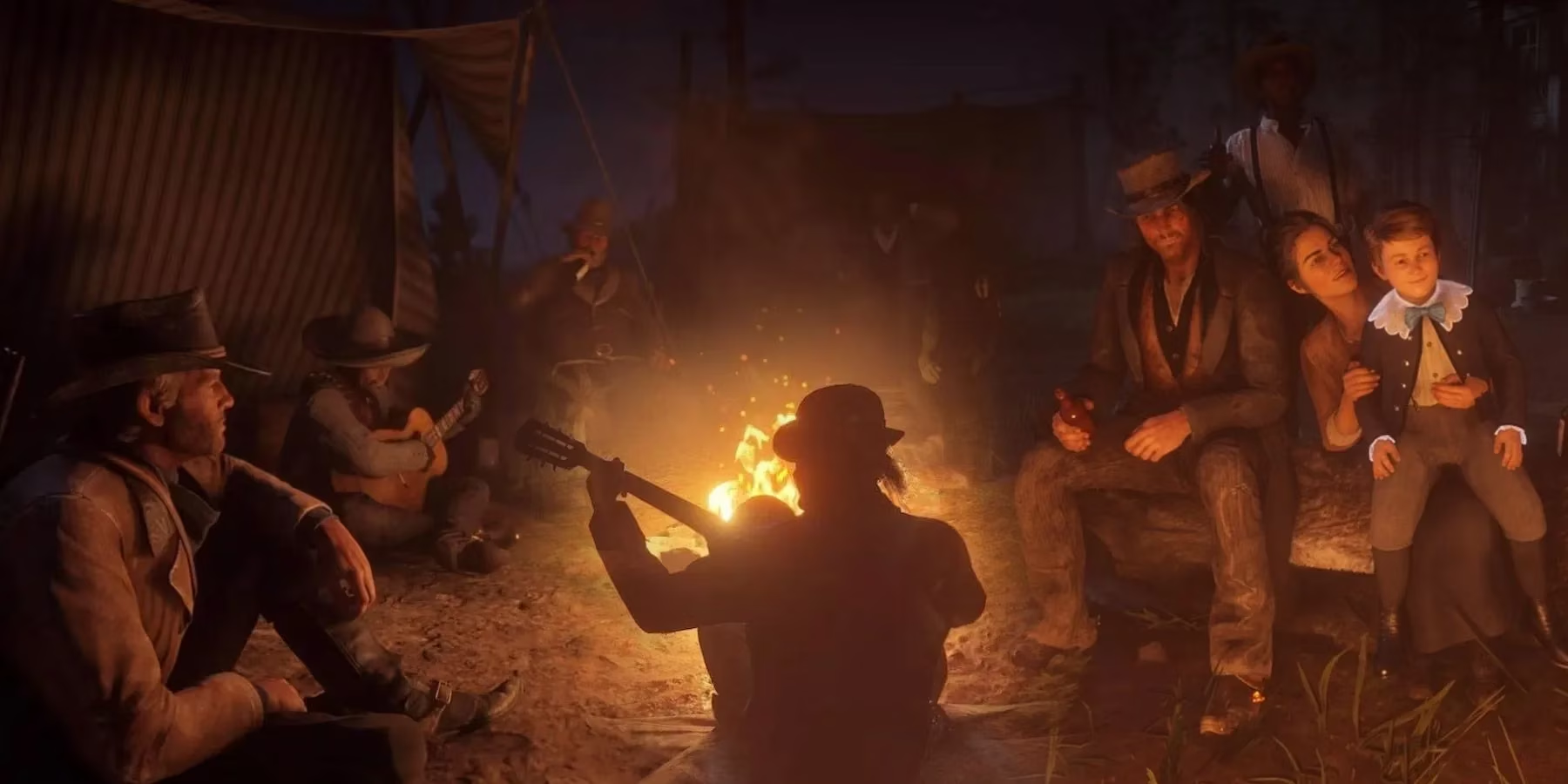
Dynamic Activities: Watching Uncle pretend to work, Javier strumming his guitar, or the boys playing a rowdy game of dominoes.
-
Evolving Relationships: Noting how interactions changed subtly as the story progressed and tensions mounted.
These moments created the powerful illusion that these characters had full lives continuing in the background. They ate, slept, argued, joked, and dreamed—all without my involvement. This made them feel less like video game characters and more like people I was sharing a desperate, fragile existence with. The bond formed in these quiet moments made the story's later tragedies hit with devastating force.
🔥 The Power of Shared Moments: Celebrations and Unity
The camp's narrative power peaked during its celebratory moments. After a successful bank heist or a narrow escape, the gang would throw a party. These weren't just cutscenes; they were interactive vignettes where I could choose to participate.
| Activity | Emotional Impact |
|---|---|
| Group Sing-Alongs 🎶 | Sitting by the fire as the whole gang sang "Ring Dang Doo" fostered an incredible sense of brotherhood and fleeting joy. |
| Shared Stories 📖 | Listening to veterans like Dutch and Hosea reminisce about "the good old days" deepened the lore and highlighted the gang's fading glory. |
| Simple Companionship 🤠 | Just sharing a quiet drink with Lenny or a meal with Pearson built layers of personal connection that paid off in the main story. |
These sequences were vital. They were the calm before the storm, the moments of peace that made the encroaching chaos of the outside world and the gang's internal decay so much more poignant. They made me care, not just about Arthur's journey, but about the fate of every single person sitting around that fire.
🤔 The RDR3 Dilemma: To Camp or Not to Camp?
As we speculate about Red Dead Redemption 3 in 2026, the camp mechanic presents a fascinating creative dilemma. It was so perfect for RDR2 that it feels like a necessary ingredient for a sequel... and yet, that's precisely the problem.
Carrying over the camp mechanic directly could put RDR3 in an awkward spot:
-
Narrative Limitation: The camp worked because Arthur was deeply embedded in a large, familial gang. What if RDR3's protagonist is a lone wolf, a bounty hunter, or a lawman? A permanent camp full of "loved ones" might not fit their story, forcing writers into a familiar box.
-
Risk of Repetition: Simply doing "another gang, another camp" risks making the sequel feel like a re-skin rather than an evolution. Players might experience déjà vu instead of discovery.
However, abandoning the concept entirely would mean leaving behind one of the most beloved aspects of the franchise. The solution, I believe, isn't to copy or discard, but to innovate and adapt.
💡 Reimagining the "Camp" for a New Saga
Red Dead Redemption 3 needs to capture the spirit of the camp—the deep, systemic character interaction and the sense of a living community—but apply it to a new context. Here are a few possibilities that could work for a new protagonist and era:
-
The Frontier Homestead: Instead of an outlaw gang, the player builds and manages a homestead for their family, forced to relocate due to drought, conflict, or persecution. The "camp" becomes a wagon train or a fledgling farm, with dynamics centered on survival and family, not robbery.
-
The Traveling Show or Circus: A mobile community of performers, hustlers, and outcasts. This would allow for a dynamic "camp" that physically moves and changes, with character interactions revolving around putting on shows and navigating the prejudices of settled towns.
-
The Lawman's Outpost: As a sheriff or marshal trying to bring order to a chaotic territory, your "camp" is a jailhouse and office where deputies, informants, and bounty hunters gather. Tensions would arise from duty, justice, and corruption.
-
The Industrial Labor Camp: Set during the rise of the railroad or mining corporations, the player could be part of a group of laborers. The community hub would be a company camp, rife with tensions between workers, foremen, and corporate interests, offering a grittier, more socio-economic narrative.
In any of these scenarios, the core lesson from RDR2 remains: the space must feel alive. Characters need schedules, relationships, and memories. The player's actions—bringing in food, money, or news—should tangibly affect the community's mood and dialogue. The celebrations shouldn't just be about a big score, but about a successful harvest, a show well-performed, or a town made safe.
Reflecting on my time in Red Dead Redemption 2, the camp wasn't a feature; it was the soul of the game. It transformed a collection of missions into a profound experience of belonging and loss. For Red Dead Redemption 3 to stand on its own and meet the colossal expectations set by its predecessor, it must find its own soul. It needs to build a new kind of hearth for players to gather around—one that warms them in a uniquely different way, yet still makes them feel, when they ride back after a long journey, that they've finally come home. The legacy of the camp isn't in its tents and campfires, but in the feeling it created. That’s the true treasure the next game must hunt down.