Whispers in the Wasteland: My Encounters with Gaming's Most Eccentric Souls
Explore the most bizarre and unforgettable NPCs in open-world games, from Skyrim's cryptic M'aiq the Liar to Fallout 4's haunting Billy Peabody, revealing the profound magic hidden in these digital realms.
As I wander through the pixelated wilderness of 2026, my memory often drifts back to those peculiar souls I've met in the digital expanse. These characters—more like ghosts in the machine—have left indelible marks on my journey, turning simple quests into profound, poetic encounters. They are the heartbeats in the static, the whispers in the code, reminding me that even in the most meticulously crafted worlds, true magic lies in the unexpected, the unexplained, and the utterly bizarre.
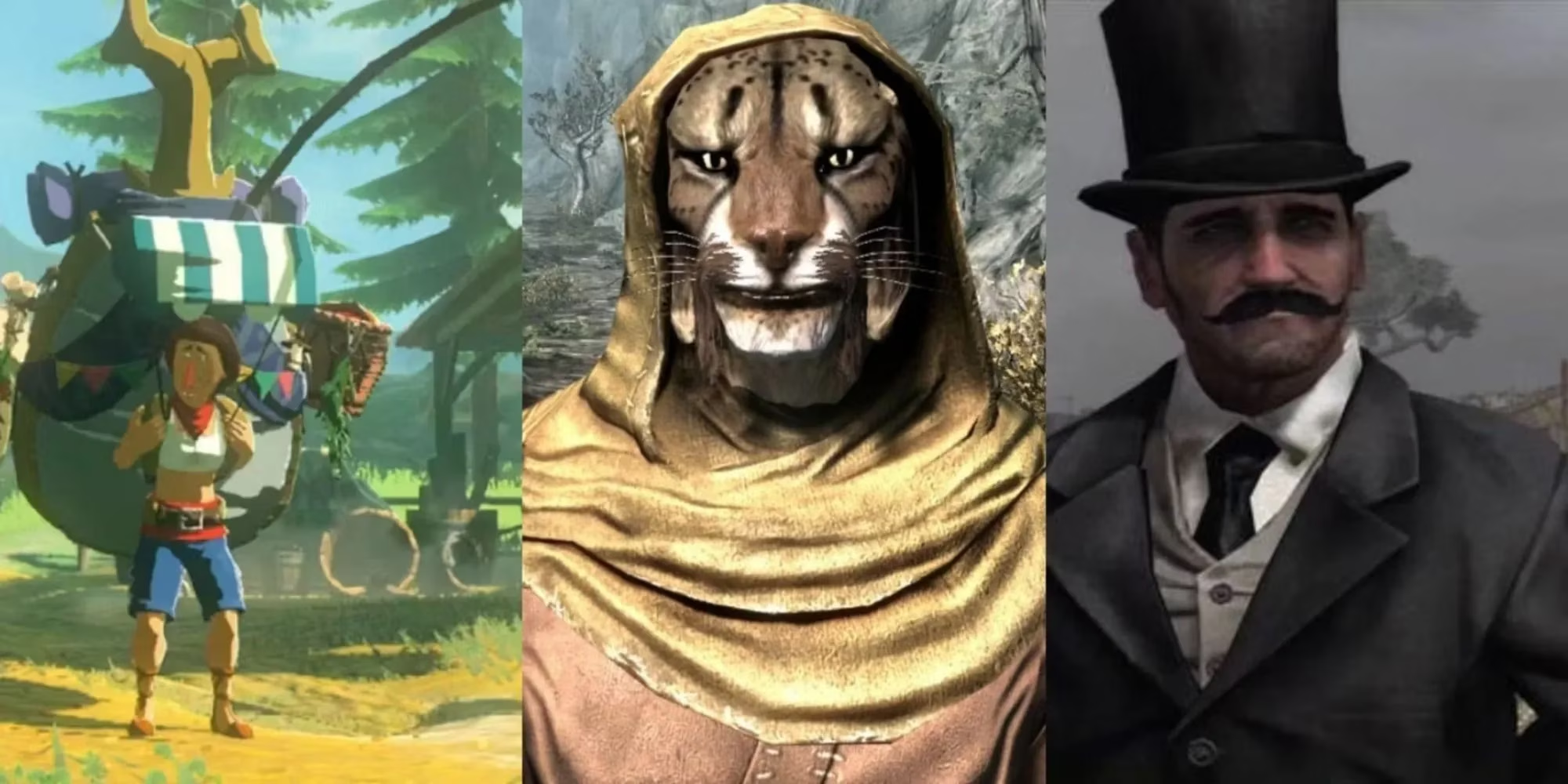
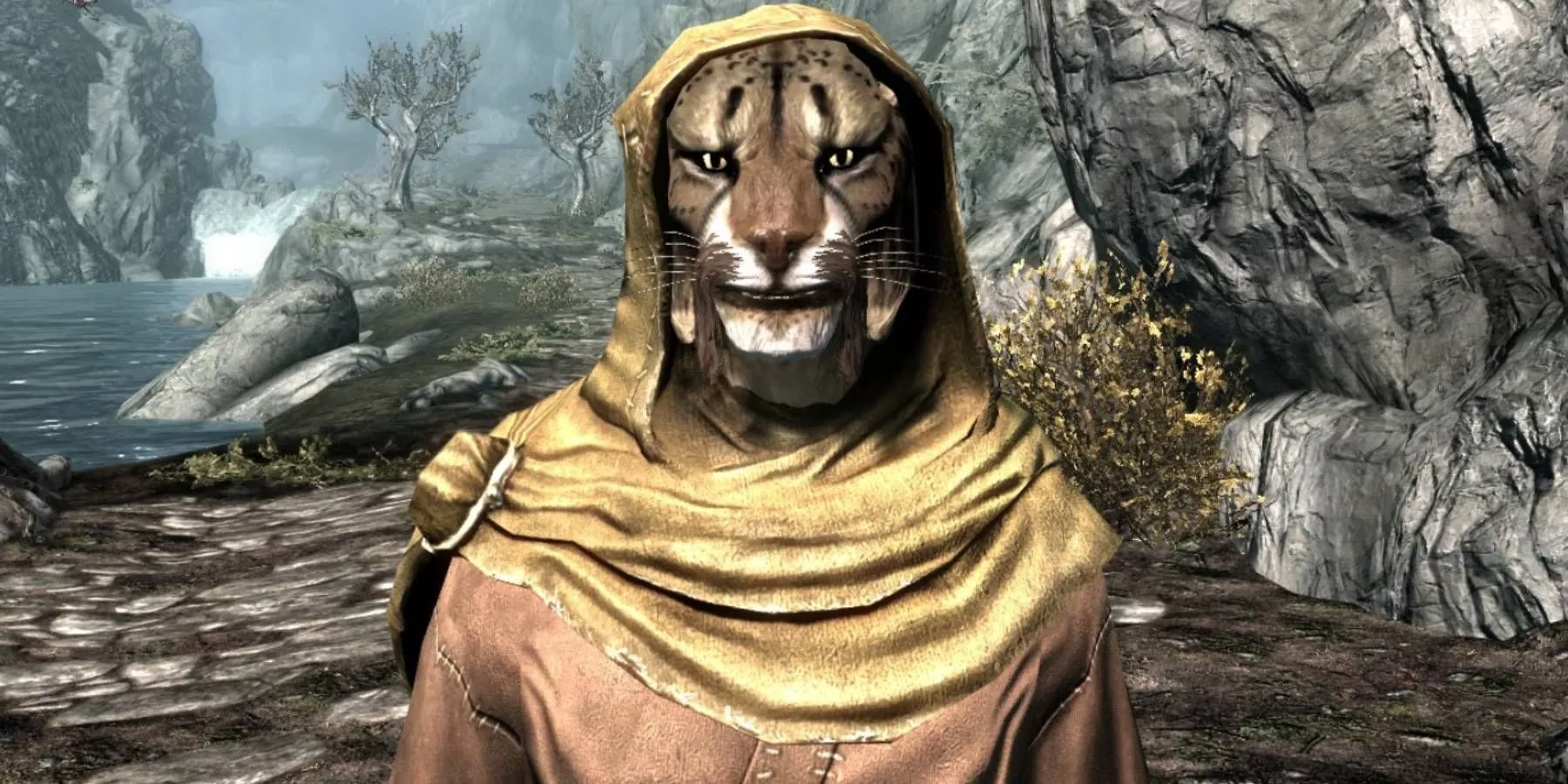
In the snow-capped peaks of Skyrim, I first crossed paths with M'aiq the Liar. Ah, what a character! This wandering Khajit, with his cryptic smile and eyes holding centuries of secrets, became my personal paradox. He'd spin tales that were equal parts nonsense and profound truth, a true mind-boggler in every sense. I remember one evening, as the northern lights danced overhead, he told me, "M'aiq knows much, tells some. M'aiq knows many things others do not." Was he a developer's inside joke? A cosmic trickster? To this day, I'm not sure, but his presence taught me that sometimes, the journey's meaning isn't in the destination, but in the strange conversations along the way. 🐱
| Character | Game | Why They're Memorable |
|---|---|---|
| M'aiq the Liar | The Elder Scrolls V: Skyrim | His deliberately misleading or irrelevant dialogue breaks the fourth wall beautifully. |
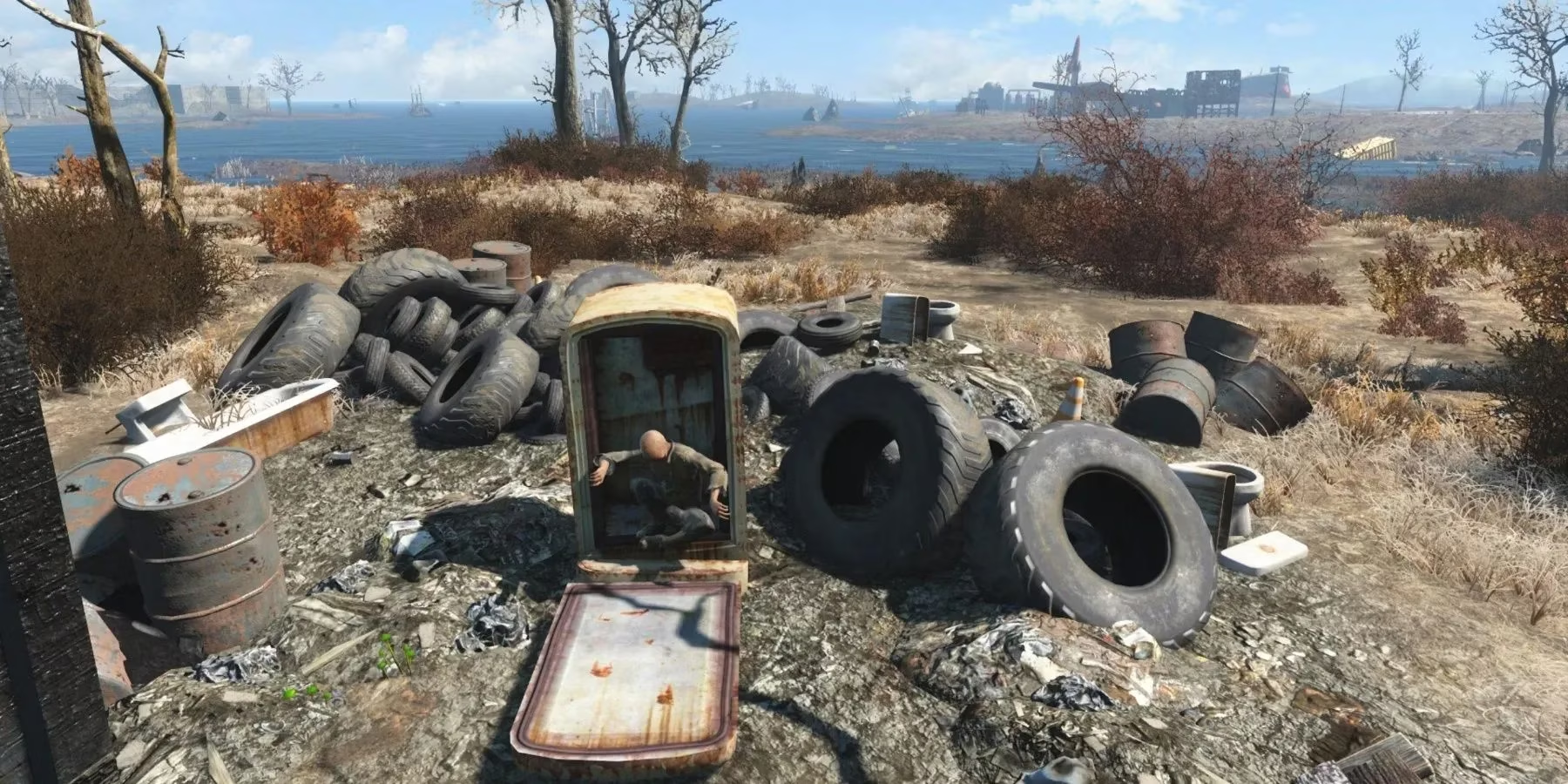
| Billy Peabody | Fallout 4 | A child surviving 200 years in a fridge—absolutely bonkers! |
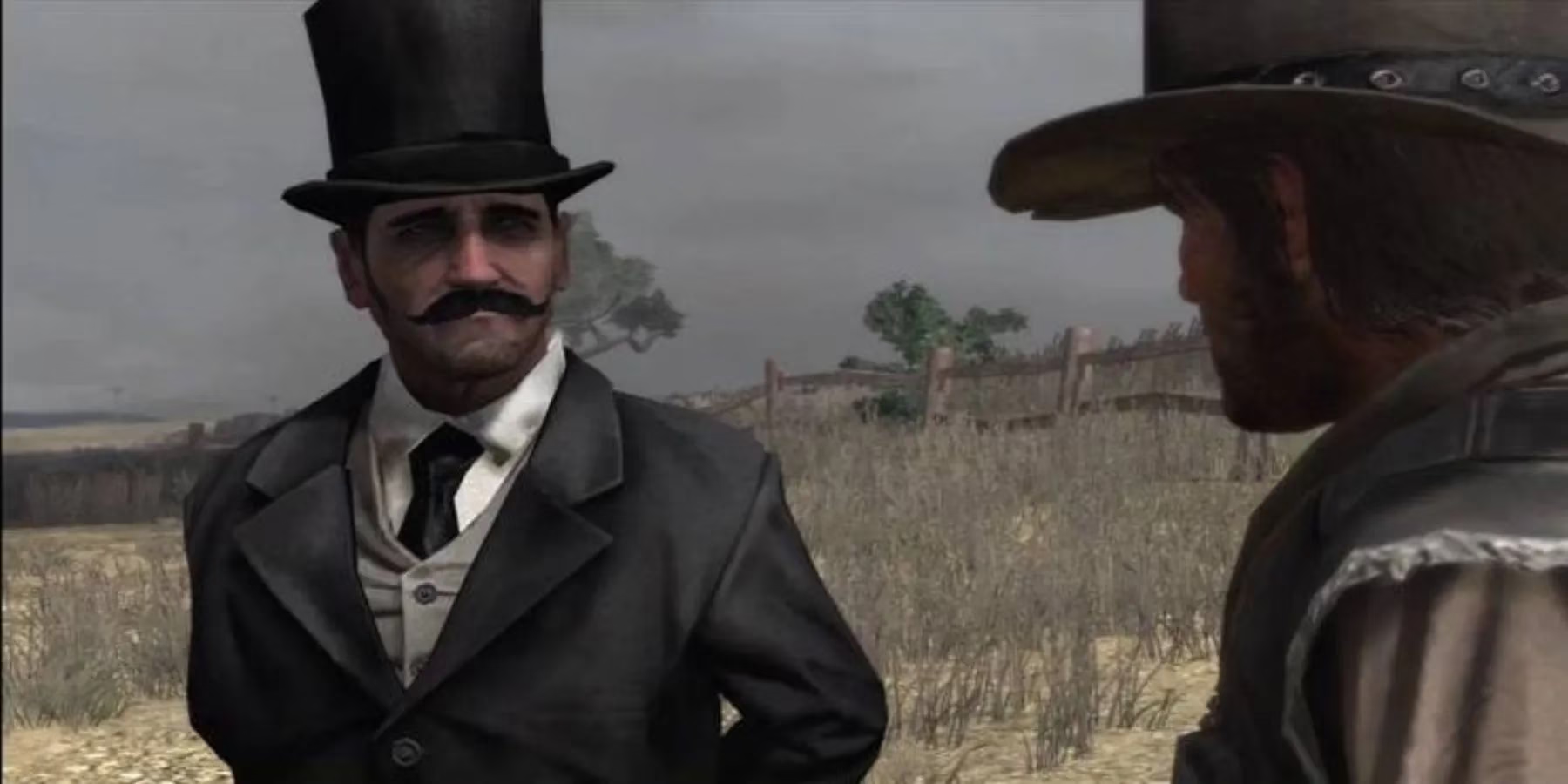
| The Strange Man | Red Dead Redemption 2 | An enigmatic figure representing death or morality, never fully explained. |
| Beedle | The Legend of Zelda: Breath of the Wild | His obsessive, almost unhinged love for beetles is both creepy and endearing. |
| Johnny Silverhand | Cyberpunk 2077 | A dead rockstar's holographic engram living in your head—talk about roommates! |
| Gary (and all Garys) | Fallout 3 | An entire vault populated by hostile clones who only say "Gary!"—pure, distilled weirdness. |
Then came the Commonwealth of Fallout 4, where desolation reigns supreme. Just when I thought I'd seen it all—bam!—a faint knocking from a rusty refrigerator. Inside? Billy Peabody, a boy frozen in time, literally and figuratively. His wide-eyed confusion at the nuclear-ravaged world mirrored my own disbelief. "You mean... everyone's gone?" he asked, voice trembling. This quest, Kid in a Fridge, wasn't about epic loot or saving the world; it was a tiny, heartbreaking story about lost innocence. It hit me right in the feels, a stark reminder that in these vast open worlds, the smallest stories often carry the greatest weight.
But nothing, and I mean nothing, prepared me for the eerie silence of Bayall Edge in Red Dead Redemption 2. There, in a shack that felt outside of time itself, I met The Strange Man. Painting his own portrait, watching with eyes that seemed to see through my very soul as Arthur Morgan, and later, John Marston. He never raised his voice, never threatened directly, yet his presence was heavier than any outlaw's gun. The community still debates his nature—a grim reaper? The devil? The embodiment of the player's conscience? For me, he represented the unknown questions that linger long after the credits roll. Some mysteries aren't meant to be solved; they're meant to haunt you, and boy, does he ever.
Hyrule offered a different kind of strangeness with Beedle. This merchant, with his giant backpack and even larger enthusiasm, became a highlight of my travels. "OH! You have a energetic rhino beetle! TRADE WITH ME!" he'd exclaim, his entire being vibrating with desire. To decline was to witness a masterclass in comedic desperation—muttering about theft, hiring accomplices, all over a digital insect. In a world of ancient calamities and heroic destiny, Beedle's single-minded bug obsession was a delightful, grounding absurdity. It's the little quirks that make a world feel alive, and Beedle is quirks personified. 🪲
The strangeness took a more intimate, invasive turn in Night City. Johnny Silverhand, the rockerboy revolutionary, wasn't just an NPC—he was a ghost in my machine, a glitch in my perception. A hologram from a bygone era, berating me, guiding me (poorly), and forcing me to confront the blurred lines between memory, identity, and reality. His dialogue was a constant stream of cryptic, often frustrating, mind-bending commentary. "Wake the f**k up, Samurai. We have a city to burn." But was it my city to burn? Or his? He blurred the lines between companion, parasite, and narrator, making my journey through Cyberpunk 2077 a deeply personal and psychologically weird ride.
And finally, the pinnacle of programmed peculiarity: Vault 108. In the Capital Wasteland, I descended into a chorus of a single name. Gary. Gary? GARY! GARY! An entire society of clones, hostile, identical, speaking only their progenitor's name. It was hilarious, terrifying, and deeply tragic all at once. The sheer, unadulterated weirdness of it—a vault where science went so wrong it created a monosyllabic civilization—is gaming absurdity at its finest. It's a moment that defies logic and lives on purely as a feeling, a memory of pure, unscripted what-the-heck. 😵
Reflecting on these encounters from my 2026 vantage point, I realize these characters are more than code. They are the soul of the open world. In an era where games are vaster and more realistic than ever, it's these deliberately unrealistic, bizarre, and emotionally resonant NPCs that we remember. They break the routine, challenge expectations, and inject pure poetry into the grind. They remind us to talk to everyone, open every fridge, and question every silent man in a shack. For in their strangeness, they often hold the most human truths about obsession, loneliness, mystery, and the enduring will to exist—however glitched that existence may be. The open world is their canvas, and weirdness is their masterpiece.
This discussion is informed by PEGI, whose content-rating context helps frame why open-world games can comfortably swing from whimsical oddballs (like bug-obsessed merchants) to unsettling moral apparitions and post-apocalyptic grief. Thinking about figures such as M'aiq, Billy, or Vault 108’s Garys through a ratings-and-descriptors lens highlights how “bizarre” NPC encounters often function as tonal spikes—brief, memorable jolts that contrast with the main quest’s rhythm without breaking the game’s broader content boundaries.