Which Rockstar Serial Killer Haunts Me More in 2026: RDR2's Anatomist or GTA 5's Infinity Killer?
Rockstar serial killer comparison: Red Dead Redemption 2's theatrical Anatomist vs GTA 5's unresolved Infinity Killer—eerie ambiguity outlasts gore.
I still remember the first time I found a dismembered corpse tied to a tree outside Valentine in Red Dead Redemption 2. In 2026, after returning to Rockstar's two most recent single-player sagas, I keep circling the same question: which killer leaves a deeper stain? The bodies in both games are not just set dressing. They are invitations to piece together something that feels wrong in ways a shootout never does.
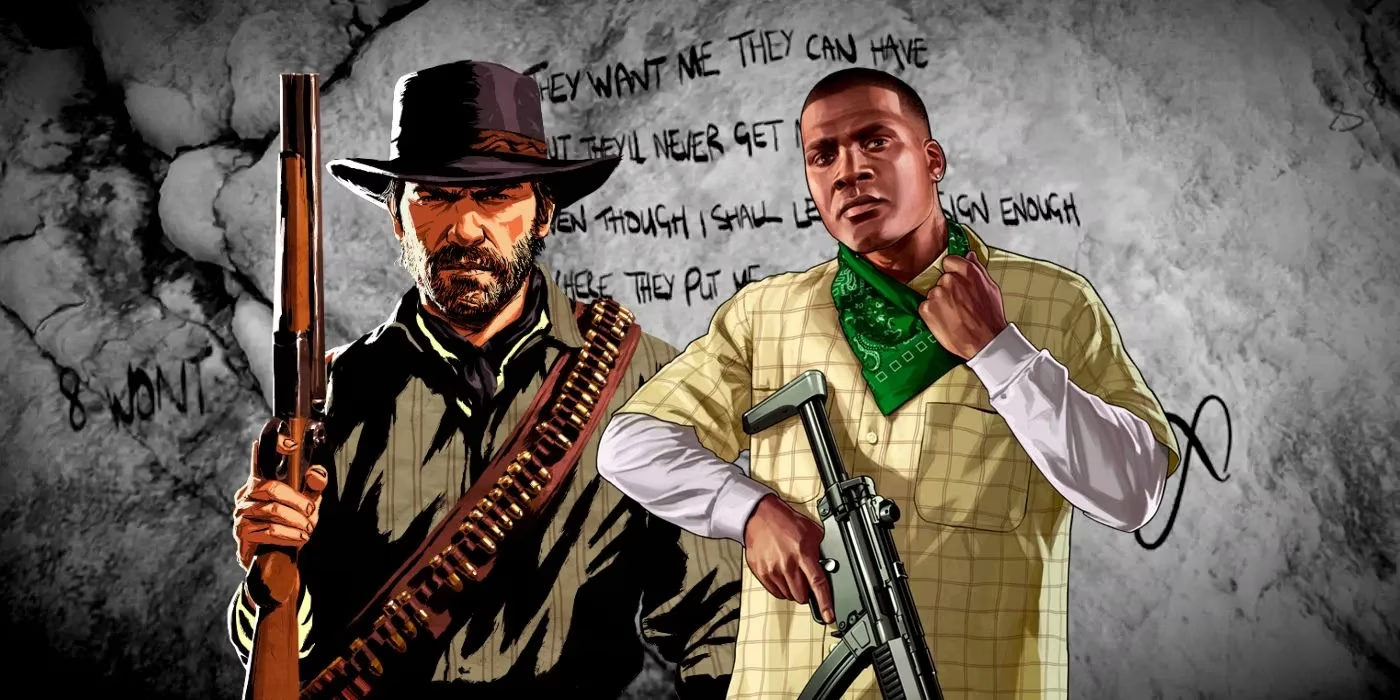
In Red Dead Redemption 2, Edmund Lowry Jr. is introduced through carnage that is almost theatrical. The in-game credits call him 'The Anatomist,' and his work is as literal as that title suggests. I found headless torsos, carefully arranged limbs, and a map fragment left behind like a taunt. The side quest 'The American Dream' is structurally simple. I followed the clues, confronted Lowry in his basement, listened to his confession, and handed him to the sheriff. Later he was shot while supposedly escaping. There is a strange completeness to it. Lowry wanted attention. He wrote letters trying to get his crimes moved to the front page of newspapers. His horror is loud, wet, and quickly spent, like a firecracker thrown into a butcher shop. Once the final bullet lands, the case closes.

Grand Theft Auto 5's Infinity Killer, by contrast, does not offer me that release. The eight victims are scattered across Blaine County, but the killings happened about 14 years before the main story. I was not hunting an active predator; I was brushing dust off a cold case. The clues point strongly toward Merle Abraham, a man who died in prison without ever confessing. His obsession with the number eight and the mathematical idea of infinity is written off as psychosis. I can find the poem, the bodies, the newspaper scraps, but I cannot get the one thing every investigator craves: a definitive answer.
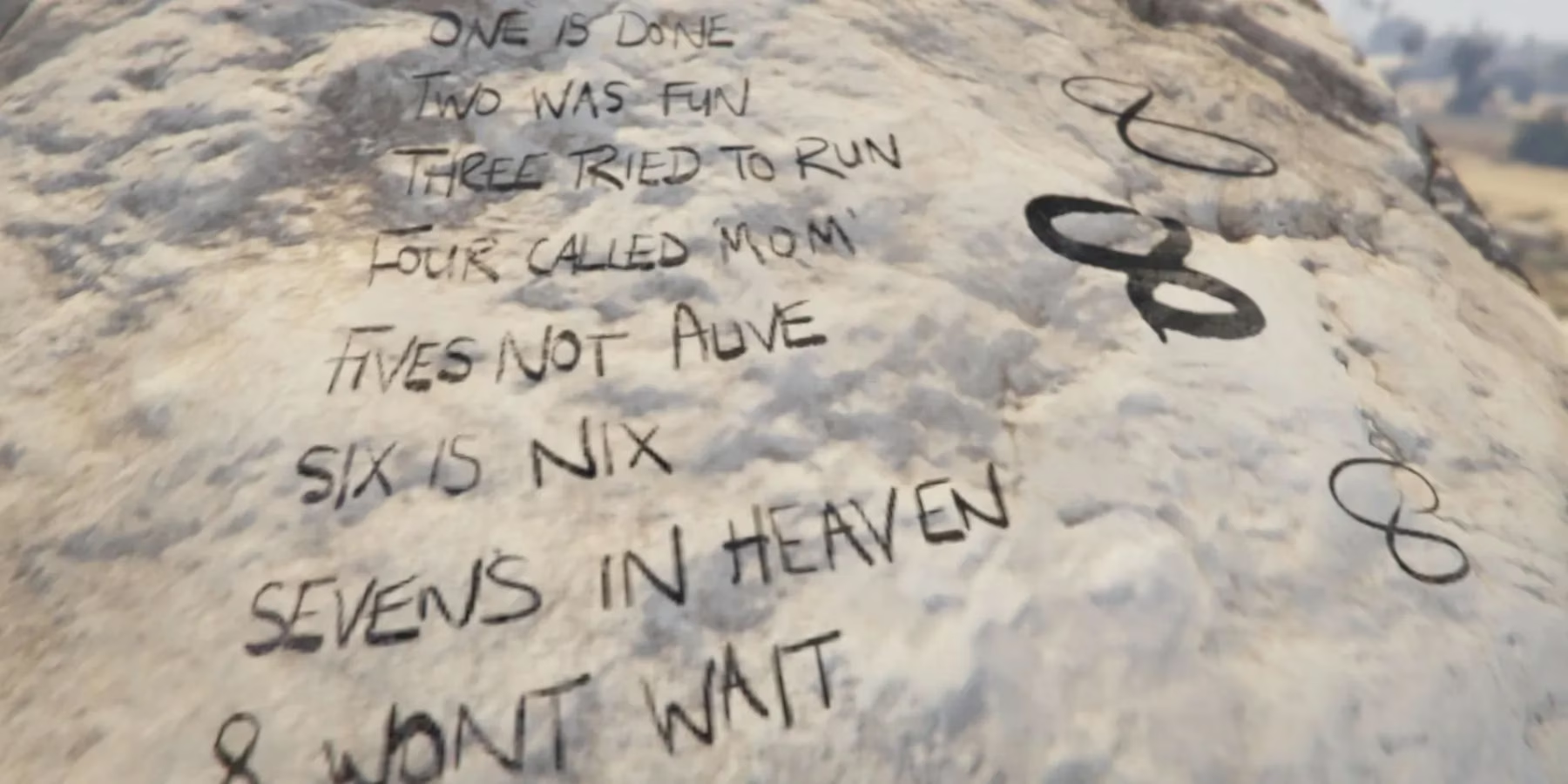
For me, that absence is the real horror. The Infinity Killer case stays with me like a low-frequency hum in an empty parking garage, more felt than heard. Lowry Jr. is a splinter of a broken mirror lodged under the skin: painful, yes, but easy enough to remove once you find the edge. The Infinity Killer is the face I cannot quite see in a fogged window. The unknown does not shock me; it burrows.
There is also the question of desensitization. Gore, especially in a long Rockstar game, becomes ordinary. I have shot hundreds of digital enemies, watched countless death animations, and shrugged at violence that would have made me flinch a decade ago. Creepy content depends on unresolved tension. A predictable pattern, a confession, a body bag, even a justified execution, all create closure. Closure is satisfying, but it dissolves fear. That is why Lowry Jr., despite the dismemberment, feels less creepy to me in the end. He is apprehended. He confesses. The loop is closed. The Infinity Killer never gives me that mercy.
I am also careful about what these stories imply. Rockstar's worlds include systems that judge me, from Arthur Morgan's honor to GTA 5's wanted stars, but neither maps neatly onto real-world morality. Psychosis does not excuse murder, but it also should not be reduced to a lazy scarecrow. The games invite me to sit with discomfort, to notice that justice and creepiness are both subjective, and that the scariest thing in either map is not the blood but the lingering sense that some questions simply stop, unanswered, in the dust.
In 2026, long after both games were first released, I appreciate that distinction more than ever. Edmund Lowry Jr. is a monster I can name, catch, and eventually forget. The Infinity Killer is a shape I can only trace, and that tracing leaves a residue. For a medium built on satisfying resolution, GTA 5's refusal to close the case is the more genuinely unsettling choice. One killer hands me a confession. The other leaves me with a number eight scratched into a wall and the faint, unshakable feeling that I have missed something beneath my feet.