The Unmatched Immersion of Red Dead Redemption 2: Why Its Successor Faces a Daunting Challenge
Red Dead Redemption 2's immersive open world and meticulous detail set a monumental, peerless standard for modern gaming. Its living ecosystem and revolutionary systems create an unparalleled, deeply engaging experience that remains virtually unmatched.
As a dedicated gamer reflecting on the landscape of modern classics, I find myself consistently drawn back to the world of Red Dead Redemption 2. Even now, in 2026, its presence looms large. Rockstar Games has long been synonymous with crafting unparalleled, high-caliber experiences, from the enduring phenomenon of Grand Theft Auto V to the feverishly awaited Grand Theft Auto VI. Yet, amidst this anticipation, Red Dead Redemption 2 stands as a monumental achievement—an immersive open world that, after nearly eight years, remains virtually peerless in its depth and execution. While the future holds the promise of Red Dead Redemption 3, I can't help but ponder the immense challenge it faces in attempting to surpass a predecessor that feels so complete, so meticulously realized.
The Foundation of a Living World
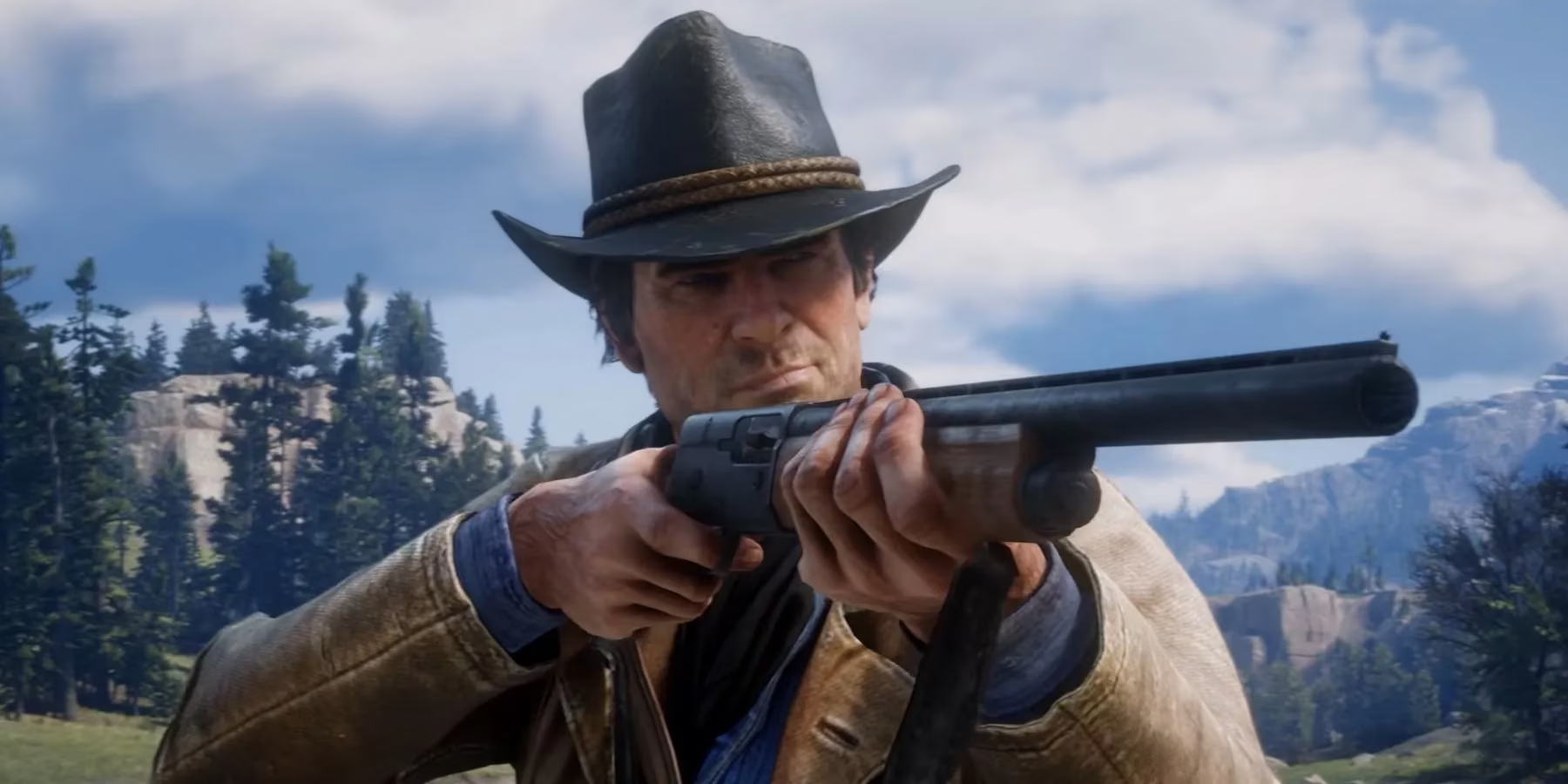
The journey began with the original Red Dead Redemption, which masterfully transplanted Rockstar's established urban formula into the sprawling vistas of the Wild West. It was a game that defined an era for open-world design, a standard that still resonates. However, its sequel didn't just iterate; it revolutionized. Red Dead Redemption 2 is, without question, Rockstar's most ambitious undertaking to date. Its immersiveness isn't a single feature but the culmination of thousands of intricately woven details. I remember the first time I noticed my horse, a trusted companion, becoming caked in mud after a trek through the bayou, or when Arthur Morgan's beard grew so long it started to obscure his view. These aren't just visual flourishes; they are integrated systems that demand engagement. Arthur's physical condition—his stamina, health, and even his aiming stability—is directly tied to how well I care for him. Neglecting to hunt for food or rest properly has tangible, punishing consequences, grounding the experience in a palpable reality.
A Tapestry of Minute Details
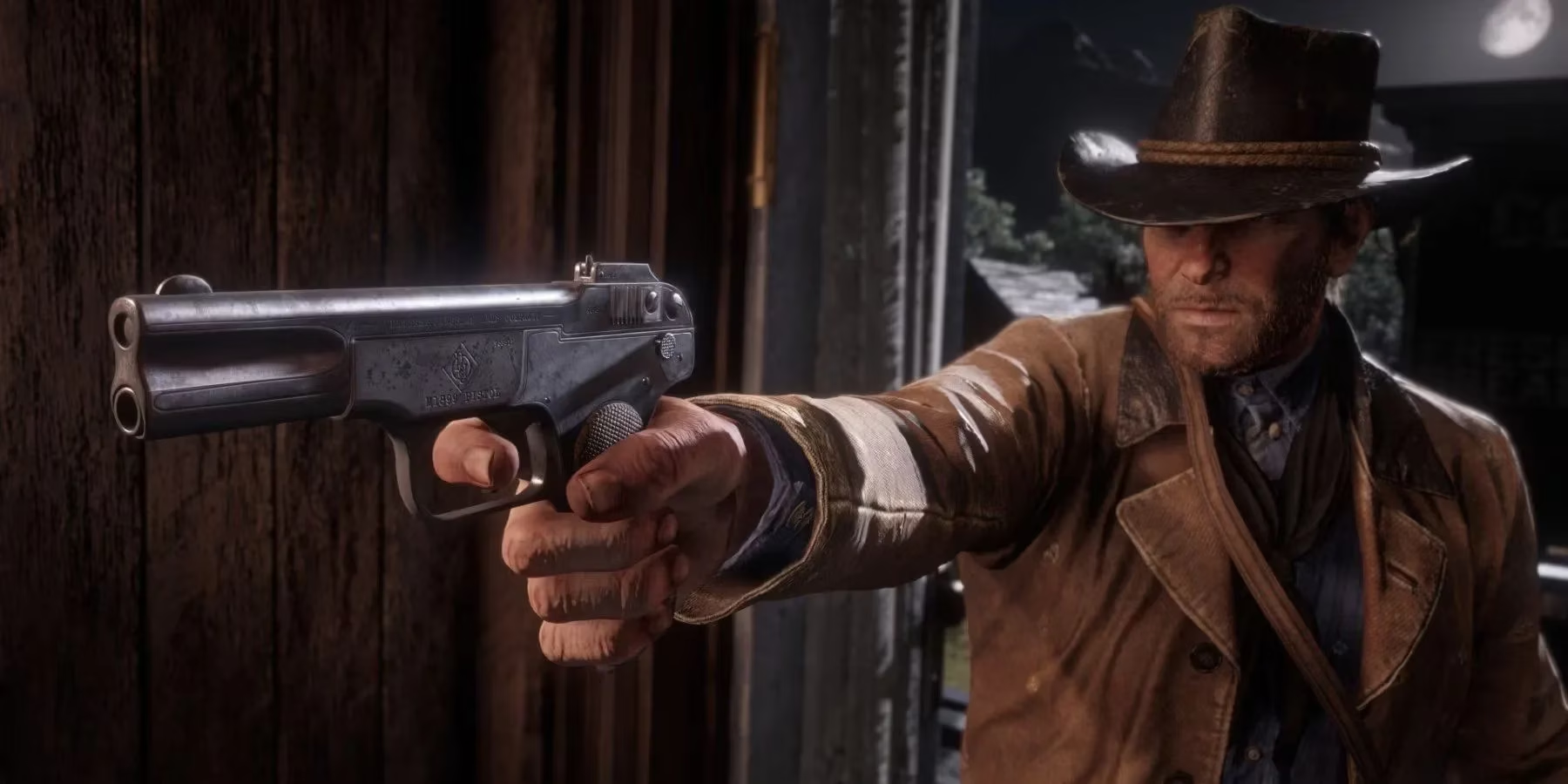
The commitment to verisimilitude extends far beyond the protagonist. The world itself is a character, brimming with life and astonishing minutiae. Almost every non-player character can be engaged in some way, and their behaviors are remarkably nuanced. I've spent minutes simply observing patrons in a saloon, watching as they methodically eat the food off their plates, bite by bite. Looting isn't a simple button press; it's an activity that involves opening drawers, rummaging through cabinets, and examining fully rendered objects. The dynamic weather systems, from torrential downpours to serene sunsets, and the impeccably animated wildlife create an ecosystem that feels authentically alive. This dense layering of interactive elements and environmental storytelling coalesces into what I consider one of the most "lived-in" virtual spaces ever conceived. It's a standard of detail that continues to lead the industry.
The Daunting Path for a Successor
Looking ahead, the trailer for Grand Theft Auto VI suggests it will set a new benchmark for visual sophistication. Undoubtedly, Red Dead Redemption 3 will be built upon the technological foundations laid by that title. We can expect a graphical leap—crisper textures, more advanced lighting, denser crowds. Yet, the core question of immersion persists. How does one meaningfully improve upon the simulator-like mechanics and obsessive detail of RDR2? If the interconnected web of survival, honor, and environmental systems becomes even more intricate and realistic, there's a genuine risk of crossing the line from engaging simulation to cumbersome chore. The brilliance of RDR2 lies in its delicate equilibrium between playability and realism.
In my view, potential innovations for a sequel might include:
-
Enhanced NPC AI: Truly dynamic social ecosystems where NPCs have deeper, persistent memories and relationships.
-
Expanded Player Agency: More profound consequences for moral choices that reshape the world and narrative in significant ways.
-
Deeper Ecological Systems: A more reactive food chain and environmental degradation based on player actions.
However, perfecting these elements without sacrificing the fluidity of the experience is a monumental design challenge. The attention to small details in RDR2 feels so comprehensive that expanding upon it meaningfully seems nearly impossible. Instead of striving to outdo its predecessor in sheer complexity, Red Dead Redemption 3 might find its success in matching that legendary standard while forging a new, compelling narrative path within that incredibly high-fidelity framework.
A Legacy to Uphold
Ultimately, Red Dead Redemption 2 set a bar that redefined player expectations for an open-world game. Its atmospheric depth, narrative weight, and systemic richness create an experience that remains singular. As we await the eventual announcement of Red Dead Redemption 3, my anticipation is tempered with a deep respect for what came before. It may not feature vastly more elaborate mechanics, and it will likely aim first to equal the immersion of RDR2. Yet, the prospect of returning to a world crafted with such loving care, perhaps exploring a new chapter of the Van der Linde gang's history or an entirely new tale from the fading frontier, is enough to keep the hope alive. In an industry constantly chasing the next big thing, Red Dead Redemption 2 stands as a timeless testament to what is possible when ambition is matched with flawless execution. Its successor doesn't need to be better; it needs to be worthy of the same legacy. 🐎✨