The Ultimate Sacrifice: When Open-World Heroes Meet Their End
Explore unforgettable open-world video games where the protagonist's death delivers powerful, emotional endings and lasting narrative impact.
In the sprawling, immersive worlds of modern video games, players often form deep, personal connections with the characters they guide through countless hours of adventure. It's a real gut-punch, then, when the final curtain falls not with a triumphant cheer, but with the somber, sometimes shocking, death of the protagonist. These aren't just game over screens; they're poignant, narrative-driven conclusions that linger long after the controller is set down. From the irradiated wastes of the Capitol to the rain-slicked streets of Night City, some of the most memorable open-world experiences are those where the hero's journey ends in sacrifice, tragedy, or a quiet acceptance of fate. Let's dive into the stories of these legends who went out not with a whimper, but with a bang—or a heartbreaking whisper.
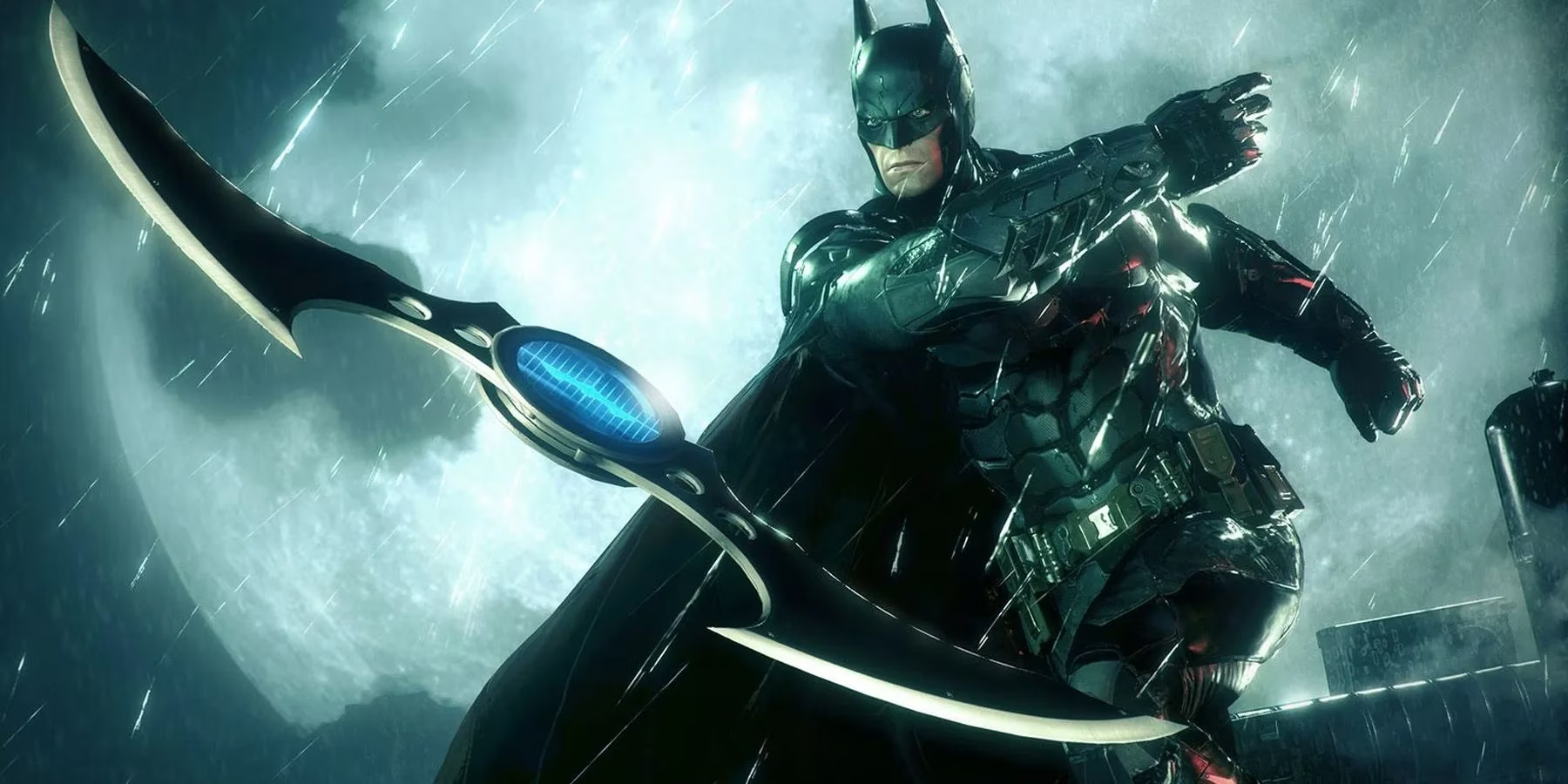
First up, the Dark Knight himself. At the climax of Batman: Arkham Knight, Scarecrow pulls off a total win, exposing Batman's secret identity to the entire world. Bruce Wayne realizes the gig is up; criminals fear the symbol, not the man. In a move that had players' jaws on the floor, he activates the Knightfall Protocol. The world watches, horrified, as Wayne Manor explodes with Bruce and Alfred presumably inside. Talk about going out in a blaze of glory! For years, this was the definitive, heartbreaking end. The identity of Batman was dead because, as Bruce knew, you can't fear a legend once you see the man behind the mask. Sure, later games would retcon this, but in that moment? It was a masterclass in tragic finality.
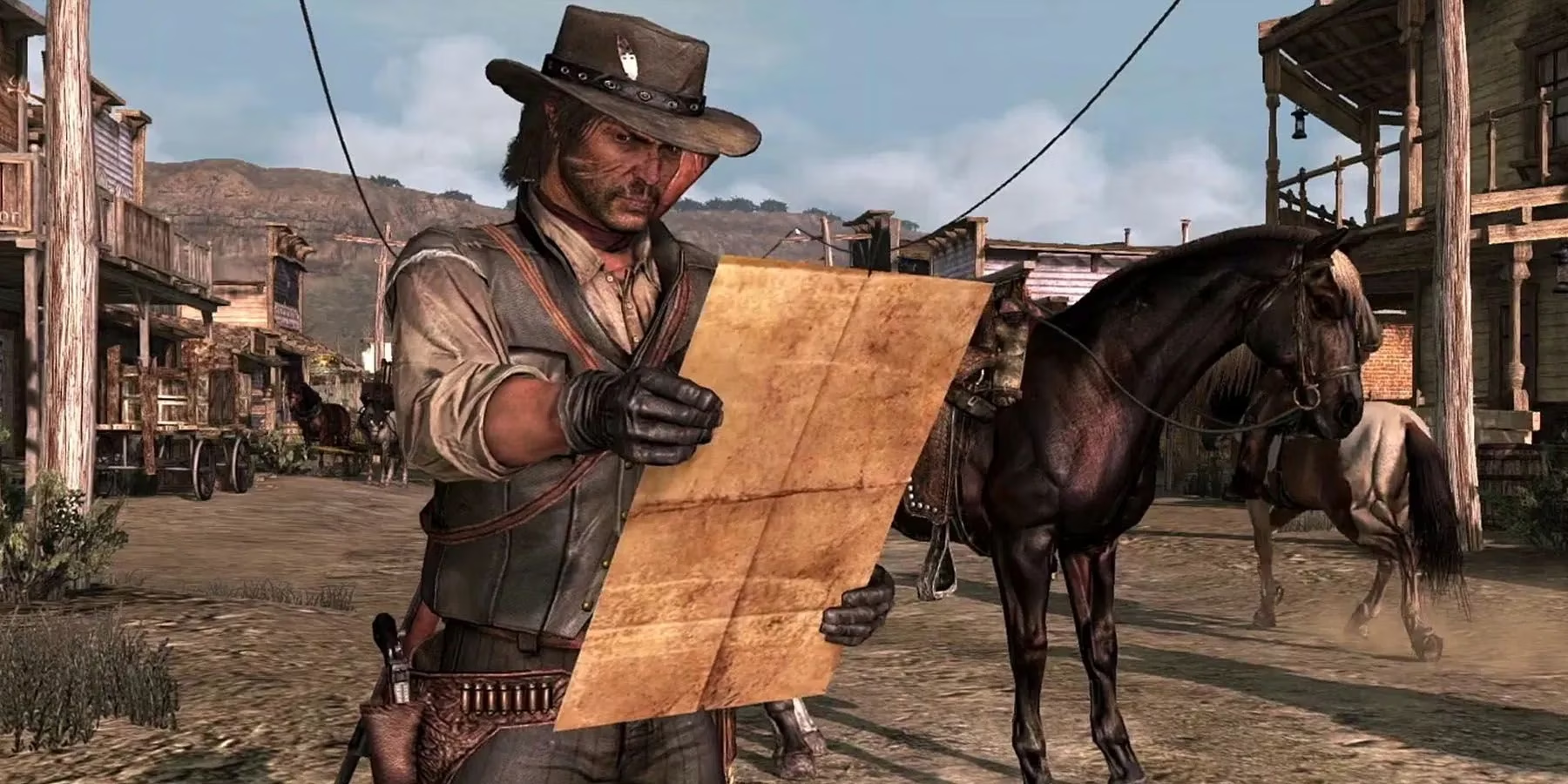
Then there's Red Dead Redemption's John Marston. After being strong-armed by the government into hunting down his old gang, John finally earns his freedom and a shot at that quiet life at Beecher's Hope with his family. But in the world of outlaws, there are no clean getaways. Agent Ross and a small army show up, and John makes the ultimate dad move. He sends his family to safety and walks out to face the music alone. His last stand in the barn, taking down as many soldiers as he can before succumbing to his wounds, is the definition of a heroic sacrifice. He dies knowing he secured his family's future—a bittersweet victory if there ever was one.
| Hero | Game | Nature of Death | Legacy/Impact |
|---|---|---|---|
| Bruce Wayne/Batman | Batman: Arkham Knight | Presumed death in explosion | The symbol of Batman 'dies' to preserve fear |
| John Marston | Red Dead Redemption | Heroic last stand | Secures family's freedom and safety |
| The Lone Wanderer | Fallout 3 | Noble sacrifice to purify water | Saves the Capitol Wasteland (base game) |
| Talion | Middle-earth: Shadow of Mordor | Murdered at game's start | Becomes a vengeful wraith, journey begins |
| Arthur Morgan | Red Dead Redemption 2 | Dies from illness & wounds after final fight | Seeks redemption, impacts gang's fate |
| V | Cyberpunk 2077 | Terminal condition; fate ambiguous | Searches for a cure, leaves legacy in Night City |
| Cole MacGrath | inFAMOUS 2 (Hero path) | Sacrifices self to save humanity | Purges plague, saves world at great cost |
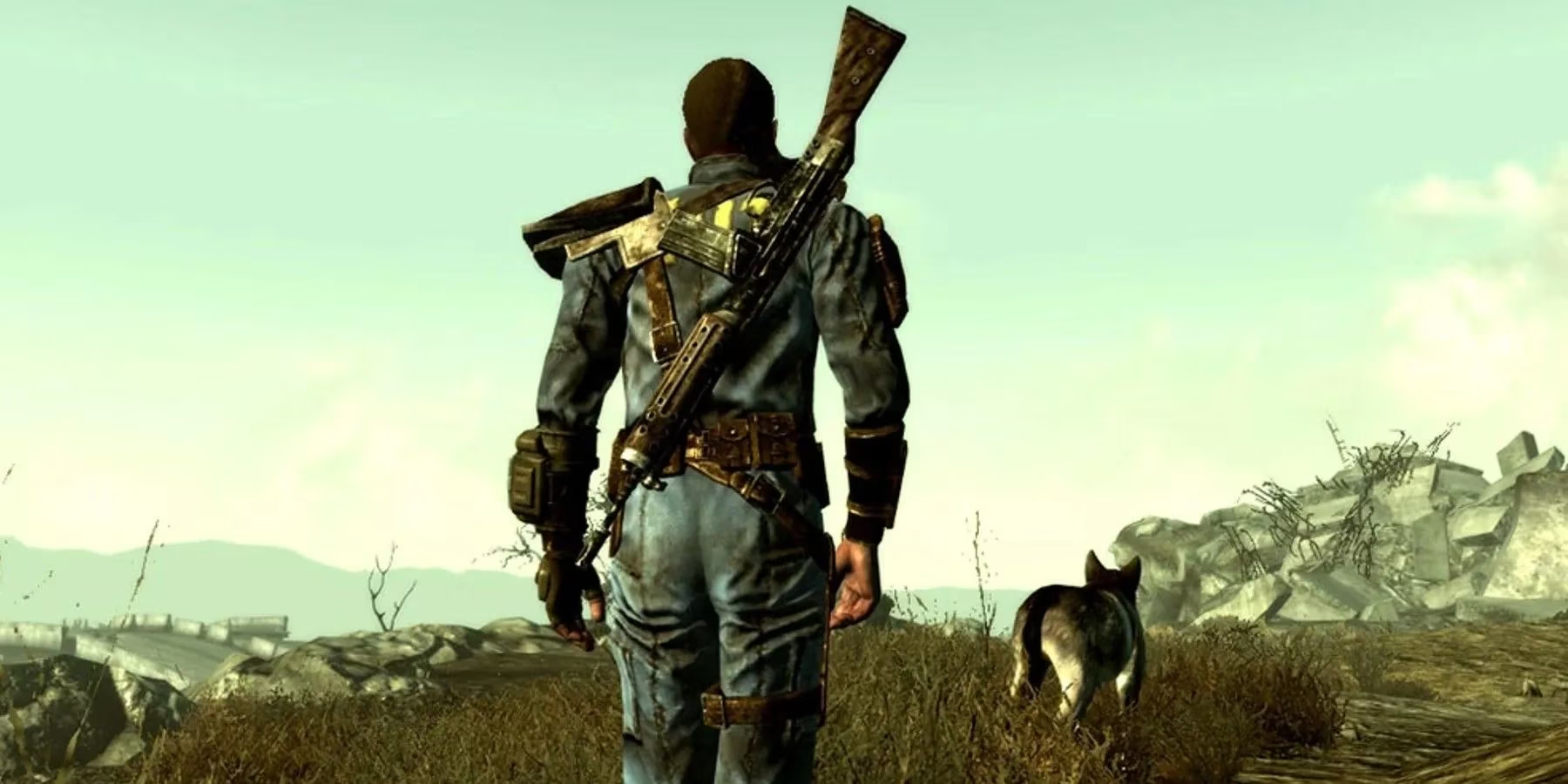
Over in Fallout 3, the Lone Wanderer faces a classic trolley problem with a radioactive twist. The mission? Activate Project Purity to cleanse the wasteland's water. The catch? The control chamber is flooded with lethal radiation. In the base game's original ending, our hero steps in, makes the call, and gives their life to save countless others. It's a sad, noble end that perfectly caps a journey through a brutal world. Of course, the Broken Steel DLC threw players a lifeline, but that initial choice? Pure, unadulterated heroism. Sometimes, saving the world costs everything.
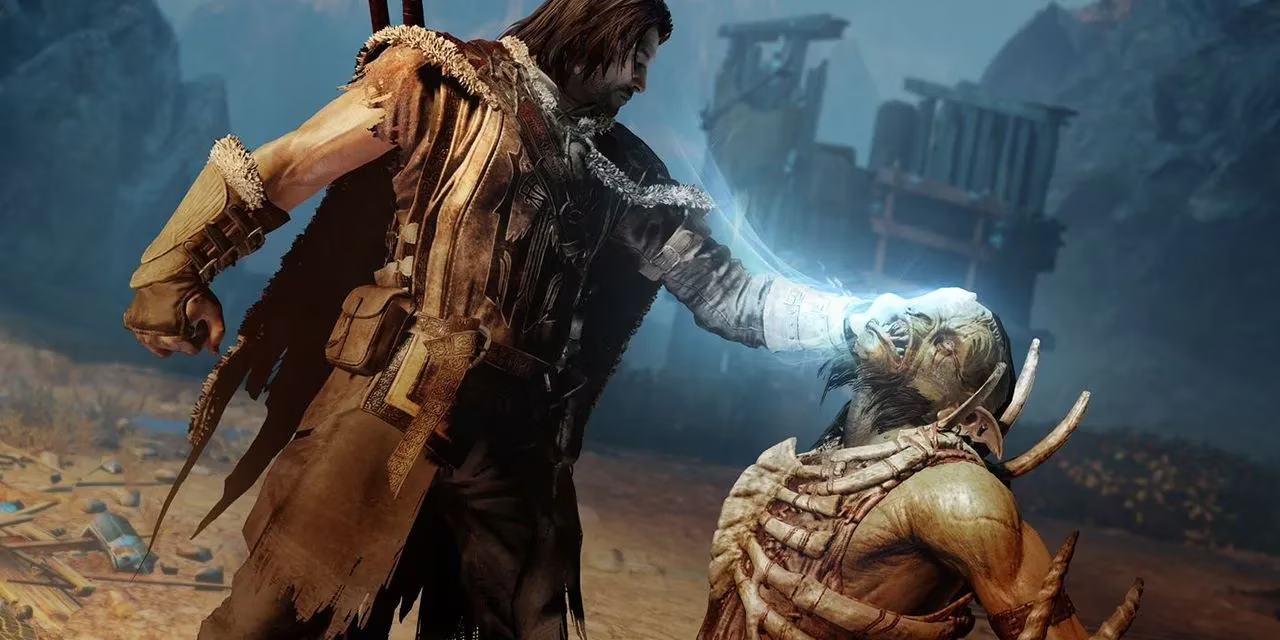
Middle-earth: Shadow of Mordor kicks things off with a serious downer. Talion, his wife, and son are brutally murdered right before the player's eyes. Talk about a cold open! But this death isn't the end—it's the beginning. Bound with the elf-wraith Celebrimbor, Talion becomes a 'dead man walking,' a specter of vengeance stalking Mordor. His mortal life is over, but his quest is just starting. This premise sets a uniquely grim and relentless tone for the entire adventure. He's got nothing left to lose, and that makes him one dangerous ranger.
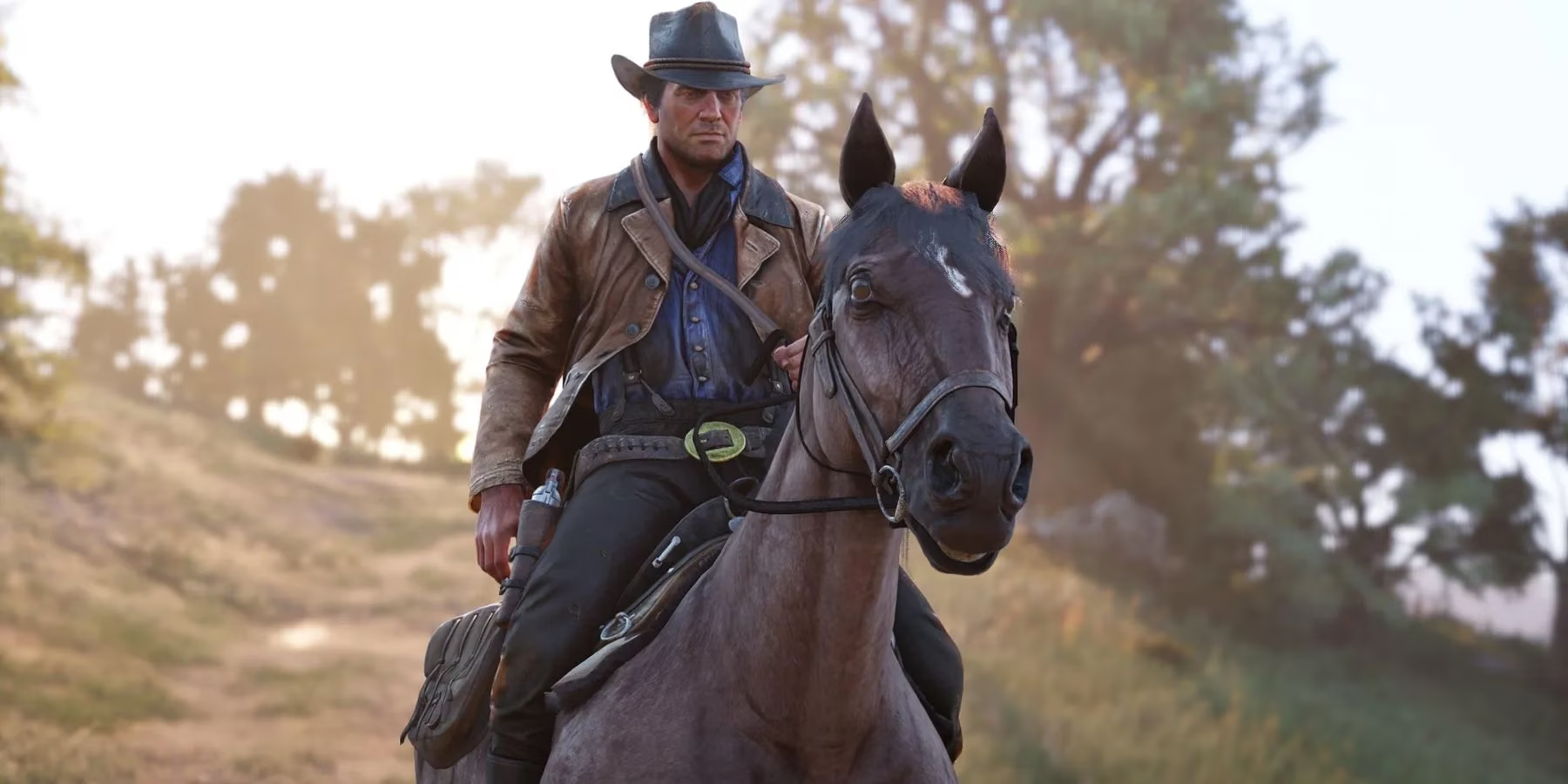
Now, let's talk about a slow burn: Red Dead Redemption 2's Arthur Morgan. Arthur's no saint—he's robbed and killed his way across the frontier. But a fateful debt collection leaves him with a death sentence: tuberculosis. The rest of the game becomes a race against time as Arthur grapples with his mortality and seeks some semblance of redemption. His final moments, after a brutal showdown with the rat Micah Bell, are quiet and profound. Wheezing his last breaths, he watches the sunrise—a man who found a sliver of goodness too late, but found it nonetheless. It's a tragedy of Shakespearian proportions that leaves players emotionally wrecked.
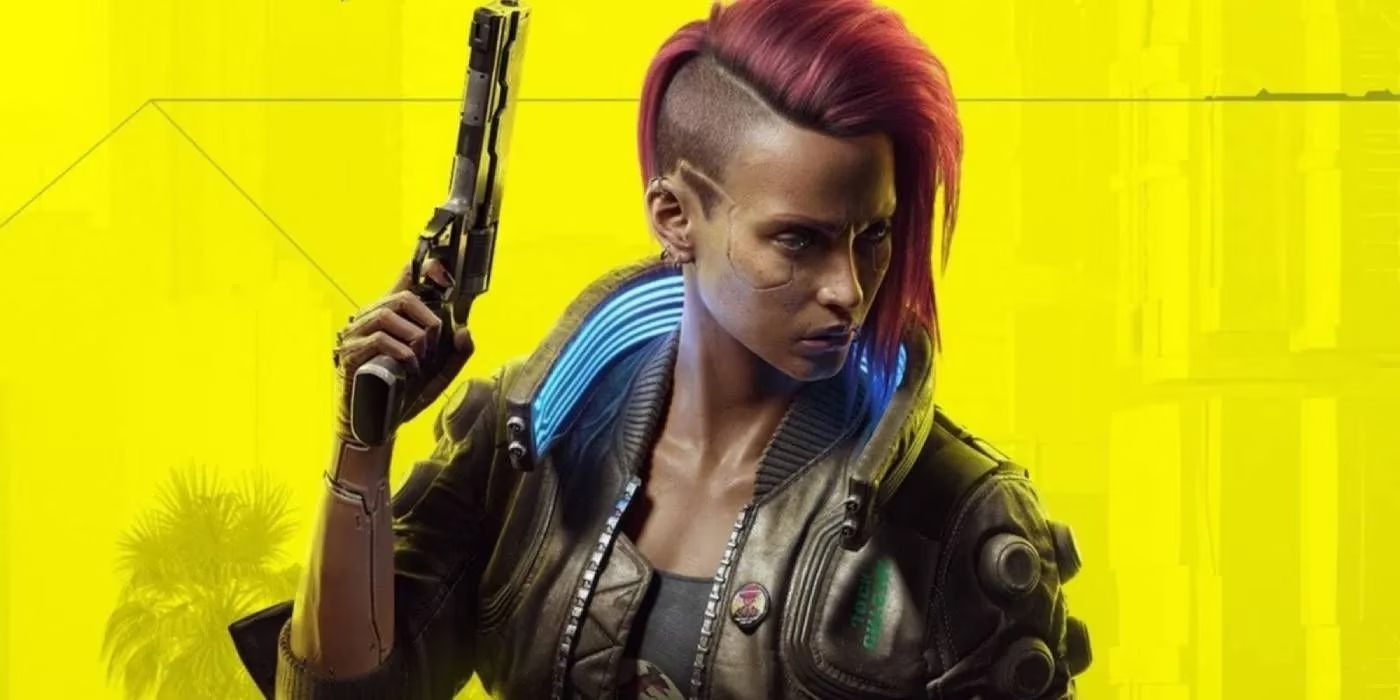
Night City is a merciless place, and Cyberpunk 2077's V learns this the hard way. After a botched heist, V is left with a bullet in the head and a rogue bio-chip slowly overwriting their mind with the engram of Johnny Silverhand. The entire game becomes a desperate, high-stakes scramble for a cure. Despite forging powerful alliances and pulling off insane missions, the core truth (outside the Phantom Liberty expansion's new path) remains bleak: V is on borrowed time. The endings are varied and open to interpretation, but the constant shadow is that V's fate is sealed within weeks. It's a story about legacy and what we do with the time we have left, a real carpe diem in a neon-drenched dystopia.
Finally, the inFAMOUS series. In the heroic ending of inFAMOUS 2, conduit Cole MacGrath is faced with an impossible choice. To save humanity from The Beast and a deadly plague, he must activate the RFI—a device that will kill every conduit, including himself and other innocent superhumans. He makes the call. He sacrifices his own life and an entire species to save the world, a decision of staggering moral weight. His body is laid to rest at sea in a moment of profound tragedy. A cryptic final shot of a lightning bolt striking his ship hinted at a possible return, but with Sucker Punch moving on to other projects like Ghost of Tsushima 2, that spark of hope has likely faded. Cole's sacrifice stands as one of gaming's most powerful heroic conclusions.
So, what's the common thread here? Why do these endings hit so hard? It's because they give weight to the journey. In a genre often defined by limitless freedom and power fantasy, these games remind us that even the greatest legends have an end. Their deaths are not failures; they are the final, defining acts of their stories. They teach us about sacrifice, redemption, legacy, and the high cost of heroism. They stick with you, making the virtual worlds they saved feel all the more real and precious. In the end, these protagonists may be gone, but damn, what a way to go out. Their stories are proof that in video games, as in life, it's not about how long you live, but how well you live—and how meaningfully you say goodbye.