Take-Two Interactive Implements Workforce Reduction and Project Cancellations Amid Industry-Wide Trend
Take-Two Interactive's strategic restructuring and workforce reduction of 5% aim to navigate turbulent industry trends and decelerating revenue growth, optimizing operations ahead of the monumental launch of Grand Theft Auto VI.
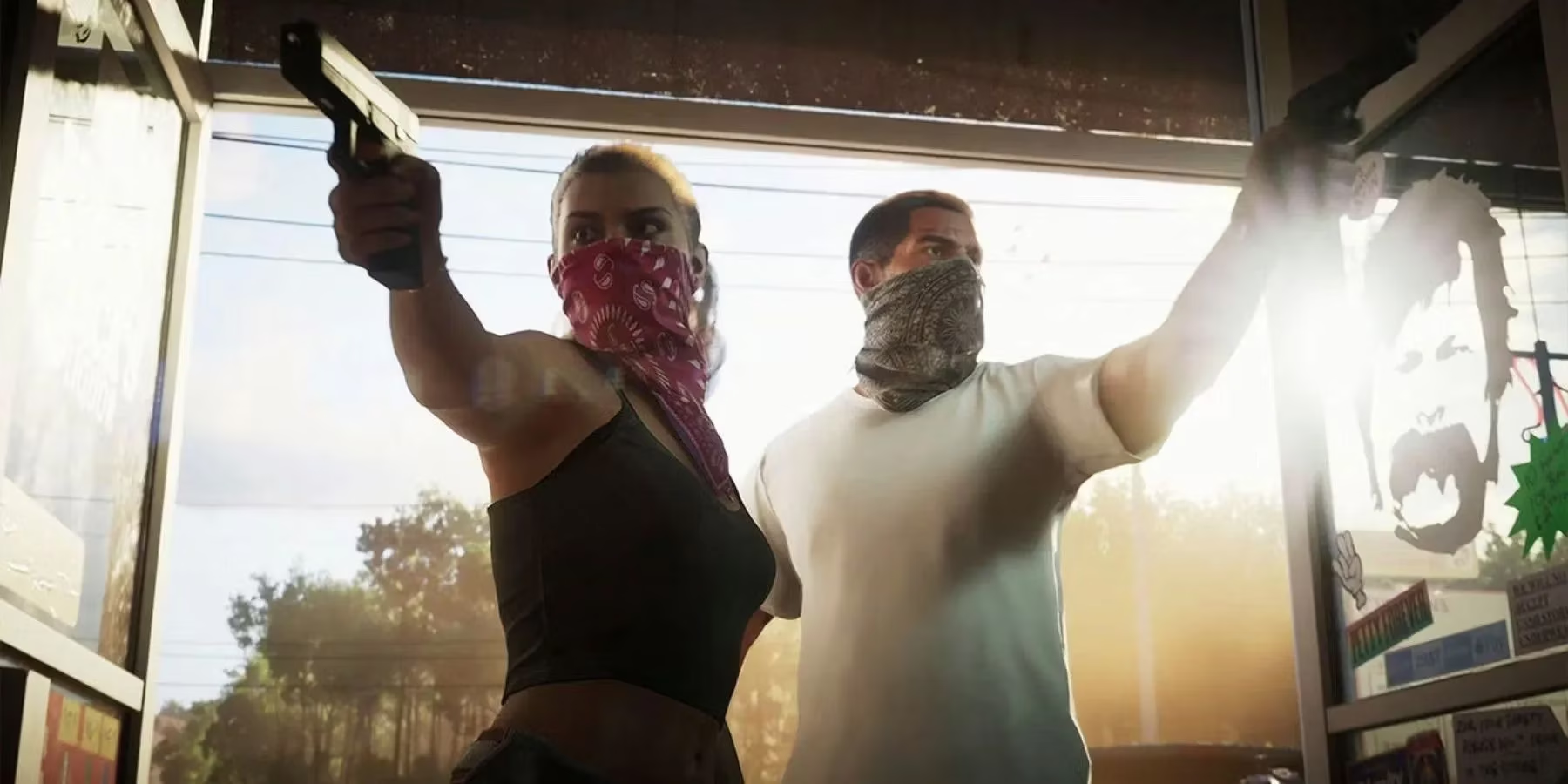
In 2026, the video game industry continues to navigate a turbulent period of restructuring, with one of its most prominent publishers, Take-Two Interactive, making significant operational adjustments. The company, renowned as the powerhouse behind iconic franchises like Grand Theft Auto, Red Dead Redemption, and BioShock, has announced a workforce reduction affecting approximately 5% of its employees, equating to around 600 individuals. This strategic decision is part of a broader initiative that also involves the cancellation of several in-development projects and the divestment of certain office properties. The publisher anticipates these measures will yield annual savings of roughly $165 million, a move framed as a necessary response to decelerating revenue growth within the PC and console gaming sectors. This development arrives at a curious juncture, as Take-Two simultaneously progresses toward the highly anticipated launch of Grand Theft Auto VI, a title universally expected to generate monumental sales and profits.
The Strategic Rationale and Industry Context
Take-Two's leadership has positioned this restructuring as a prudent financial maneuver. The core objective is to streamline operations and bolster profitability in the face of a challenging market environment. While specific titles slated for cancellation remain undisclosed, the decision underscores a strategic pivot towards focusing resources on the company's most assured blockbusters. This action mirrors a pervasive trend across the global gaming landscape, where numerous major corporations have enacted similar workforce reductions over the past several years.
The industry-wide pattern of layoffs is often attributed to a confluence of factors:
-
Post-Pandemic Correction: During the COVID-19 pandemic, a surge in gaming engagement led many studios to expand their teams rapidly. As consumer habits have normalized, companies are now rightsizing their workforces.
-
Economic Pressures: Rising development costs, market saturation, and cautious consumer spending have compelled publishers to seek efficiencies.
-
Strategic Consolidation: Following acquisitions, such as Take-Two's recent $460 million deal to acquire Gearbox Entertainment (the studio behind Borderlands), parent companies frequently integrate operations, which can lead to role redundancies.
A Contradiction in Timing?
For many observers, the timing of these cuts presents a stark paradox. Take-Two stands on the cusp of releasing what is arguably the most anticipated video game of the decade: Grand Theft Auto VI. The title's predecessor, GTA V, remains one of the best-selling entertainment products of all time. Financial analysts project that GTA VI will achieve record-breaking sales within its first week of release, promising a massive influx of revenue. This context makes the pre-emptive cost-cutting measures appear particularly severe to some industry commentators and developers.
The situation at Gearbox Entertainment further illustrates this complex dynamic. Shortly after the acquisition announcement, the studio itself underwent a round of layoffs, signaling Take-Two's intent to swiftly align its new subsidiary with its overarching efficiency goals. This has sparked discussions about the human cost of corporate consolidation and the prioritization of shareholder value over developmental stability.
The Broader Industry Debate: Necessity vs. Greed
Take-Two Interactive is far from an isolated case in this wave of restructuring. Gaming behemoths like Sony and Microsoft have executed substantial layoffs, and countless independent developers have been forced to downsize or shutter entirely. However, the rationale behind these sweeping cuts is hotly debated within the development community.
A prominent counter-narrative, voiced by figures like Swen Vincke, director of the critically and commercially successful Baldur's Gate 3 at Larian Studios, challenges the economic necessity argument. Vincke has publicly asserted that many of these workforce reductions are primarily driven by corporate greed and an insatiable pursuit of higher profit margins, rather than by genuine financial distress. This perspective highlights a growing tension between the artistic and technical labor that creates games and the corporate structures that fund and publish them.
| Company | Action (2024-2026) | Cited Reason |
|---|---|---|
| Take-Two Interactive | 5% workforce cut, project cancellations | Slowing revenue growth, cost-saving |
| Sony Interactive Entertainment | Significant layoffs across studios | Reorganization, focusing on development |
| Microsoft Gaming | Major cuts post-Activision acquisition | Synergies and strategic alignment |
| Various Indie Studios | Closures and downsizing | Market competition, funding challenges |
The Human Impact and Creative Cost
Beyond the financial spreadsheets and investor reports, these decisions have a profound human dimension. For the hundreds of developers, artists, designers, and support staff affected, a layoff represents not just a loss of income but a disruption of career trajectory and creative passion. The cancellation of projects also means the loss of years of dedicated work and the silencing of potential new intellectual properties before they ever reach an audience.
The emotional and professional toll on the industry's workforce is significant. Many developers express a sense of whiplash, having been hired during the industry's expansionary phase only to be deemed expendable during contraction. This environment can foster instability, reduce morale, and potentially drive talent away from game development into more secure tech sectors.
Looking Ahead: The Path Forward for Take-Two and the Industry
As 2026 unfolds, all eyes will be on Take-Two Interactive's next moves. The success of Grand Theft Auto VI will be a defining moment, likely determining the company's financial health and strategic direction for years to come. The key questions remain:
-
Will the cost savings from these layoffs and cancellations translate into sustained profitability, or will they undermine the creative pipeline necessary for long-term success?
-
How will the company manage its expanded portfolio, including Gearbox's properties, while maintaining a lean operational model?
-
Can the industry find a more sustainable balance between growth, artistic ambition, and corporate responsibility to its employees?
The current era serves as a critical juncture for video game publishing. The cycle of aggressive hiring followed by abrupt downsizing is increasingly seen as unsustainable by many within the development community. There is a growing call for business models that prioritize stability, ethical management, and long-term creative investment over short-term fiscal optimization.
In conclusion, Take-Two Interactive's recent restructuring is a microcosm of the broader challenges facing the multi-billion-dollar gaming industry. While framed as a necessary business decision, it reflects deeper tensions between art and commerce, between human resources and financial resources. The legacy of this period may well be defined not only by the record-breaking sales of titles like GTA VI but also by the industry's capacity to evolve its practices to better support the very people who bring its virtual worlds to life. The coming years will reveal whether this is a temporary correction or a permanent reshaping of how games are made and marketed. 💼🎮✨