Revolutionary Game Mechanics That Still Remain Underutilized in 2026
SSD-powered dimensional hopping in Ratchet & Clank and Red Dead Redemption 2's universal NPC dialogue systems were revolutionary, yet remain isolated marvels in gaming.
The gaming industry thrives on innovation, yet some of its most brilliant ideas rarely manage to escape the confines of a single title. Every so often, a developer introduces a feature that reshapes how players interact with virtual worlds—be it through seamless world traversal, deeply reactive enemies, or interface designs that prioritize immersion over convenience. These breakthroughs can be as technical as leveraging solid-state drive speeds for instantaneous travel or as subtle as enabling conversations with every pedestrian on a dusty frontier street. But while these mechanics earn critical acclaim and fan adoration, their wider adoption often stalls due to patent restrictions, development complexities, or simple creative inertia. Even in 2026, several standout innovations from the past decade remain tragically isolated, waiting to be rediscovered by an industry that sometimes clings too tightly to its established formulas.
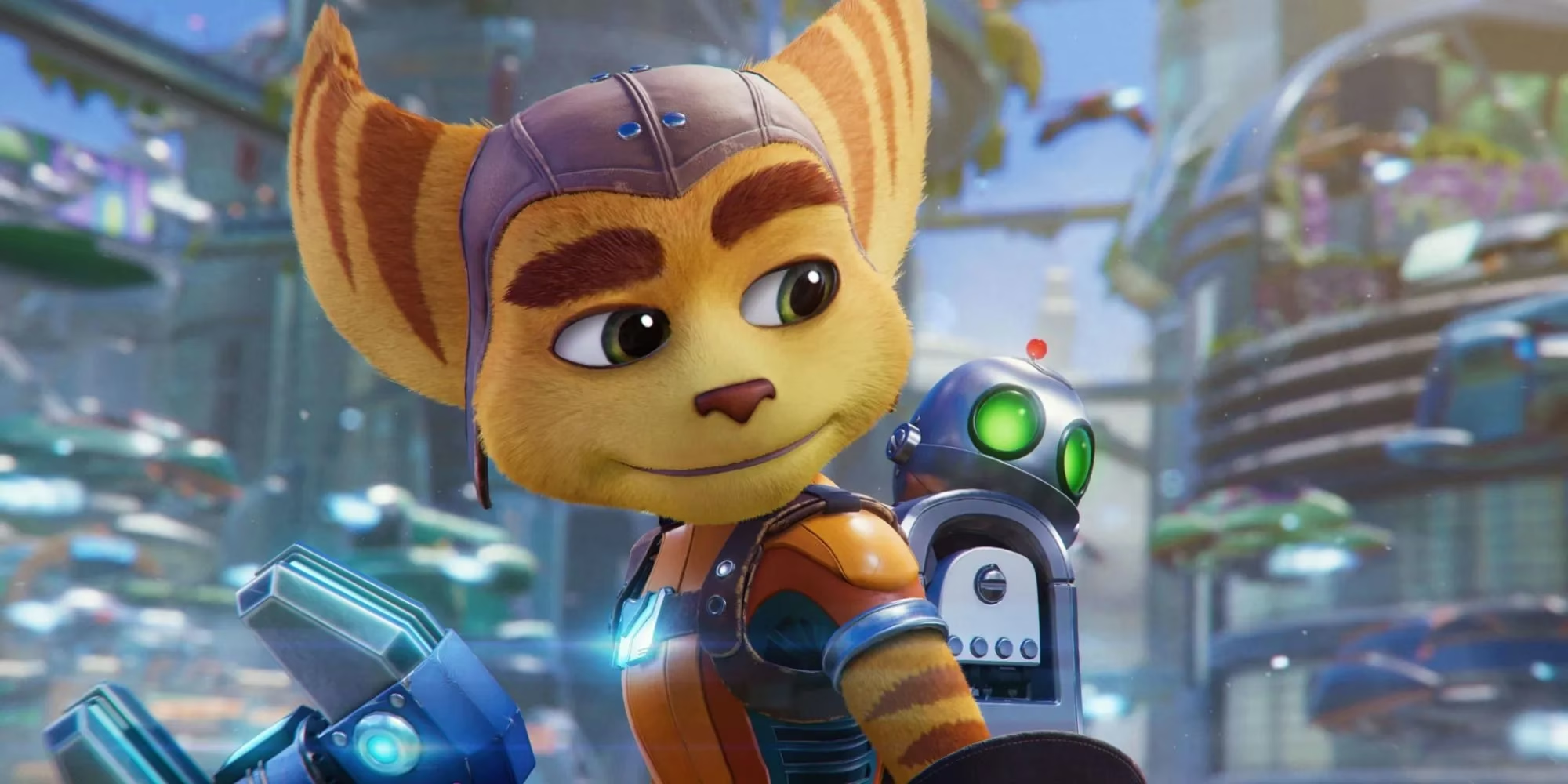
One of the most impressive technical showcases of the early ninth console generation was how Ratchet & Clank: Rift Apart weaponized the PlayStation 5’s custom SSD. The game turned near-instantaneous data streaming into a core gameplay pillar: portals could be torn open mid-combat, flinging the heroes across entirely different planets in the blink of an eye. This wasn't just a flashy loading-screen trick—it altered combat rhythm, enabled multi-layered puzzle solving, and created an exhilarating sense of dimensional flux. While PC gamers had long enjoyed the speed benefits of SSDs for boot times and texture streaming, console titles rarely built entire gameplay loops around that speed. Years later, open-world epics still rely on elevators, tight corridors, and slow traversal sequences to mask loading, while the dream of a truly seamless, portal-driven sandbox remains largely unexplored outside of a few experimental indie projects. The technology is now ubiquitous across every platform, yet designers continue to treat the SSD as little more than a faster hard drive, overlooking its potential to shatter spatial conventions.

Immersion is the holy grail of modern game design, and Red Dead Redemption 2 pursued it with a relentlessness that has rarely been matched. Rockstar’s Western magnum opus grants the player the simple yet transformative ability to greet, antagonize, or smooth-talk every single non-player character wandering its world. These interactions are not mission-critical—they are atmospheric fabric. A brief exchange with a passerby on a muddy Saint Denis street might reveal a hint of local gossip, a flash of gratitude, or a surge of hostility that escalates into an unscripted brawl. In an era where most role-playing games still compartmentalize dialogue into quest-givers and decorative crowds, the all-encompassing communication system of Red Dead Redemption 2 stands as a totem of interactive depth. A handful of immersive sims have toyed with systemic conversation, but the vast majority of 2026’s open-world releases continue to populate their environments with mute mannequins, missing out on a layer of authenticity that could turn a beautiful backdrop into a living, breathing society.
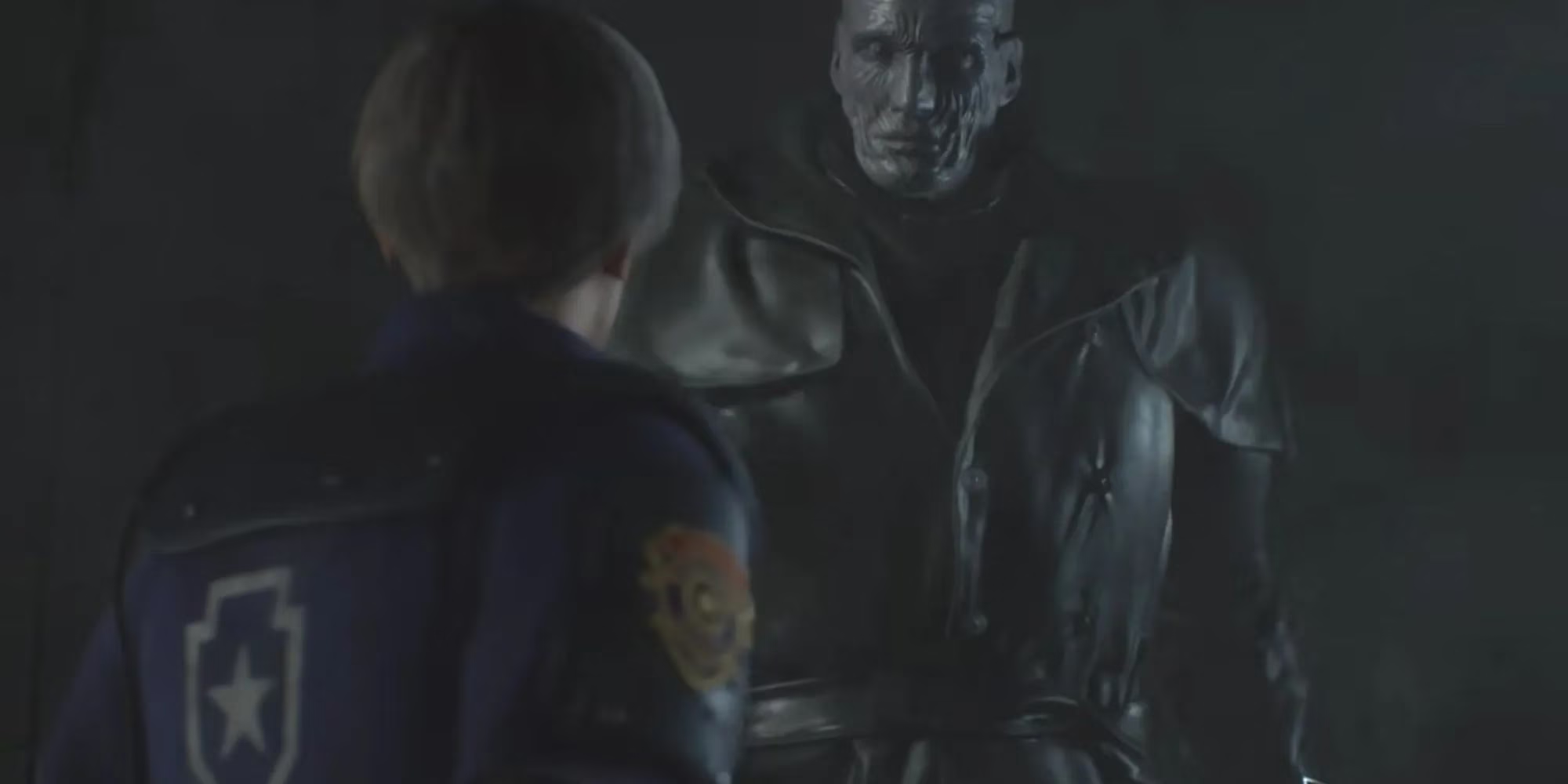
Few devices induce sustained dread like a stalker that never quits. The 2019 remake of Resident Evil 2 perfected this with Mr. X, a trench-coated juggernaut who pursued Leon and Claire through the labyrinthine police station with unnerving determination. His heavy footsteps became an audio cue that redefined the meaning of safety, turning every room into a potential trap. The idea was later amplified in Resident Evil 3’s Nemesis and explored with clinical precision in Alien: Isolation, where a single xenomorph learned and adapted based on player behavior. Outside of pure horror, the concept remains fertile ground. Even the classic Tomb Raider 2 offered a lighthearted variant with Winston the butler, who would creepily shadow Lara around her mansion. Yet persistent, intelligent stalkers are still anomalies. Action-adventure titles could deploy rival hunters who track the protagonist across an open world, and stealth genres could borrow the idea to create emergent predator-prey dynamics. By 2026, the closest we get are scripted chase sequences, not the unpredictable, systemic terror that makes a stalker truly memorable.

Possession mechanics have always been a niche delight, but Super Mario Odyssey elevated the concept into a universal tool with Cappy. The plumber’s spectral hat could latch onto everything from a lowly Goomba to a towering T-Rex, granting Mario their unique movement and attack patterns. This transforms each kingdom into a playground of identity-swapping possibilities, where solving a puzzle might require capturing a stack of Goombas or taking flight as a tropical bird. Kirby and the Forgotten Land followed a similar path with its Mouthful Mode, allowing the pink puffball to envelop cars, cones, and vending machines, each offering fresh ways to traverse and fight. Despite these successes, the design space remains sparsely populated. Most platformers cleave to static power-ups, while action-adventure games hesitate to give players the keys to every character’s abilities. In an industry ripe with superhero fantasies and imaginative creature design, the capture mechanic remains a glittering, underused jewel.
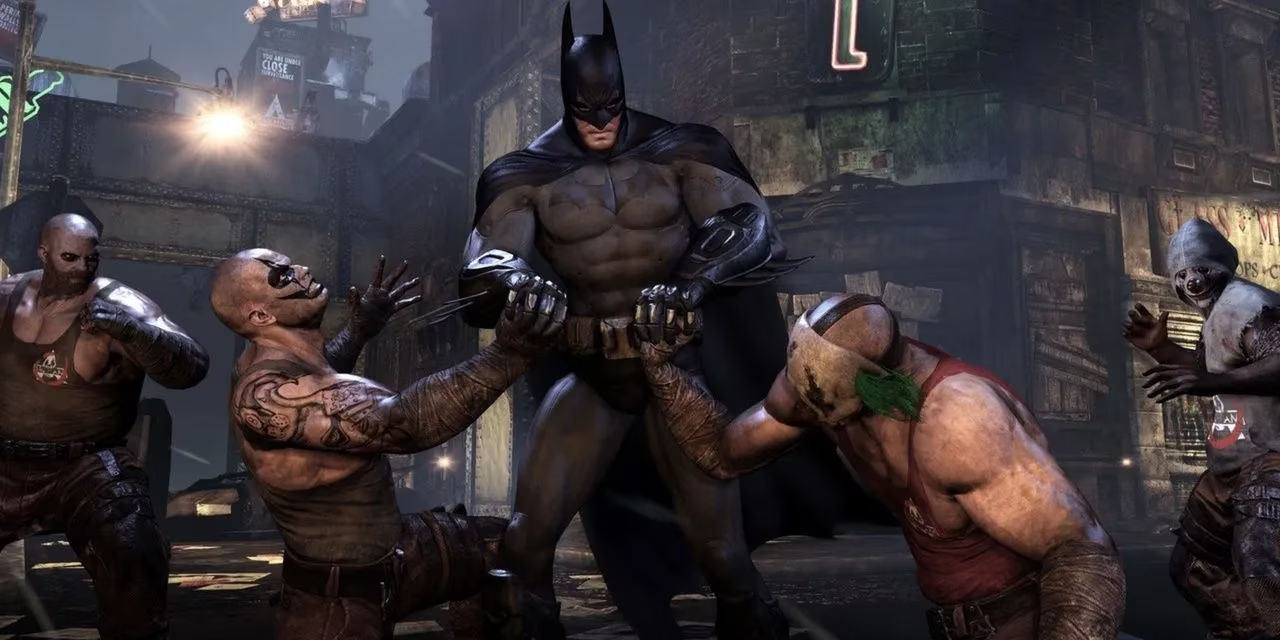
The Batman: Arkham series didn’t just deliver an excellent superhero narrative; it codified a new language of melee combat. Free-flow combat turned brawls into a rhythmic dance of strike, counter, and gadget-enhanced combos, rewarding timing and situational awareness over button-mashing. Its influence trickled into the sword-and-sorcery duels of Middle-earth: Shadow of Mordor, the acrobatic fisticuffs of Marvel’s Spider-Man, and even the grounded martial arts of Sifu. Yet considering how deeply satisfying and widely praised the system is, its footprint is surprisingly small. Dozens of third-person action games continue to rely on stamina bars and dodge rolls, ignoring the poetic simplicity of a system that makes every fight feel like a choreographed spectacle. Developers might worry about being labeled derivative, but a well-executed free-flow variant is always preferable to a clumsy original combat scheme.
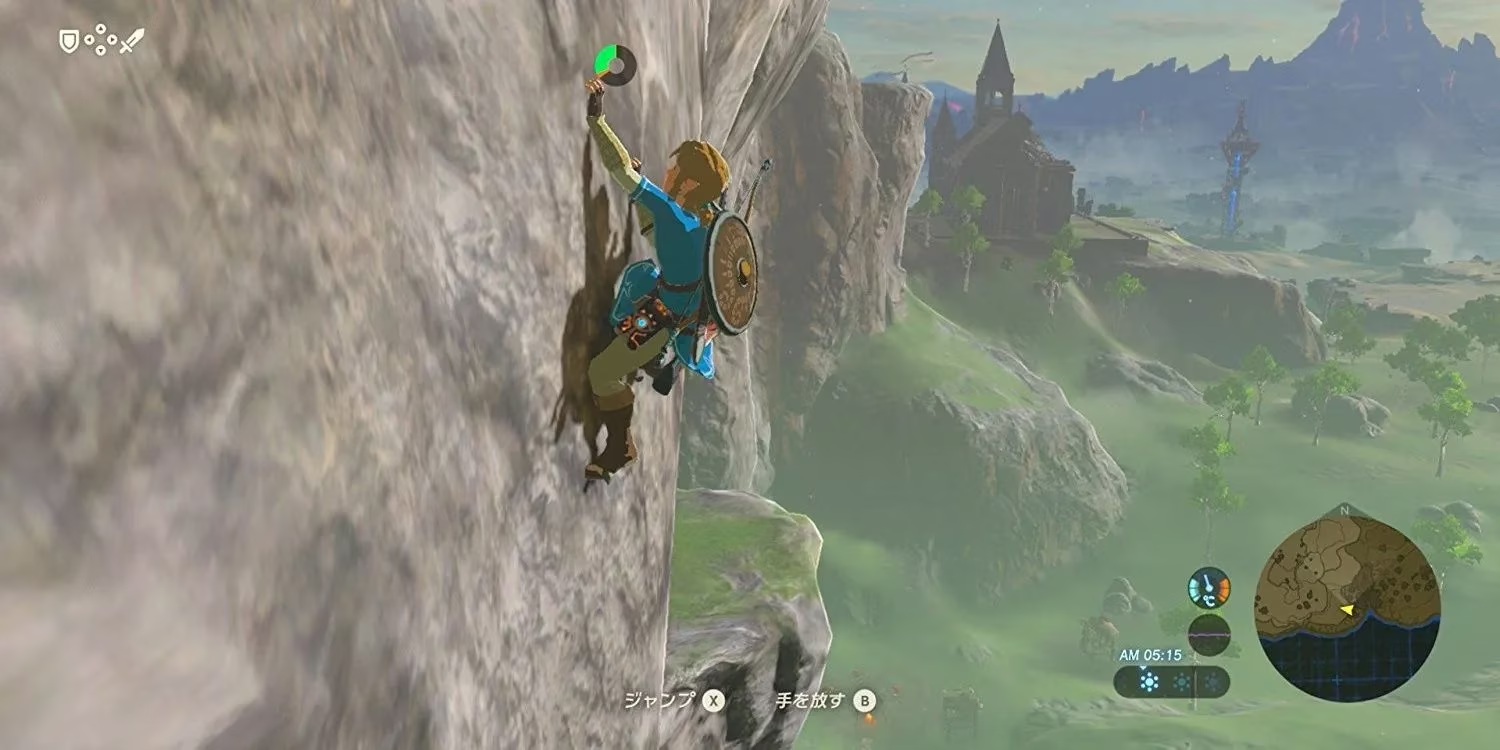
When The Legend of Zelda: Breath of the Wild declared that every surface was scalable, it didn’t just add a navigation option—it redefined the very contract between player and world. A distant mountain peak was no longer a painted backdrop; it was a destination with tangible rewards for those willing to manage their stamina. This philosophy of vertical freedom transformed exploration into a personal, emergent experience. Post-2022 open-world giants have flirted with more agile climbing, but most still gate movement behind predetermined handholds, stamina-chugging slopes that are clearly delineated in the level geometry. By 2026, the universal climb remains an outlier, partly because of the immense design challenge it poses: when a player can bypass curated paths, the entire game must be built to accommodate that freedom from the ground up. Still, the allure of a world where every cliff is an invitation rather than a wall remains one of interactive entertainment’s most tantalizing unfulfilled promises.
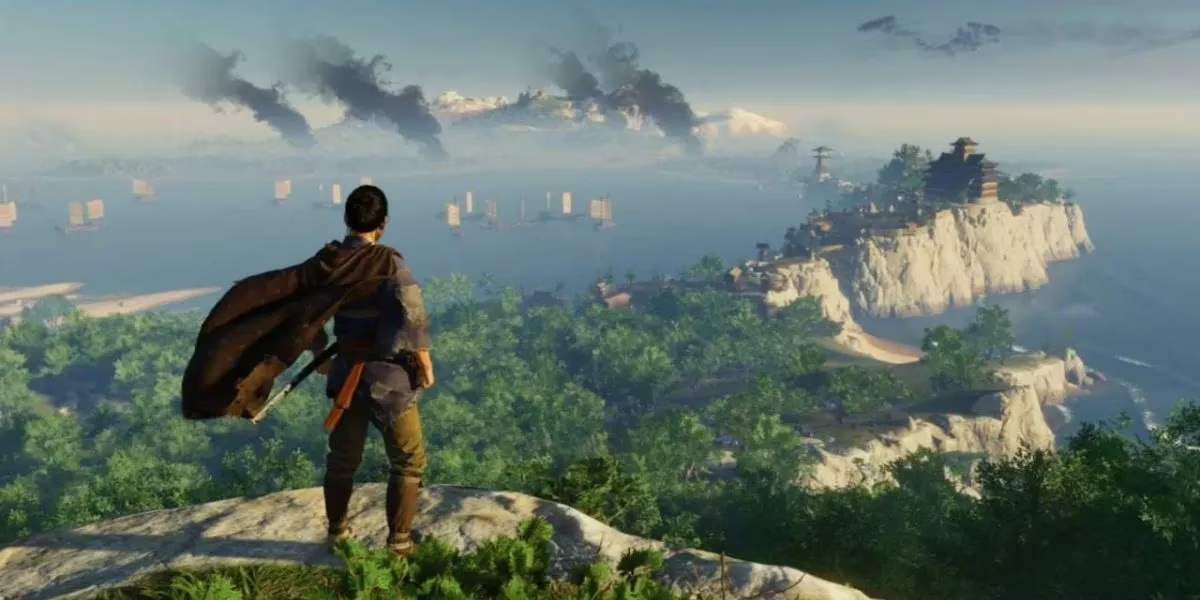
For too long, players have navigated fantastic worlds with their eyes glued to a corner minimap or a clutter of objective markers. Ghost of Tsushima broke that dependency with a stroke of genius: the Guiding Wind. A swipe of the touchpad summoned a gust of airborne leaves and swirling particles that pointed toward the next goal, while foxes and golden birds led Jin to hidden shrines and hot springs. This environmental design philosophy kept the player’s gaze on the vibrant fields and bamboo forests, not on abstract interface elements. The result is a deeply immersive, meditative experience that respects the land it depicts. Countless games that followed still litter their screens with dotted lines and glowing beacons, missing a golden opportunity to weave navigation into the aesthetic tapestry of the world itself. The technology to read player intent and provide nudge-based guidance has only improved, yet the industry’s addiction to icon-heavy HUDs remains stubbornly persistent.
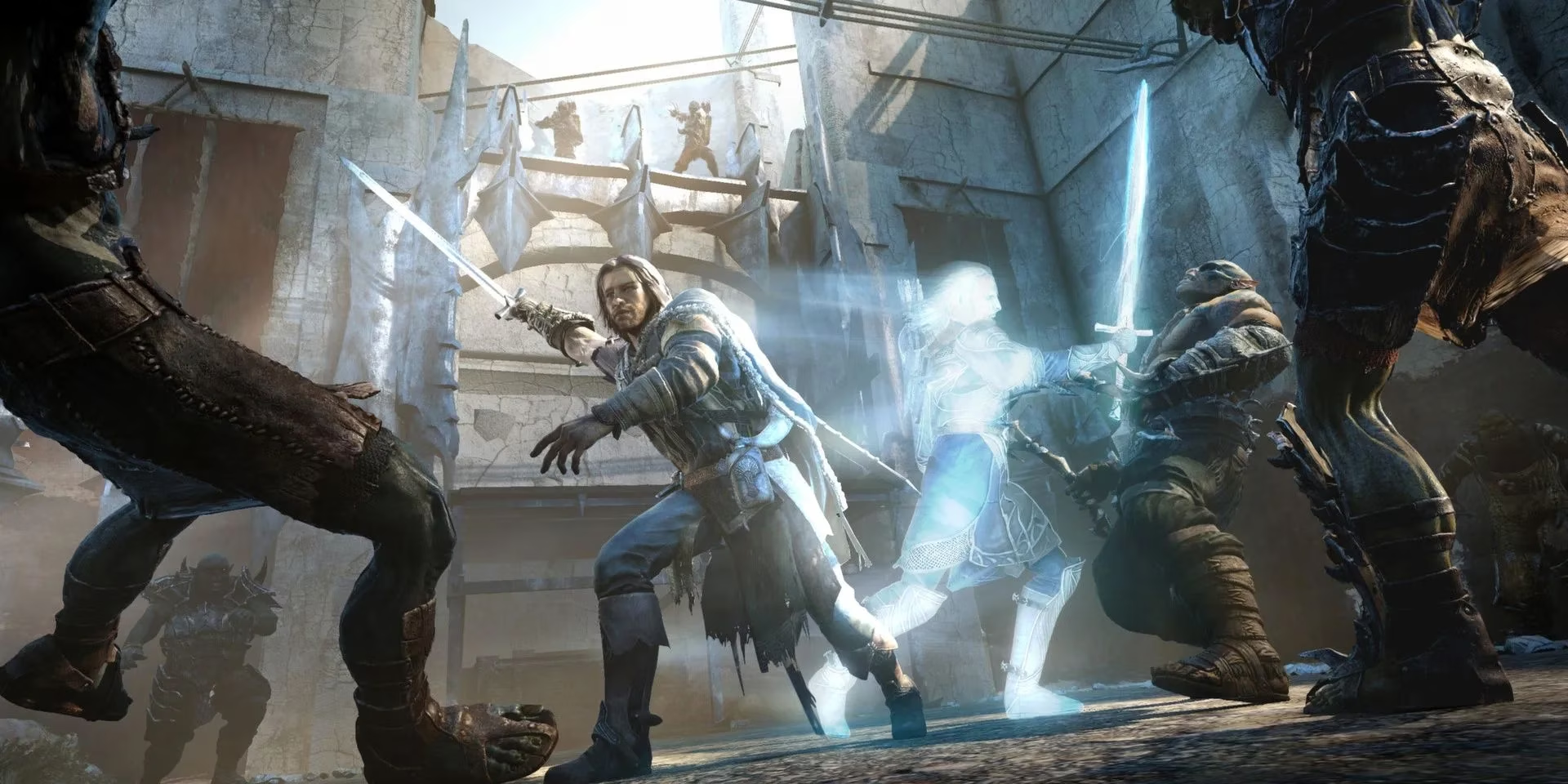
The greatest tragedy of underused mechanics is undoubtedly the Nemesis System from Middle-earth: Shadow of Mordor and its sequel. By procedurally generating orc hierarchies and letting each enemy remember every encounter, the system birthed personal rivalries that felt organic and urgent. A lowly grunt who survived a skirmish might return hours later with a metal plate over his eye, snarling about the scar you gave him. He could ambush you, rise through the ranks, and become an overarching nemesis for whom you’d develop a genuine loathing. The system was so innovative that Warner Bros. Interactive Entertainment secured a patent, effectively locking the concept behind legal walls for years. While other games have implemented basic reputation or retaliation mechanics, none have replicated the full, emergent storytelling power of the Nemesis System. As of 2026, the patent remains a formidable barrier, leaving one of the medium’s most celebrated designs to languish in a single fantasy franchise. It stands as a stark reminder that sometimes the greatest obstacle to progress isn’t a lack of creativity, but the legal frameworks built to protect it.
These mechanics represent just a fraction of the brilliant ideas that have flickered across gaming’s history without truly catching fire. Their obscurity stems from a mix of technological conservatism, risk-averse development cycles, and the occasional proprietary lock. Yet every year brings new hardware, new ambitions, and a fresh generation of developers who grew up marveling at these very features. Perhaps the next few years will finally see the Guiding Wind blow across a space opera, a stalker enemy woven into a historical epic, or a capture mechanic turned into the core of a superhero adventure. Until then, these features remain cherished memories of what could have been—a quiet invitation for the industry to stop merely applauding ingenuity and start copying it.