My Tangled Red Dead Upgrade Nightmare
Explore the clash between gaming passion and corporate AI support, highlighting Rockstar's upgrade controversy and the rise of automated customer service.
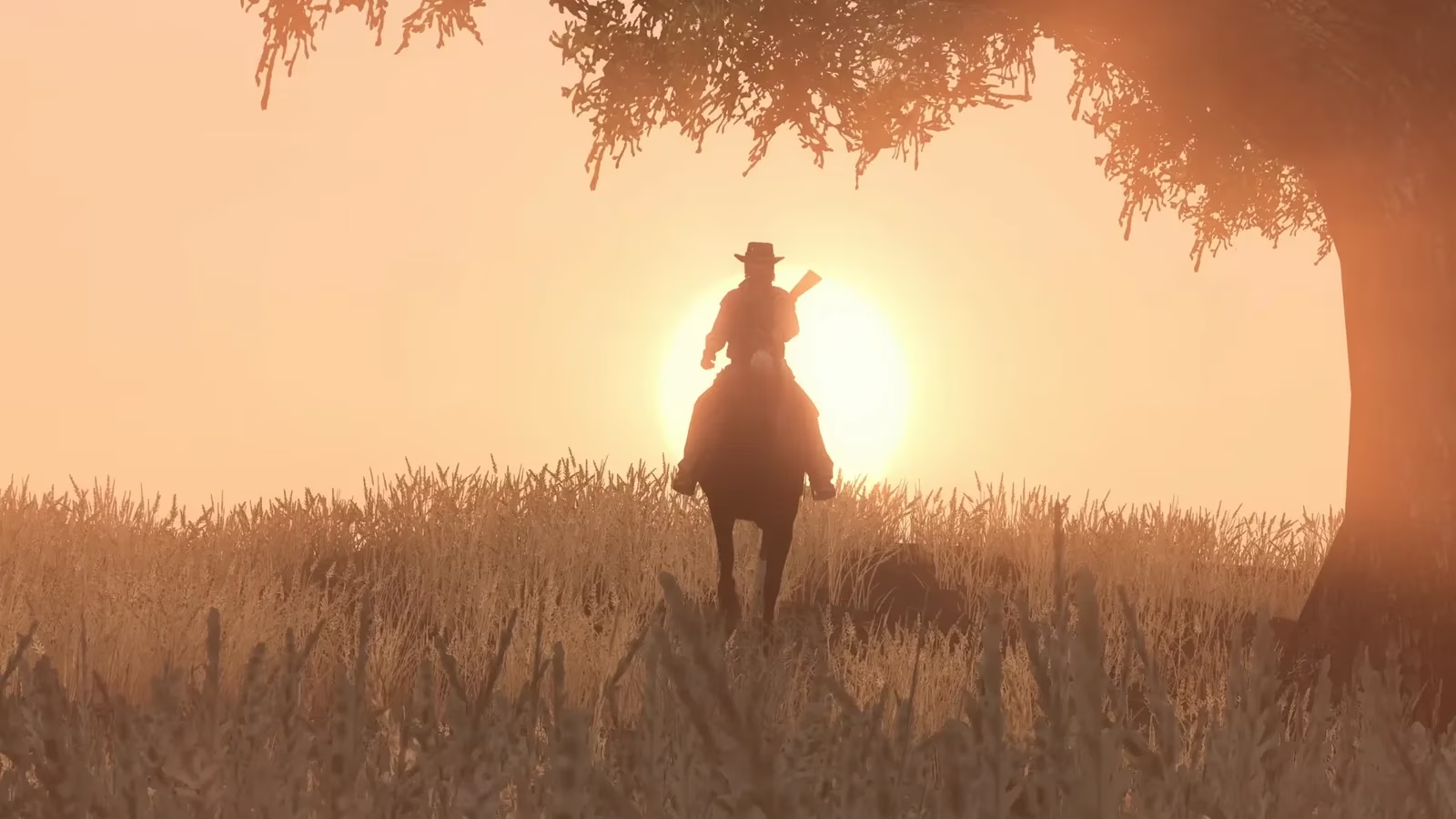
I remember the adrenaline rush last month when Rockstar announced the free current-gen upgrade for Red Dead Redemption. As a die-hard fan who’d poured hundreds of hours into the dusty plains of the Xbox 360 backward-compatible version, it felt like Christmas came early. Rockstar’s promise was clear: owners like me would get a digital upgrade at zero cost. No strings attached—or so I thought. When launch day finally arrived, I booted my Xbox Series X with the enthusiasm of a kid unwrapping a mystery gift, only to find a $24.99 price tag glaring back at me like a rattlesnake in tall grass. My excitement evaporated faster than a puddle in the Mojave desert. 😤
Frantically, I scoured the Red Dead Redemption subreddit and realized I wasn’t alone. Dozens of Xbox players were trapped in this digital purgatory—promised a free upgrade but handed a bill instead. One user, Frequent_Health_8113, shared their Kafkaesque exchange with Rockstar Support. The response they got was baffling: "Backward-compatible titles do not automatically upgrade... unless the publisher offers a free upgrade program." Let that sink in. Rockstar, the publisher, was robotically explaining its own policy in third person, like a self-referential ouroboros swallowing its tail. The phrasing felt unnatural, almost alien—like a GPS navigation system reciting Shakespeare. I couldn’t shake the eerie suspicion that I was chatting with an AI, not a human.
This whole debacle exposed a chilling trend in gaming. Companies are quietly replacing flesh-and-blood staff with AI customer service bots, turning support into a ghost town. Consider these recent examples:
-
🎮 Epic Games using chatbots for refund requests
-
🕹️ EA deploying AI for basic troubleshooting
-
💻 Microsoft integrating Copilot into Xbox Help
It’s like watching marionettes perform a tragedy while the puppeteers hide backstage. Rockstar’s glitch feels emblematic of a larger collapse—human interaction crumbling like sandstone under algorithmic erosion. The fight against this feels as uneven as bringing a knife to a drone strike.
Now, I’m left wondering: When corporations treat players like data points in a spreadsheet, does gaming lose its soul?