My Journey Through Open Worlds: Where NPCs Are More Than Just Pixels
Discover how immersive NPCs and living worlds in games like Grand Theft Auto 5 and Red Dead Redemption 2 transform digital landscapes into vibrant, believable communities.
You know, as a humble gamer in 2026, I’ve spent more time wandering digital landscapes than I care to admit. And let me tell you, what really makes or breaks these vast playgrounds isn’t just the size of the map or the number of side quests—it’s the people. No, not the other players, but the Non-Player Characters, the NPCs. They’re the soul of the place, and when they feel real, the whole world just… clicks. It’s the difference between feeling like a tourist in a theme park and a resident in a living, breathing community. So, let me take you on a little tour of some worlds that got it right, where the background characters stopped being background noise and started having lives of their own.
Rockstar's Living, Breathing Playgrounds
Oh, Rockstar. They’re the masters, the grand architects of open-world chaos. I remember when Grand Theft Auto 5 dropped, and the hype was, well, let's just say it was louder than a jet engine at a library. And for good reason! They promised to take their already legendary formula and crank it up to eleven. And boy, did they deliver. Los Santos wasn't just a city; it was a character. The story, the gameplay, the sheer detail in every corner—it was in a league of its own. But what really got me was the people. The NPCs felt… present. They weren't just cardboard cutouts waiting for me to run them over (though, admittedly, I did that a lot). They had routines, reactions. Controlling three protagonists made the world feel interconnected in a way I hadn't seen before. It was like Rockstar whispered to the game, "Make it breathe," and it did.
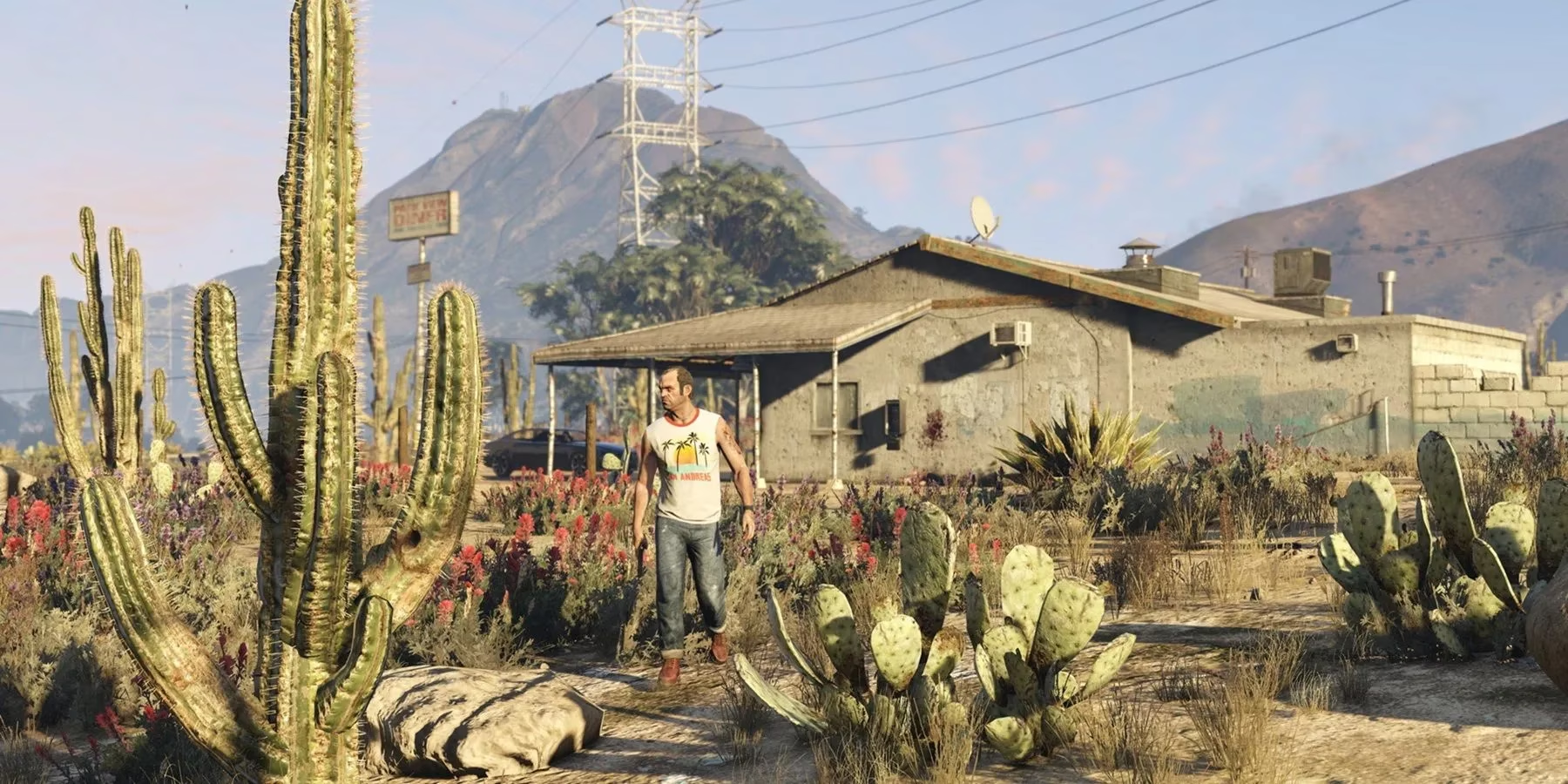
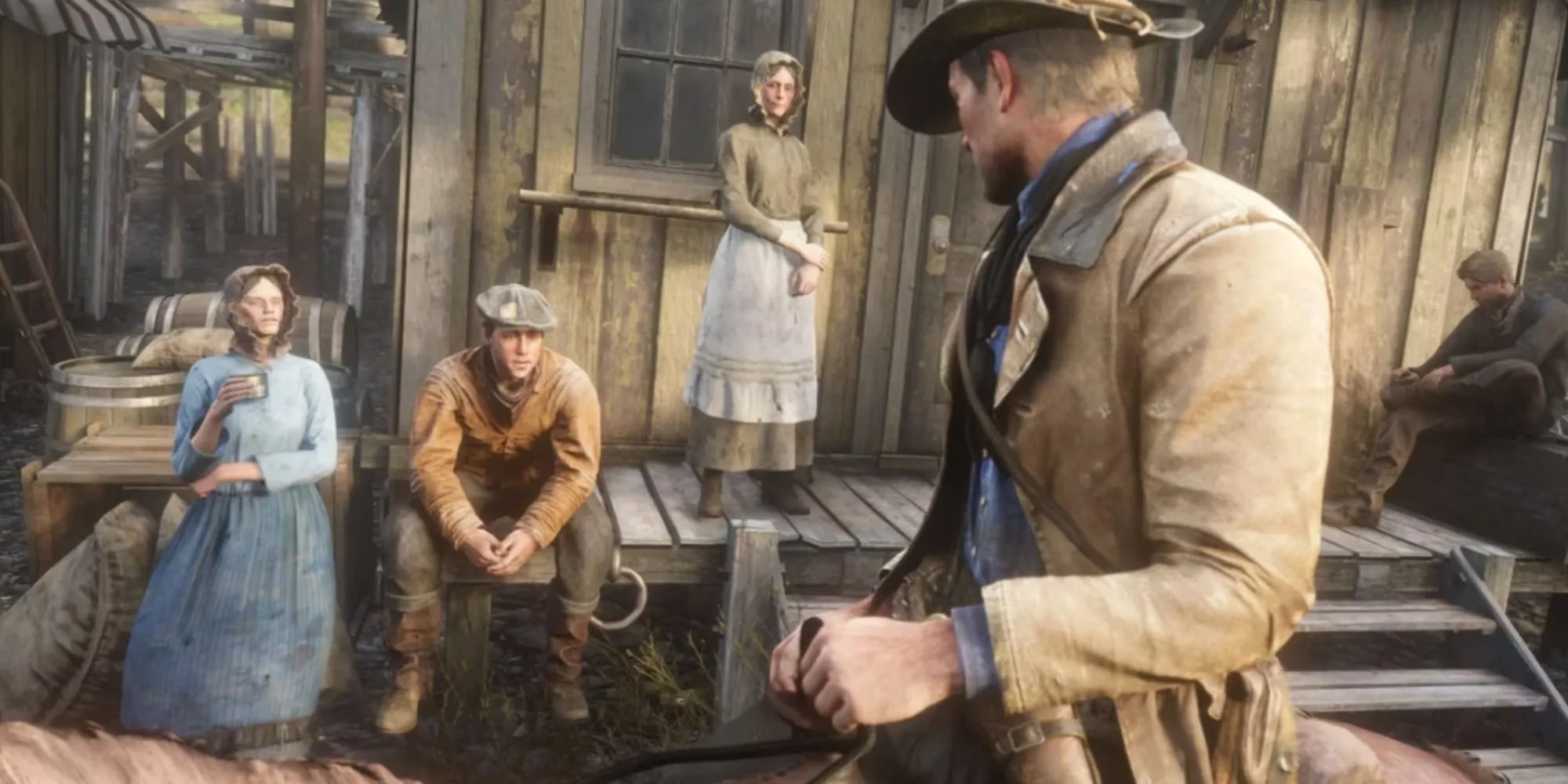
But then, just when I thought they’d peaked, they dropped Red Dead Redemption 2. My goodness. If GTA V was a step forward, this was a quantum leap into another dimension. The story of Arthur Morgan is one for the ages, a slow, heartbreaking tragedy. But the world… the world is what steals the show. The NPCs in this game are something else. They remember you. They react to your clothes, your hygiene (or lack thereof), your actions in a previous town. I once had a shopkeeper refuse to serve me because I’d been rude to him a week prior in-game time! It’s these tiny, unique interactions that build a tapestry of believability. Rockstar didn't just create a world; they simulated a slice of life at the turn of the 20th century, warts, mud, and glorious sunsets all included.
The Underrated Gems & The Rule-Breakers
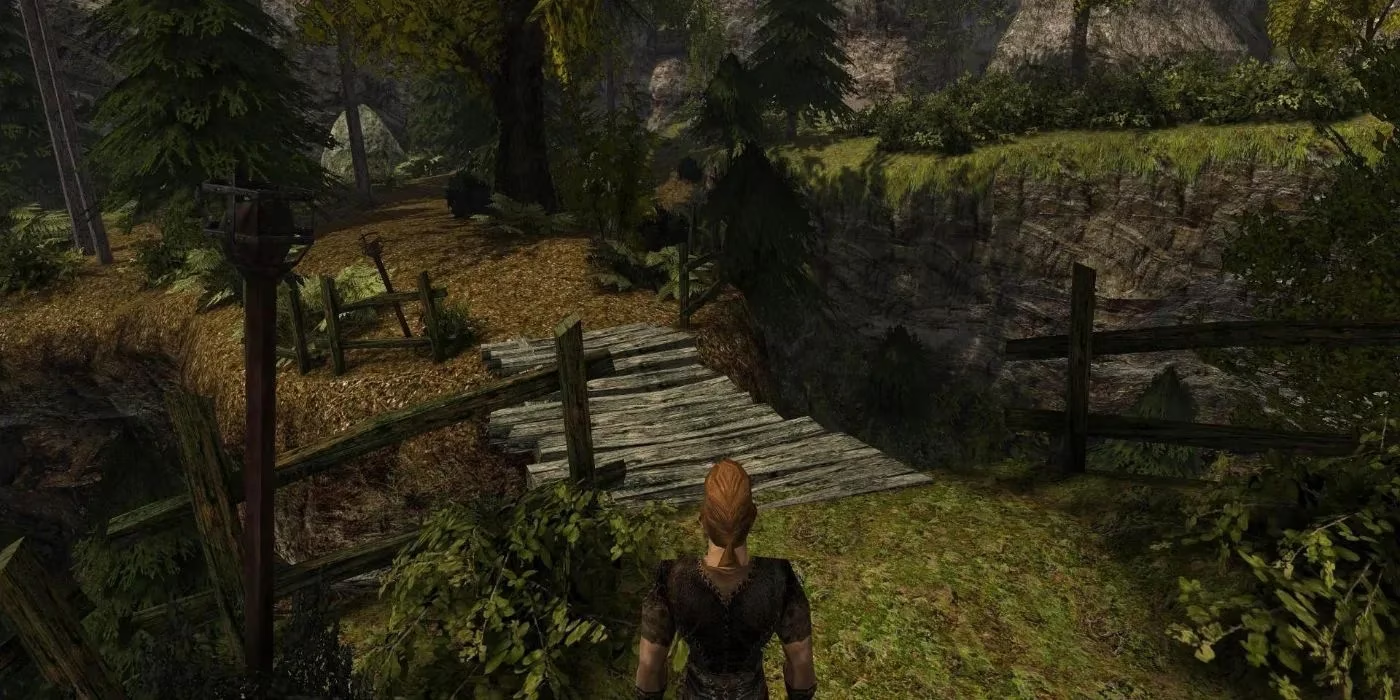
Now, let's rewind the clock a bit and talk about an old friend: Gothic. This game is like that indie band you discovered before they were cool—underrated, a bit janky, but absolutely brilliant where it counts. You start as a nobody, a prisoner dumped in a mining colony. And here’s the kicker: to get better at anything, you don't just dump points into a skill tree. You have to find actual characters in the world—trainers, blacksmiths, mages—and convince them to teach you. It forces you to engage with the world and its inhabitants on a deeply personal level.
The NPCs had schedules. They’d go to work, cook meals, hang out at the tavern, and head to bed. The world didn't revolve around me; it lived alongside me. It made the colony feel like a real, functioning (if hostile) society. Fleshing out the AI like that back then was a bold move, and it paid off by creating a sense of immersion that many modern games still struggle to match.
Then there’s Kenshi. Oh, Kenshi. If other games make you feel like a hero, Kenshi makes you feel like a speck of dust in a very, very angry desert. You are profoundly, hilariously unremarkable at the start. There’s literally no difference between you and any random NPC wandering by. And that’s the beauty of it! The NPCs aren't just set dressing; they have defined tasks, factions, and behaviors. They’ll farm, they’ll patrol, they’ll trade, and they’ll absolutely wreck you if you look at them funny. The world of Kenshi is brutal, unforgiving, and feels alive precisely because you are not its center. You’re just another creature trying to survive in its ecosystem. It’s a humbling, and utterly unique, experience.
The Ambitious Experiment: Recruiting a City
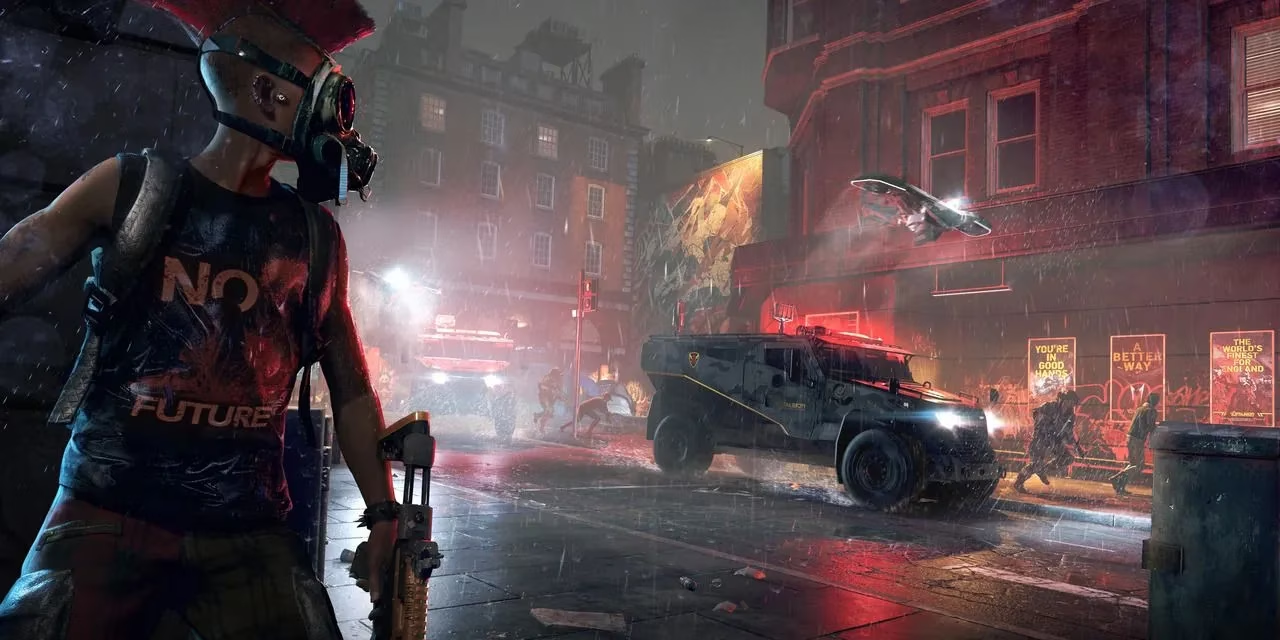
And we can’t forget Watch Dogs: Legion. Now, I’ll be honest—when it came out, it got a bit of a mixed reception. The story was… fine. The world felt a bit generic at times. But one idea they had was absolutely bonkers in the best way possible: you can recruit literally any NPC to join your hacker collective, DedSec.
This meant the developers had to make every single person in a futuristic London feel unique. And you know what? They kinda pulled it off! Every NPC has a backstory, a personality, likes, dislikes, and a daily routine. Your actions in the world affect how they see you. Want to recruit that tough-looking construction worker? You might have to do a favor for her friend first, or maybe not get caught committing crimes in her neighborhood. It turned the entire city into a puzzle of social dynamics. The act of building your team was the game, and it made you look at every passerby not as an extra, but as a potential ally with a story to tell.
What Makes a World Feel Real?
So, after all this virtual tourism, what’s the secret sauce? It’s not just about fancy graphics or a big map. It’s about giving the digital inhabitants a semblance of life. Here’s what these masters of the craft teach us:
-
Routines & Schedules: NPCs that eat, sleep, work, and play make a world feel cyclical and independent.
-
Reactivity & Memory: Characters that remember your actions create a sense of consequence and connection.
-
Purpose Beyond the Player: NPCs with their own goals (even simple ones) stop being quest dispensers and start being parts of a larger machine.
-
Interconnected Systems: When an NPC's job affects the economy, or their faction loyalty affects dialogue, the world feels systemic and deep.
| Game | NPC Magic Trick | Why It Works |
|---|---|---|
| Red Dead Redemption 2 | Deep systemic reactivity & memory | Creates unparalleled narrative immersion and personal stories. |
| Gothic | NPCs as skill trainers with schedules | Forces player engagement and makes the world feel autonomous. |
| Kenshi | Player character is equal to NPCs | Fosters a brutal, believable ecosystem where you are not the hero. |
| Watch Dogs: Legion | "Recruit Anyone" mechanic | Turns the entire population into unique characters with agency. |
Playing these games in 2026, the lessons are clearer than ever. We’ve moved past worlds that are just pretty backdrops. We crave worlds that feel lived-in. We want to be part of a story, not the only story being told. When an NPC goes about their day, oblivious to my epic destiny, it doesn’t break my immersion—it completes it. It tells me that this world existed before I hit 'New Game' and will keep spinning long after I'm gone. And that, my friends, is the true magic of an open world. It’s the quiet moments, the unscripted encounters, the feeling that you’re sharing a space with others… even if they are, ultimately, just very clever lines of code. Here's to the developers who do the hard work to make those pixels feel like people. The rest of us are just living in their worlds, and honestly, I wouldn't have it any other way. 🤠✨