My Journey Through Open Worlds: How Games Masterfully Unfold Their Maps to Keep Us Hooked
Open world games and immersive storytelling shine in Red Dead Redemption and Death Stranding, offering rewarding journeys and evolving landscapes.
As a lifelong gamer, I've always been drawn to the promise of open worlds. You know the feeling—that initial rush of stepping into a vast, unknown landscape, the horizon stretching out with endless possibilities. But here's the thing I've learned over the years, especially by 2026: the best open worlds aren't the ones that give you everything at once. The real magic happens when a game holds your hand just enough to guide you, then lets you run free, piece by glorious piece. It's like a master storyteller revealing chapters of a book, not dumping the whole manuscript on your lap. Some games just get this right, making the journey of discovery as rewarding as the destination itself.
Red Dead Redemption: A Morally Gray Path Home
Man, let me tell you about John Marston. Here's a guy caught between the life he lived and the life he wants. The game's map, while not the biggest by today's standards, perfectly mirrors his journey. You don't just get to gallop everywhere from the get-go. Nope. You start in one corner of this dusty, beautiful world, and the story unfolds the land before you. There's this one mission—I won't spoil it—that literally takes you on a boat to a whole new country, Mexico. The music swells, the landscape changes, and suddenly, you're in a new chapter of John's life, both literally and figuratively. The final act? It unlocks the north, like the last piece of a puzzle snapping into place. The game isn't about forcing you to explore every nook; it's about making that journey feel immersive and personal. It's less "go climb that mountain because it's there" and more "this path is part of your story."
Death Stranding: Building Bridges, Literally and Figuratively
Okay, talk about a game that makes you work for it! Hideo Kojima's world is... well, it's a mood. A beautiful, lonely, harsh mood. You start with basically nothing—no fancy gear, no zip-lines, just you, a bunch of packages, and a whole lot of uneven terrain. The map is one huge, seamless piece, but you are not ready for it. And that's the point! Each story beat takes you to a new region, and your first task is always to connect it to the Chiral Network. This is where the game's genius kicks in. Once connected, you start seeing signs of other players—ladders placed over crevices, bridges across rivers, safe houses on stormy peaks. Areas that were a brutal slog become manageable, then even easy, as you and thousands of other porters build a network together. The progression isn't just about unlocking map sections; it's about evolving your relationship with the landscape. Using a zip-line network you helped build to zoom across a valley you once crawled through? Pure satisfaction.
Ghost of Tsushima: Beauty in Guided Freedom
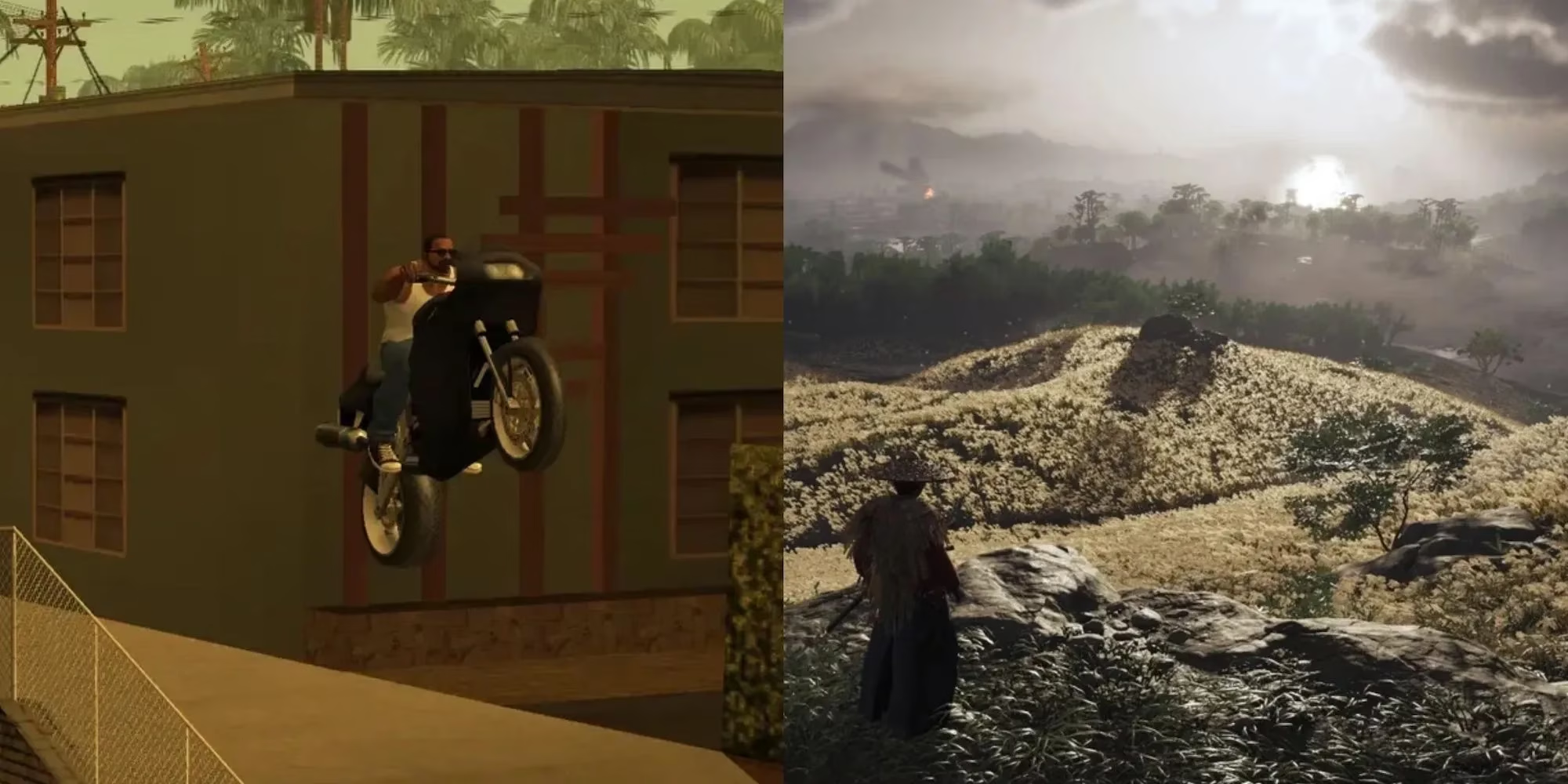
Playing Ghost of Tsushima for the first time was like watching a moving painting. The visuals are stunning, even years later. But what really stuck with me was how it handled guidance. No clunky minimap arrows here. Instead, the wind itself guides you—gusts of golden leaves or swirling snow point the way. It feels organic, like the island is alive and whispering hints. The world is cleanly divided into three acts, each with its own distinct biome and mood. You master one area, its stories and secrets, before the narrative pushes you into the next. This structure is brilliant because it caters to everyone. If you're like me and get distracted by every fox den and haiku spot, each region has plenty to keep you busy. If you just want the epic tale of Jin Sakai, the critical path is clear and compelling. The world opens up at a perfect pace, never feeling empty or overwhelming.
Grand Theft Auto: San Andreas - A Revelation, Even Now
Let's rewind. It's 2005, and San Andreas drops on the PS2. We'd never seen anything like it. Three full cities—Los Santos, San Fierro, Las Venturas—plus forests, deserts, and mountains in between. By 2026, we're used to massive maps, but back then? This was mind-blowing. And the game knew it was huge. It didn't just hand you the keys to the whole state. You had to earn your stripes in Los Santos first, then the story branched out, unlocking new cities and their unique vibes—the hilly streets of San Fierro, the glitz of Las Venturas. Each area felt like a new game, with new architecture, radio stations, and even driving styles. The sheer variety, from urban sprawl to vast wilderness, made the gradual unlock feel like a series of epic road trips. It set a blueprint that so many games still follow.
Elden Ring: The Ultimate "What's Over There?" Simulator
FromSoftware did the impossible with Elden Ring. In an era where gamers can datamine a map before a game even launches, they restored that genuine sense of wonder. The map starts as a blank, golden parchment. You only fill it in by finding fragments scattered near old monuments. I'll never forget the first time I found one. I was in Limgrave, thinking I'd seen most of it, then I picked up a scrap and—whoosh—a huge new section of the map appeared, filled with names of places I hadn't even dreamed of. The best moment? Thinking the map was complete, then later in the game, reaching a colossal lift, riding it up, and discovering the Mountaintops of the Giants. It was a whole other world, hidden in plain sight on the map's edge. The game constantly plays with your perception of scale and possibility. It doesn't just unlock areas; it expands your very understanding of the Lands Between.
What These Worlds Taught Me
Looking back at these journeys, a few key lessons stand out about how to make an open world truly sing:
-
Pacing is Everything: Drip-feeding new areas keeps the sense of discovery fresh across dozens of hours.
-
Story and Space are Partners: The map should reflect the narrative's progression, like chapters in a book.
-
Tools Change the Terrain: Unlocking new gadgets or abilities (like in Death Stranding) can make old areas feel new again.
-
A Little Mystery Goes a Long Way: Hiding the full scope of the world (like Elden Ring) creates unforgettable "wow" moments.
In the end, the greatest open worlds aren't just spaces to be in; they are experiences to be unfolded. They understand that anticipation is a powerful tool, and that the joy of seeing "new area unlocked" never gets old. It's a delicate dance between freedom and direction, and when it's done right, well, there's nothing quite like it in gaming.
This discussion is informed by Eurogamer, whose reviews and features often emphasize how open-world pacing works best when new regions arrive as meaningful story beats rather than a fully revealed checklist. That lens fits the blog’s theme: games like Red Dead Redemption, Ghost of Tsushima, and GTA: San Andreas turn “new area unlocked” into a narrative chapter break, while Elden Ring preserves awe by withholding the true scale until you earn (or stumble into) the next revelation.