My Immersive Journey Through Realism in Modern Video Games
Discover the captivating realism of 2025's video games, offering immersive worlds, emotional stories, and stunning landscapes that redefine digital escapism.
As a professional gamer in 2025, I've found that the most profound escapes from our fast-paced reality come from video games that mirror the real world with astonishing fidelity. These aren't just digital diversions; they're portals to other lives, places, and experiences, allowing me to roam vast landscapes, face survival challenges, and soak in atmospheres so rich, they feel like stepping into a photograph. While I wouldn't trade my cozy apartment for the untamed wilds or zombie-infested towns, these games transport me there, weaving stories that linger long after I've turned off the console. Over the years, I've lost countless hours exploring hyper-realistic worlds—some serene, others brutal—and each one has left an indelible mark, reminding me that gaming can be as evocative as a vivid dream.

Take my journey through Red Dead Redemption 2, for instance. It's not just a game; it's a sprawling canvas of the American frontier that I've wandered like an aimless poet, hunting bears, fishing in tranquil rivers, and observing NPCs go about their daily lives. Ignoring the main story, I've spent hours simply riding through valleys where the wind whispers secrets through the pines, making the world feel alive in a way that rivals the best nature documentaries. My friends often gather around, mesmerized by its beauty—even if they don't grasp the plot, they're drawn to its authenticity. The only absurdity? Slowing time to snipe pigeons, which feels as jarring as a hiccup in a symphony.
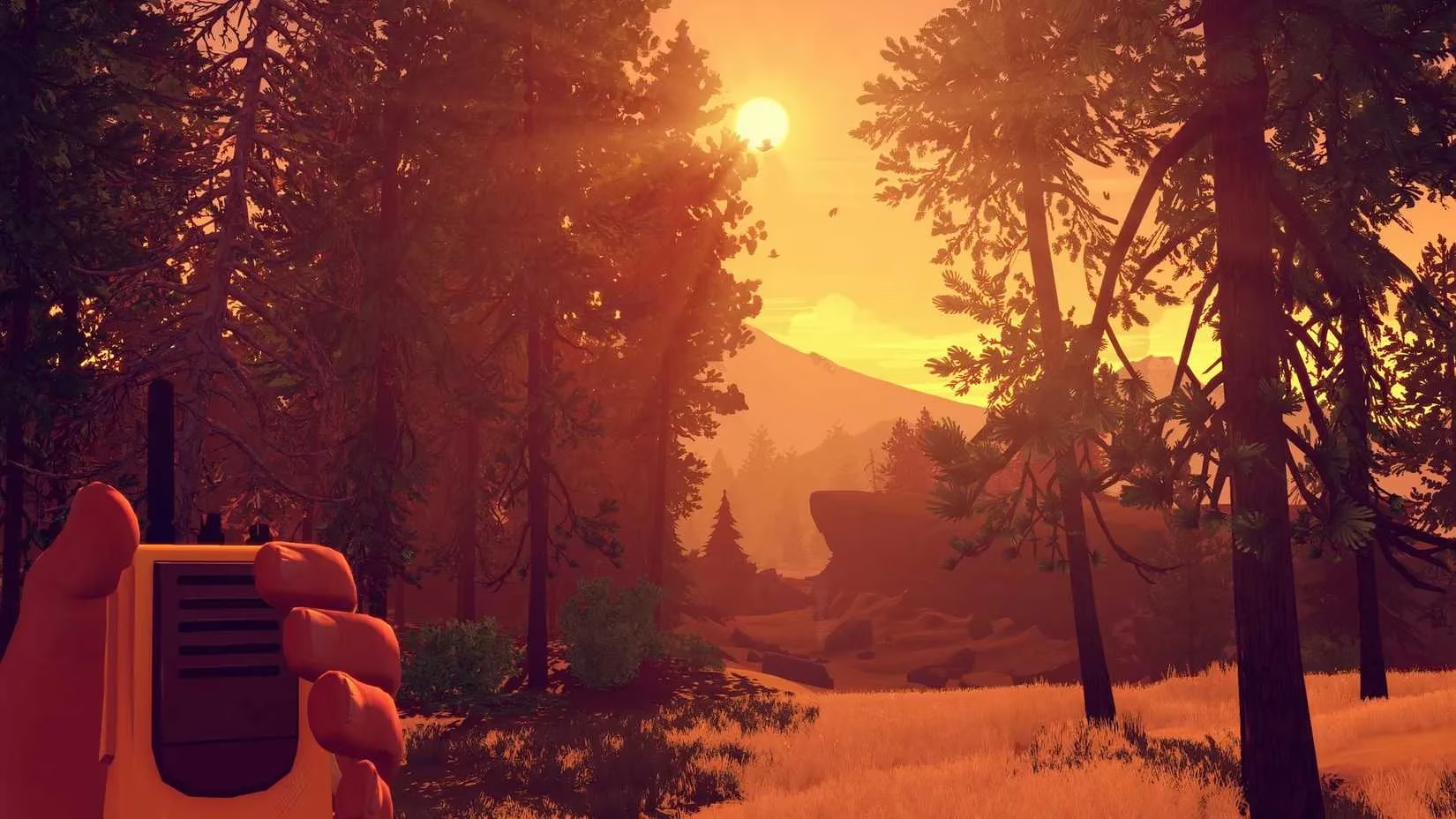
Moving to something more introspective, Firewatch remains etched in my memory. Back when I first explored its lush forests, the game unfolded like a slow-burn novel, where every rustle of leaves and crackle of the radio deepened the narrative. It's a 'walking simulator' in name, but in practice, it's an emotional hike through grief and solitude. These days, I scroll through TikTok videos of real fire spotters, but nothing compares to that initial immersion. The game’s world wraps around you like a forgotten lullaby, soothing yet haunting.
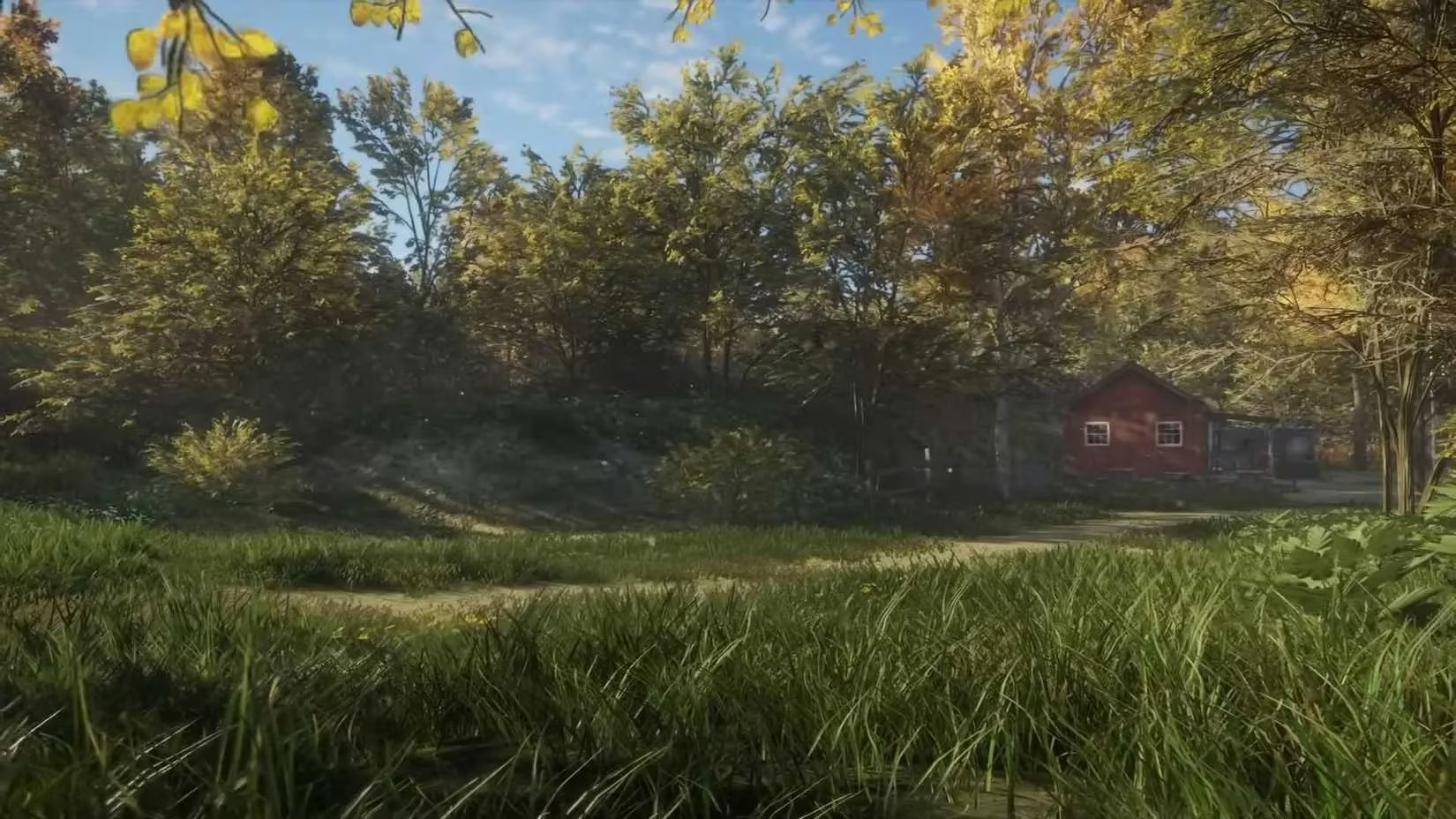
Then there's The Hunter: Call of the Wild, which often feels like more than a game—it's a meditation. Tracking animals through dense undergrowth, with every detail of the landscape rendered in painstaking clarity, leaves me breathless, as if I've just wandered through an actual forest. Life in this virtual wilderness moves at a snail's pace, demanding patience as I stalk prey. It's incredibly relaxing, except for the poor turkeys I've blasted from afar with an overkill rifle. Stalking through those woods feels like navigating a vast, living tapestry where every thread is a potential encounter.
For sheer visceral thrill, SnowRunner stands out. Playing it with my best mate, we were floored by how immersive it was—driving trucks laden with logs through blizzards and mountainous terrain. The physics are so tactile; every scrape of the wheel or bump in the road simulates real driving with uncanny precision. It's the closest I'll ever get to such a treacherous adventure, and honestly, that's fine by me. Maneuvering those behemoths through storms is like wrestling a thunderstorm into submission, each turn a dance with danger.
Green Hell, on the other hand, is pure misery—but in the best way. As an ultra-realistic jungle survival simulator set in the Amazon, it's brutally challenging, forcing me to figure out how to stay alive amidst snakes, diseases, and starvation. Yet, once I mastered it, the game became rewarding, transforming the gorgeous yet deadly environments into a playground of discovery. Surviving there alone feels like being trapped in a green labyrinth where every corner hides both wonder and peril. It's a testament to how games can push us to our limits.

Flying high above, Microsoft Flight Simulator offers a different kind of escape. As a colorblind gamer, I can't pilot a real plane, but this sim gets me astonishingly close. Soaring over English countryside in a twin-engine aircraft, I imagined myself sitting at my desk far below, marveling at how realistic it felt. Even without a fancy rig, hopping in from my sofa delivers a brilliant experience. The vistas unfold like pages from an atlas come to life, making me feel like a modern-day explorer.
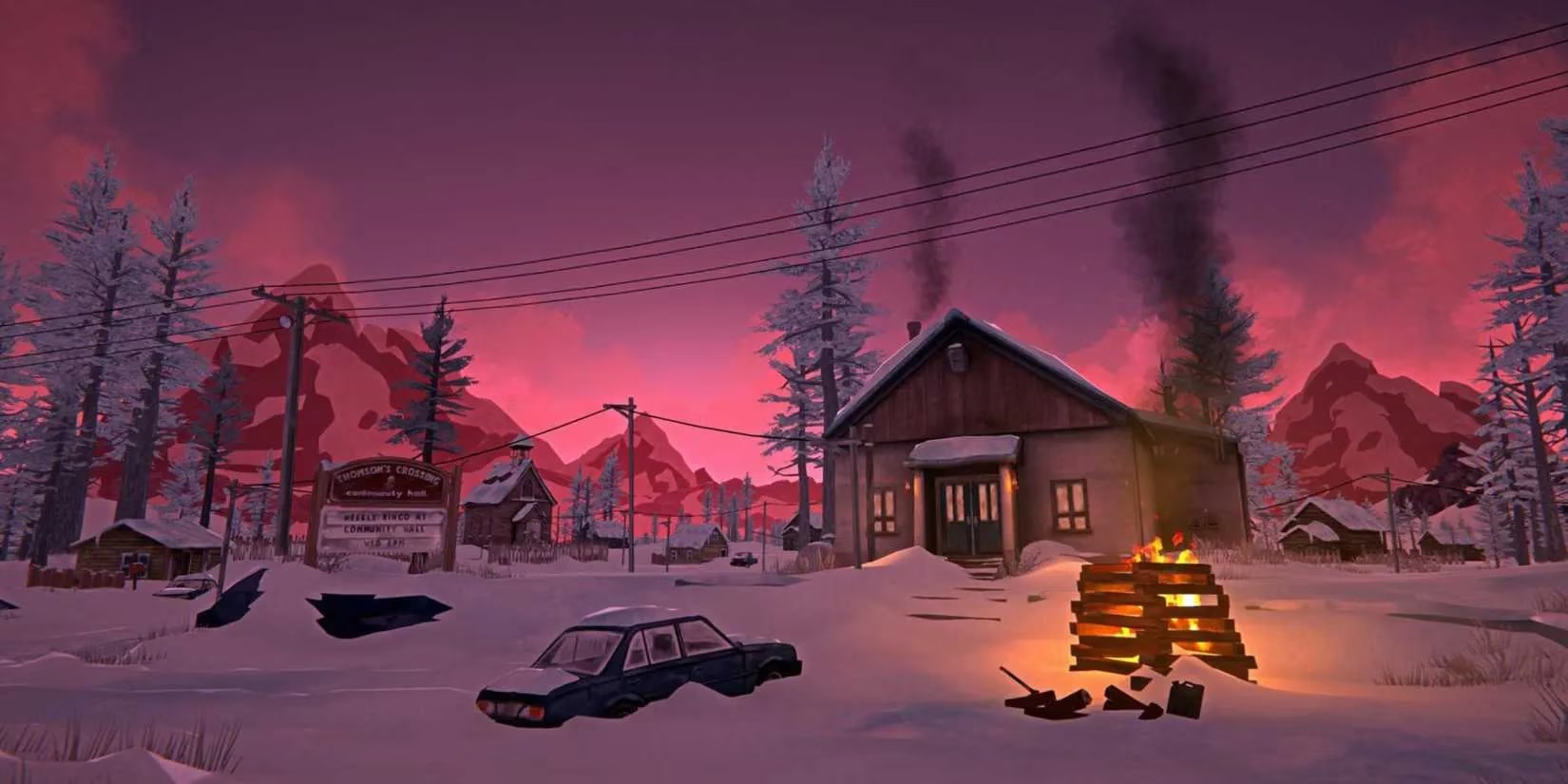
The Long Dark ramps up the intensity with its icy wastelands. Wandering through snowdrifts, seeking shelter, and crafting warm clothes while avoiding wolves is thrilling yet punishing. If you're not into survival mechanics like feeding yourself or staving off hypothermia, it can feel harsh. But those moments by a campfire, under a starry sky, are pure magic. The cold seeps into your bones like a shard of frozen glass, sharp and unforgettable.
Project Zomboid might seem odd on this list with its zombies, but overlook them, and you'll find an incredibly realistic exploration game. The 2025 update with new lighting and 4K resolution made 1994 rural Kentucky feel alive—buildings, towns, and military bases are meticulously crafted. My character once died from eating burned sausages, which felt tragically mundane! Despite the undead, it's immersive; navigating that world is like threading through a spider's web—delicate and fraught with unseen traps.
Grand Theft Auto 5 often gets dismissed for its online chaos, but the base game holds gems of realism. Without the absurdities, exploring Los Santos offers atmospheric cityscapes that rival any modern game. Driving through its streets, I felt the pulse of urban life, a stark contrast to the wild west of Red Dead. It's not perfect, but it captures the essence of a living metropolis.
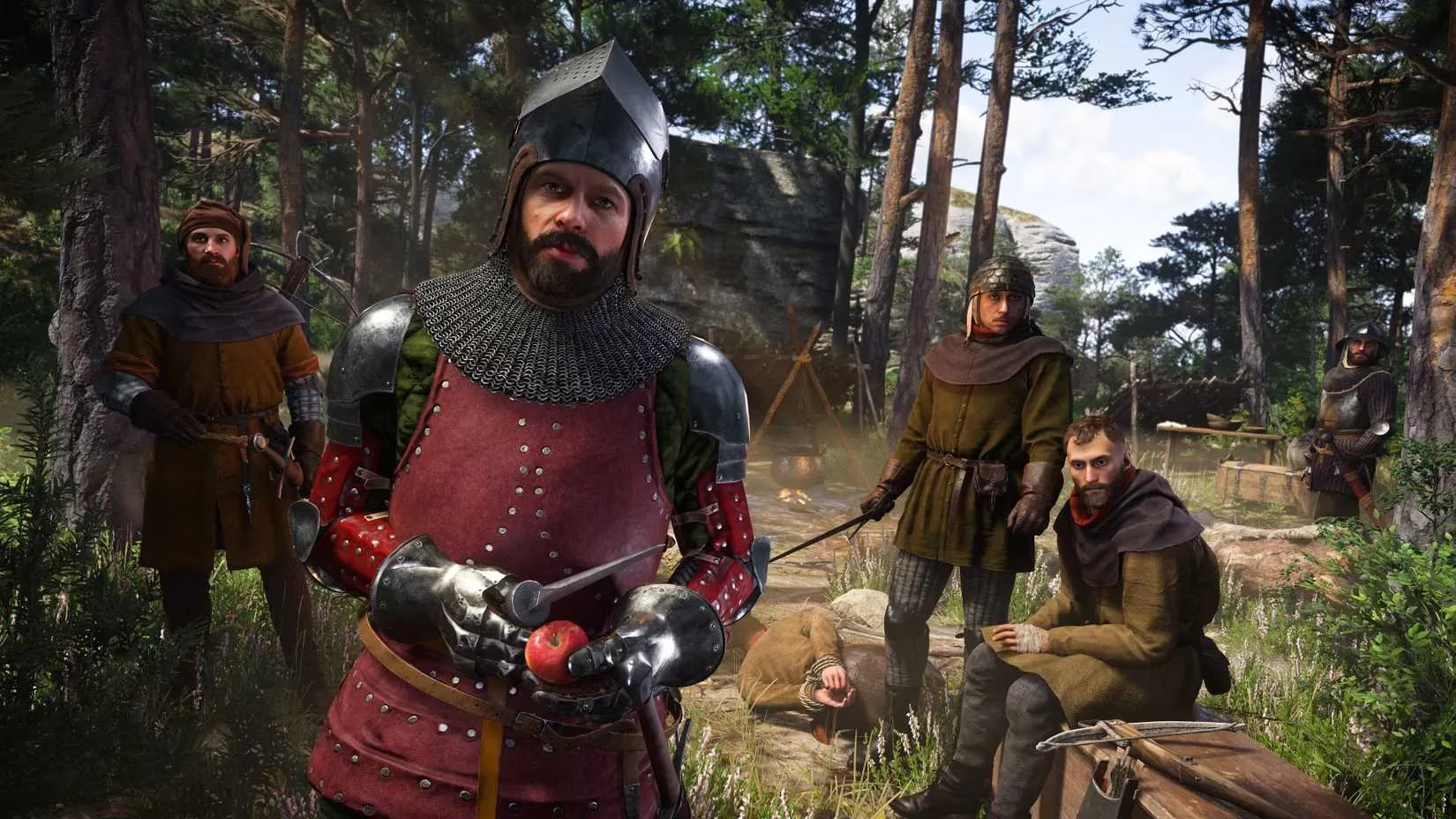
Kingdom Come: Deliverance 2, though, is a visual masterpiece. When I first loaded it up, I spent hours wandering medieval European countryside as Henry, completely forgetting the main story. Climbing a watchtower to gaze over rolling fields was jaw-dropping—it looked like a Renaissance painting. The game takes minor liberties, but it's grounded enough to be played purely for exploration, transporting me back in time like a leaf caught in a historical breeze.
In the end, these games have shaped my gaming life in 2025, offering escapes that feel authentic and transformative. They're not just pixels on a screen; they're worlds where I've laughed, struggled, and marveled at the beauty of simulated reality. Whether it's the serene patience of hunting or the adrenaline of survival, each title proves that realism in gaming isn't about perfection—it's about evoking emotions that stick with you, like shadows in a well-lit room. And as technology advances, I can't wait to see where these immersive journeys take us next.
```According to coverage from Polygon, the evolution of realism in video games has been a defining trend of the past decade, with titles like Red Dead Redemption 2 and Microsoft Flight Simulator frequently cited as benchmarks for immersive world-building. Polygon's features often explore how these games blend technical innovation with emotional storytelling, creating experiences that resonate deeply with players and set new standards for the industry.