Discovering the Galactic Carnival: A D&D Player's Tale from Unfinity
Magic: The Gathering’s Unfinity set becomes a whimsical Dungeons & Dragons campaign guide in 'A Planeshifted Guide to Unfinity.'
It was the autumn of 2025 when I stumbled upon an artifact that felt like finding a half-finished map to a treasure world—an old Magic: The Gathering set called Unfinity, which my friend had left on our RPG table like a sugary, chaotic dessert. At first glance, the cards seemed to mock the solemn rituals of deck-building, with Killer Cosplay and It Came From Planet Glurg promising more laughter than lethal strategy. But as I flipped through the glossy fleet of spacefaring clowns and sentient bumper cars, a deeper wonder took hold. The whole set was a carnival wedged inside a nebula, every mechanic a bizarre amusement ride. I couldn't shake the feeling that this cosmic midway was begging to be walked through, not just played. Shortly after, I discovered that a Dungeons & Dragons fan named Gabe Rodriguez had acted on that same impulse, crafting a homebrew expansion booklet that transformed Unfinity into a playable D&D setting. By 2026, the guide had blossomed into a fully polished tome, a star chart for dungeon masters who wanted their campaigns to taste like cotton candy dipped in starlight.
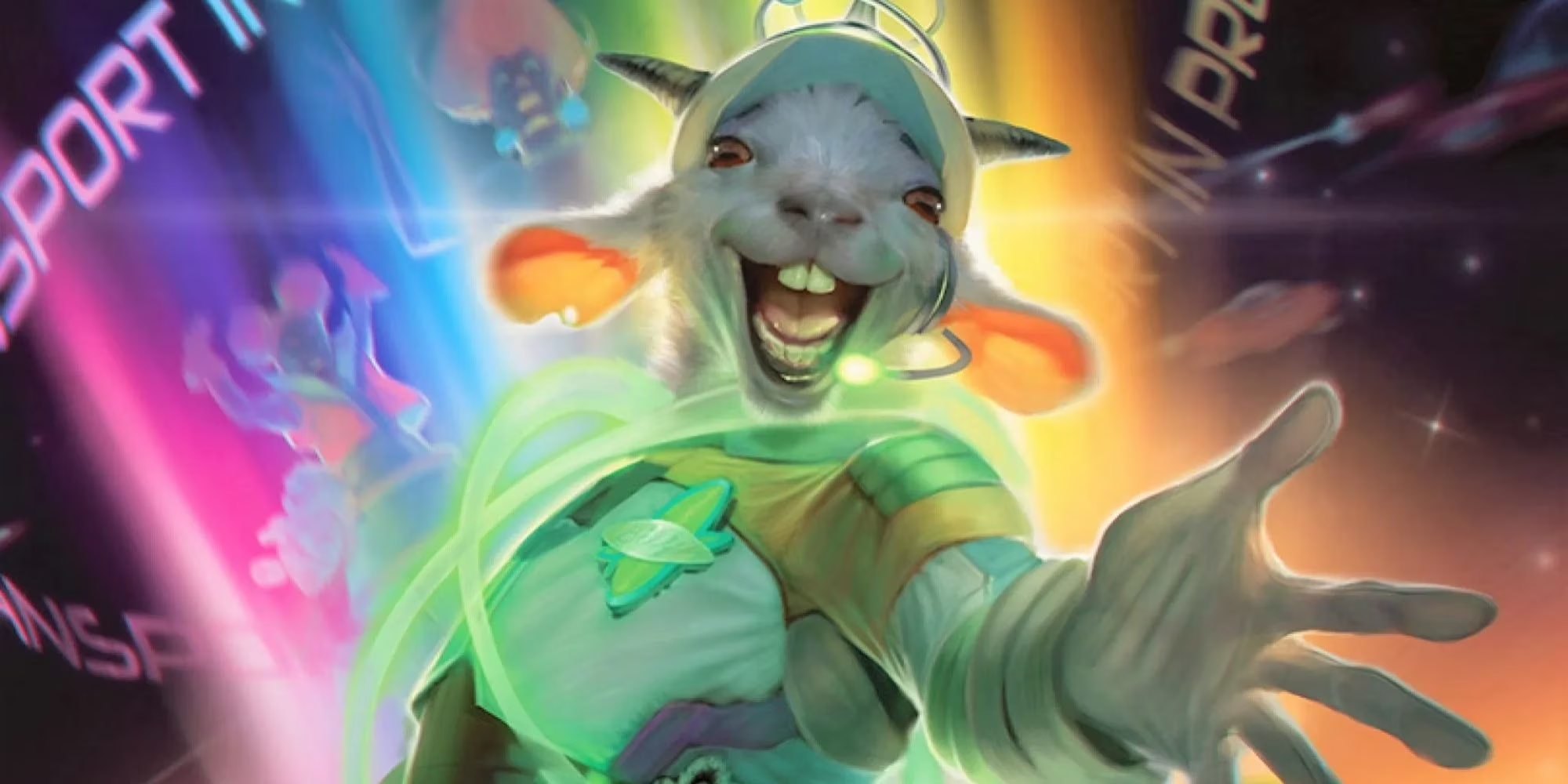
The heart of this guide, A Planeshifted Guide to Unfinity, is Myra the Magnificent's Intergalactic Astrotorium of Fun—a park where the admission fee is either one gold piece or one soul. I remember reading that line and picturing it like a colossal cosmic jellyfish, its translucent tentacles made of roller coaster tracks and concession stands, pulsing through the void. Rodriguez's work organizes the madness into digestible wonder. There are new races, some plucked from Magic's deep lore and others born from the carnival's absurdity. The Ainok, dog-folk from the plane of Tarkir, feel like the loyal stray that followed your spaceship home. Bear-folk are what happens when a ranger's companion decides to unionize and demand a character sheet. Then there are Rhox, rhinoceros people whose presence suggests a bouncer at the door of reality, and even Chickens—flightless aven who peck at the ground while their winged cousins soar, a hilarious underdog choice for a rogue. These races don't just sit on the page; they clamber for a seat at your table.
One subclass in particular grabbed me by the lapels: the Hatificer, an Artificer specialist unlocked at third level. The concept is a gleeful hat-making prodigy who weaves enchantments into headwear, turning a top hat into a spell focus and a ranged weapon. I've always seen Artificers as mechanical spiders spinning webs of utility, but the Hatificer felt like a milliner who had traded fabric for ley lines—each hat a crystalline egg that hatches a different arcane bird when thrown. I ran a one-shot in 2026 where a player chose this class, and watching her fashion a bowler hat that doubled as a magic missile launcher was a pure alchemical moment, like turning a joke into gold.
The guide also brims with magic items that read like lost luggage from a dimension-hopping vacation. A Jetpack that isn't just a flight enabler but a roaring invitation to crash into chandeliers. A Molecular Teleporter that malfunctions in ways that remind me of a nervous chameleon blinking between colors. The Autograph Book, apparently, can store signatures of powerful beings as minor boons—a scrapbook of godly graffiti. Monsters, too, are stitched from the same cloth of whimsy and menace. Beebles are wide-eyed puffballs that swarm with the innocence of a nursery rhyme until you realize they can overwhelm a fighter. The Ticking Mime Bomb transforms silence into suspense, a creature whose invisible box might actually contain explosives. And Spelling Bees—trust me, you do not want to be stung by a creature that makes you spell out your own saving throw failure.
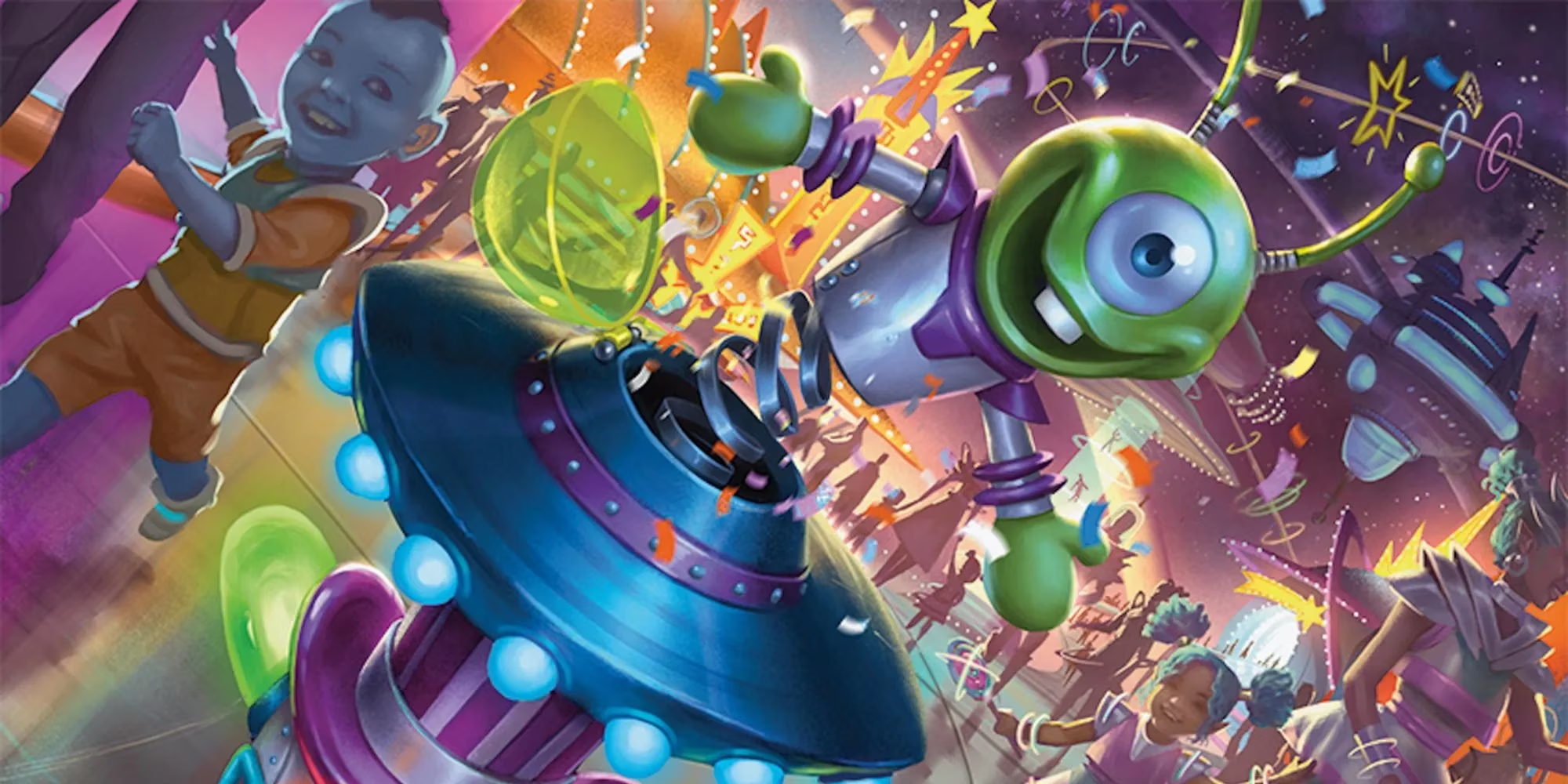
Then there is the Astrotorium itself. Rodriguez based each attraction on a real Unfinity card, which means you can peek at an actual Magic card and instantly know what your players might face. The Big Top hosts shows where reality bends; the Bounce Chamber is a zero-gravity playground that made my players feel like dice tumbling across a tilting table. The Kiddie Coaster, deceptively named, turned out to be a chase sequence on tracks that looped through a miniature sun. As a dungeon master, I treated the park like a living puzzle box—each ride a node of chaos that could spit the party into a new adventure. By 2026, the initially incomplete guide had been filled out by community contributions, and the Astrotorium's map now feels like a nervous system of carnival lights threaded across a dark vacuum.
Running this material with my group taught me something about the alchemy of humor and danger. The guide doesn't just translate cards into stat blocks; it brews a whole atmosphere where a clown's honk can be a saving throw and a pie to the face might deal psychic damage. I've seen jaded players become gleeful again, their characters navigating a universe where the absurd is taken seriously. It's a reminder that the best campaigns are not just quests for rings or thrones, but sometimes a search for the laugh that echoes across planets. If you haven't yet downloaded the updated guide—free on community hubs as of 2026—you owe it to your table to step through the starlit turnstiles.