A Villain's Journey: Embracing the Dark Side in Open Worlds
Villainy in video games offers a compelling narrative power, transforming players into architects of chaos within open worlds.
As I wander these digital realms, a question often whispers in the back of my mind: must a hero's path always be paved with light? The vast, sprawling worlds of modern gaming offer more than just a playground for valor; they present a canvas for a different kind of epic—one written in shadow and choice. To be the architect of chaos, to feel the world recoil at your presence, is a narrative power uniquely afforded by these open landscapes. It is a freedom that redefines the journey, transforming the player from a savior into a specter, a force of nature that villages and cities learn to fear. This is the allure of walking on the bad side of life, a path less traveled but profoundly compelling.
The Joy of Mayhem: Building Your Own Chaos
What does it truly mean to embrace villainy? Is it the cold calculus of self-interest, or the pure, unadulterated thrill of disruption? The games that grant us this role understand it's a spectrum. They hand us the tools and set us loose in worlds ripe for our influence.
-
The Freedom of Choice: At its core, being the villain is about agency. It's the ability to look at a problem—or a person—and choose the most destructive, self-serving, or simply interesting solution. The world becomes a sandbox of consequences, both immediate and far-reaching.
-
A Different Kind of Power Fantasy: While heroes often gain strength through discipline and righteousness, a villain's power can feel more visceral, more immediate. It's power seized, not earned through virtue. This shift in acquisition changes the entire feel of progression.
-
Narrative Consequences: True villainy isn't just about doing bad things; it's about the world remembering. The best games ensure your infamy follows you, changing how characters react, how stories unfold, and even how your own avatar appears.
Worlds of Wickedness: A Gallery of Infamy
Let us explore some of the digital domains where I've sown my most memorable seeds of discord. Each offers a unique flavor of malevolence, from cartoonish chaos to grim, moral decay.
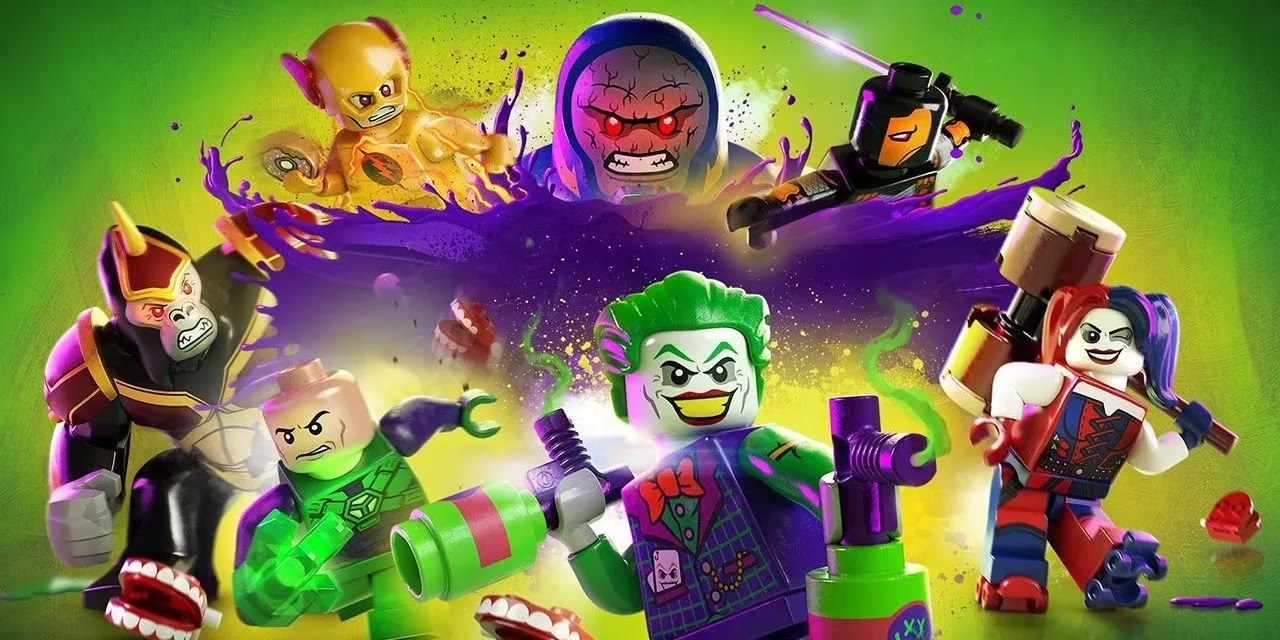
Lego DC Super-Villains 😈 was my first lesson in the pure, unadulterated joy of sanctioned chaos. With the Justice League vanished, who better to keep the peace than those who understand disorder best? This game flipped the script beautifully. I wasn't just causing mayhem; I was, in a twisted way, filling a power vacuum. Creating my own custom villain, complete with a dastardly laugh and absurd powers, then unleashing them upon a blocky, vibrant Metropolis or Gotham, felt liberating. The world wasn't just a backdrop; it was a toybox, and every vehicle, building, and citizen was a part of my destructive play. It proved that villainy could be fun, colorful, and strangely endearing.
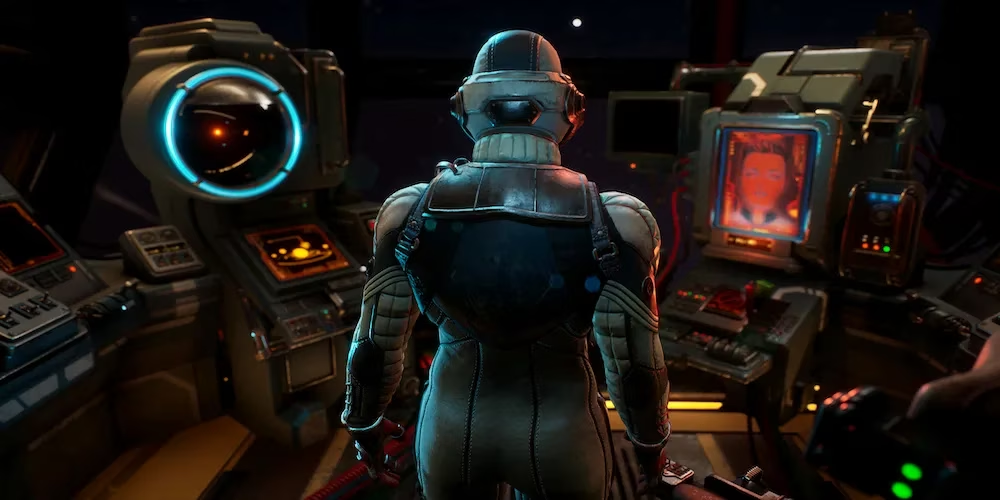
Then came The Outer Worlds 🪐, where villainy wore the sleek, corporate mask of pragmatism. Here, the evil was systemic, baked into the very structure of the Halcyon colony. The "heroic" path felt naive against the grinding gears of unchecked capitalism. So, I chose differently. Why save a doomed colony when you can profit from its demise? Allying with the Board, sabotaging the hopes of revolutionaries, and treating people as expendable assets for my own gain—it was a cold, calculating evil. The game rewarded this path not with fanfare, but with quiet power, unique perks from shady allies, and the grim satisfaction of being the smartest, most self-interested person in the room. It asked: if the system is the true villain, is joining it not just a form of brutal realism?
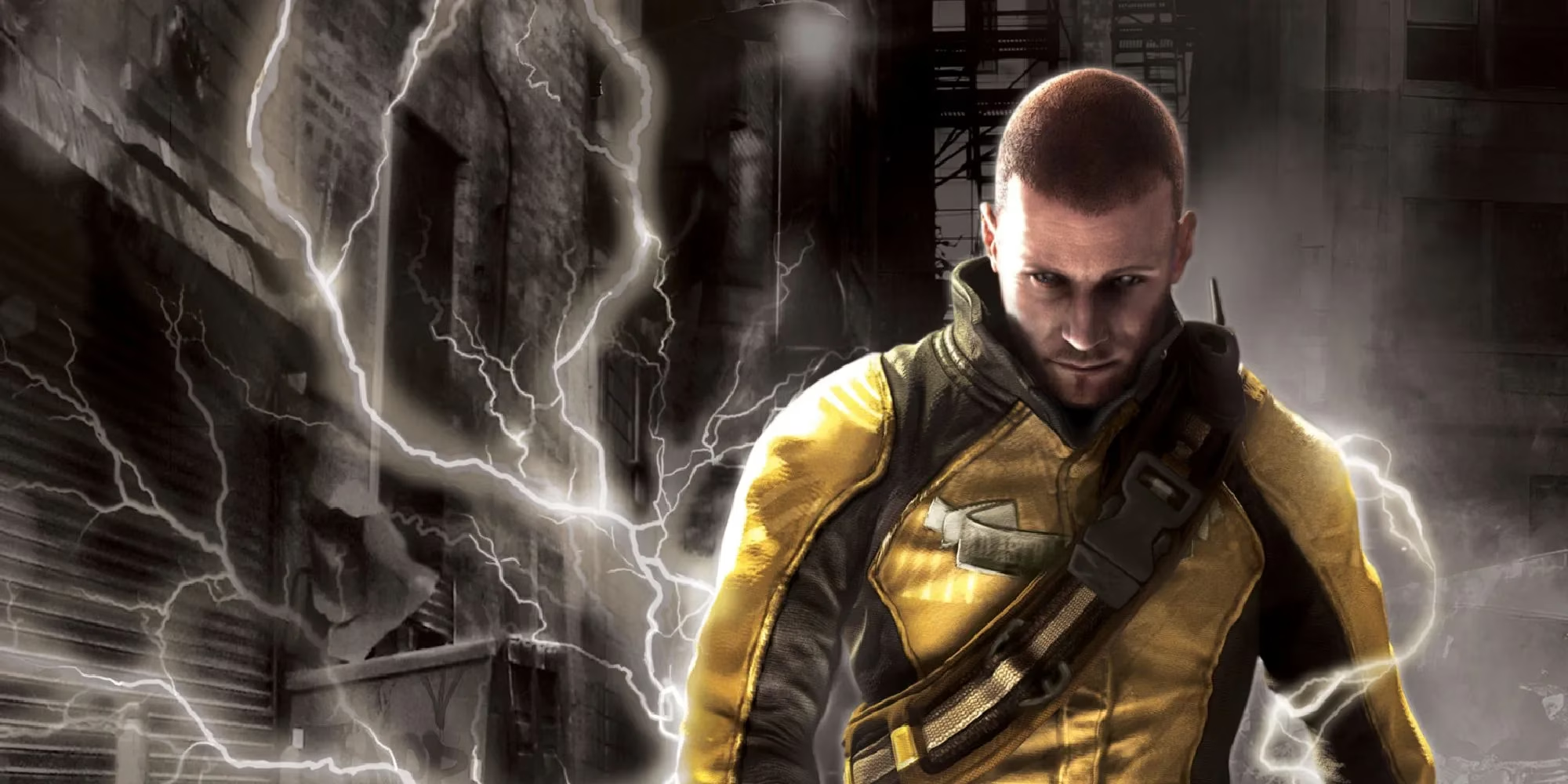
The corruption was more personal in inFamous ⚡. Every choice in Empire City wasn't just narrative; it was metabolic. Choosing the "evil" path literally rewired my being, granting me devastating, brutal powers that fed on negativity. Using these powers—like draining innocent civilians to fuel my electricity—felt terrifyingly potent. The city itself became a reflection of my morality, growing darker, its citizens more fearful. This wasn't just about being a villain; it was about becoming a force of nature, a storm given human form. The power fantasy was inextricably linked to the moral fall, making each violent surge of energy a confirmation of the path I had chosen.
The Physical Cost of Corruption
Perhaps the most striking element of a villain's journey is how it manifests not just in the world, but upon the self. Our avatars become living testaments to our choices.
| Game | Physical Manifestation of Evil | What It Signifies |
|---|---|---|
| Fable 2 | Horns grow, hair darkens, teeth rot, skin pale. | A classic, fairy-tale corruption. The evil within literally breaks through, marking you as a monster for all to see. |
| inFamous | Appearance grows darker, more sinister; electric aura becomes red and violent. | The corruption of power. Your very energy is tainted by the choices you make to fuel it. |
| Fallout 3 | Karma level affects NPC dialogue; no physical change, but infamy is reputation-based. | A societal brand. Your deeds precede you, making you a legend or a scourge in the wasteland's collective memory. |
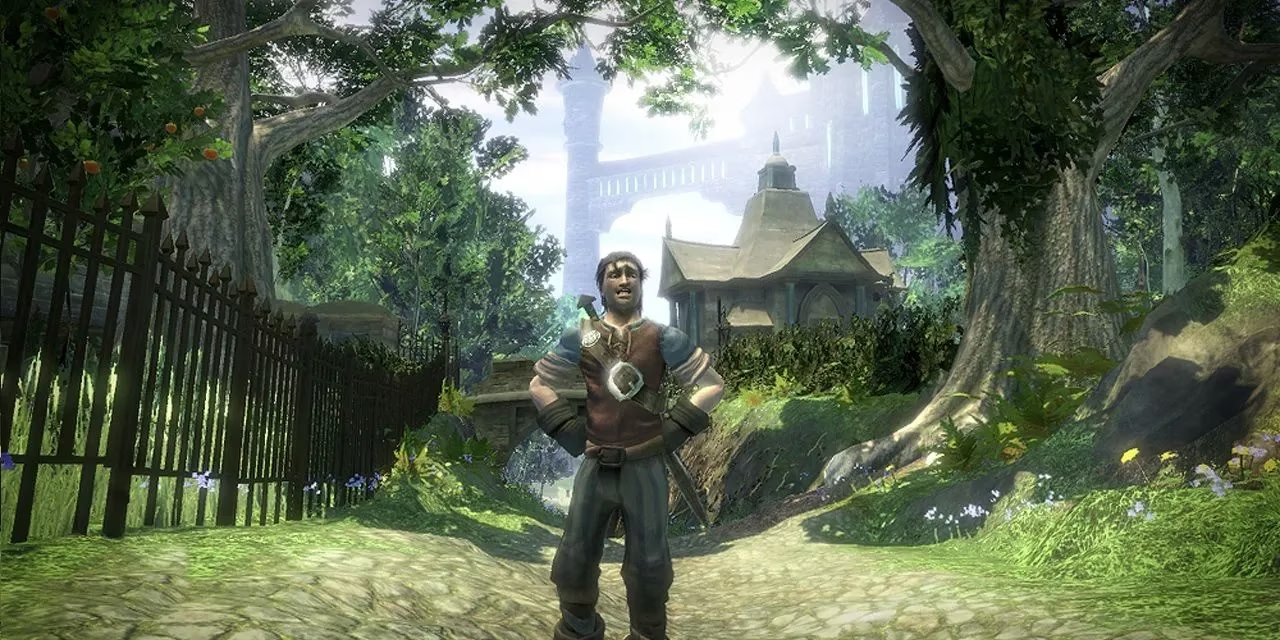
Speaking of Fable 2 👹, its approach to villainy remains one of the most memorable. Choosing the path of wickedness was a slow, visible transformation. It wasn't an instant costume change. I watched as my character, once perhaps noble-looking, began to sprout horns. Their hair lost its luster, turning a stark black, and a sinister pallor took over their skin. People in towns would scream and run. Children would cry. The game didn't just tell me I was evil; it made me look the part, a walking testament to every greedy, cruel, or violent decision I had made. This physical decay made the role-playing profoundly immersive—I wasn't just playing a villain; I was becoming one.
The Nuances of Modern Malevolence
The art of the video game villain has evolved. It's no longer a simple binary of good versus evil, but a complex web of motivations, perspectives, and questionable decisions.
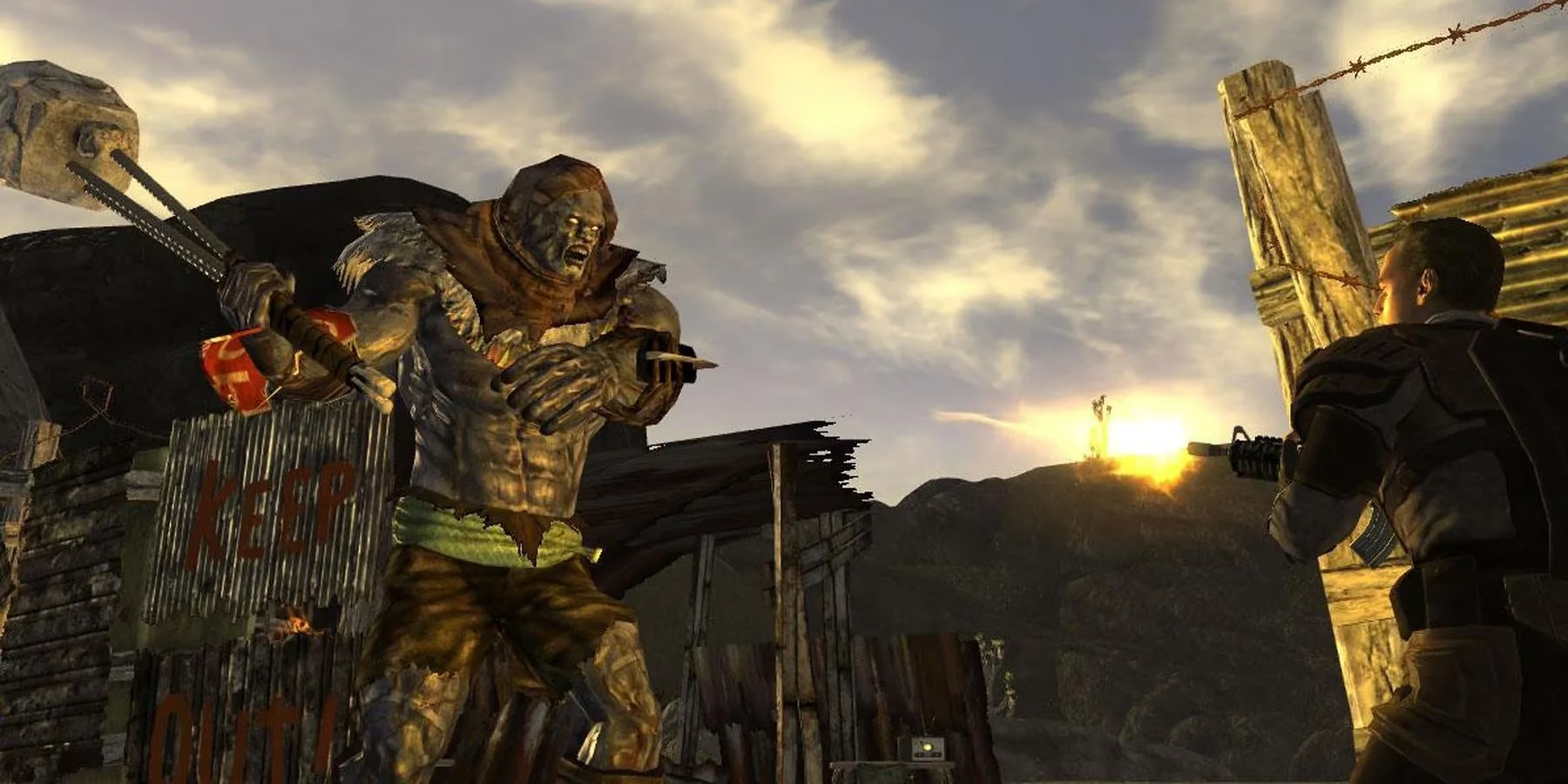
Fallout 3 ☢️ taught me that evil could be mundane, casual, and horrifyingly simple. The Capital Wasteland is a harsh teacher. In the town of Megaton, a dormant atomic bomb sat at its heart. The "good" path was clear: disarm it, be the hero. But the other option... to rig it to explode for a handful of caps and a fancy suite in a pristine tower... it was a choice offered with chilling simplicity. Detonating it, watching the mushroom cloud rise in the distance, and later being able to visit the irradiated crater—it was an act of villainy that felt uniquely personal and devastatingly complete. It proved that in a broken world, the greatest evil isn't always a grand scheme, but a single, selfish, and irrevocable act.
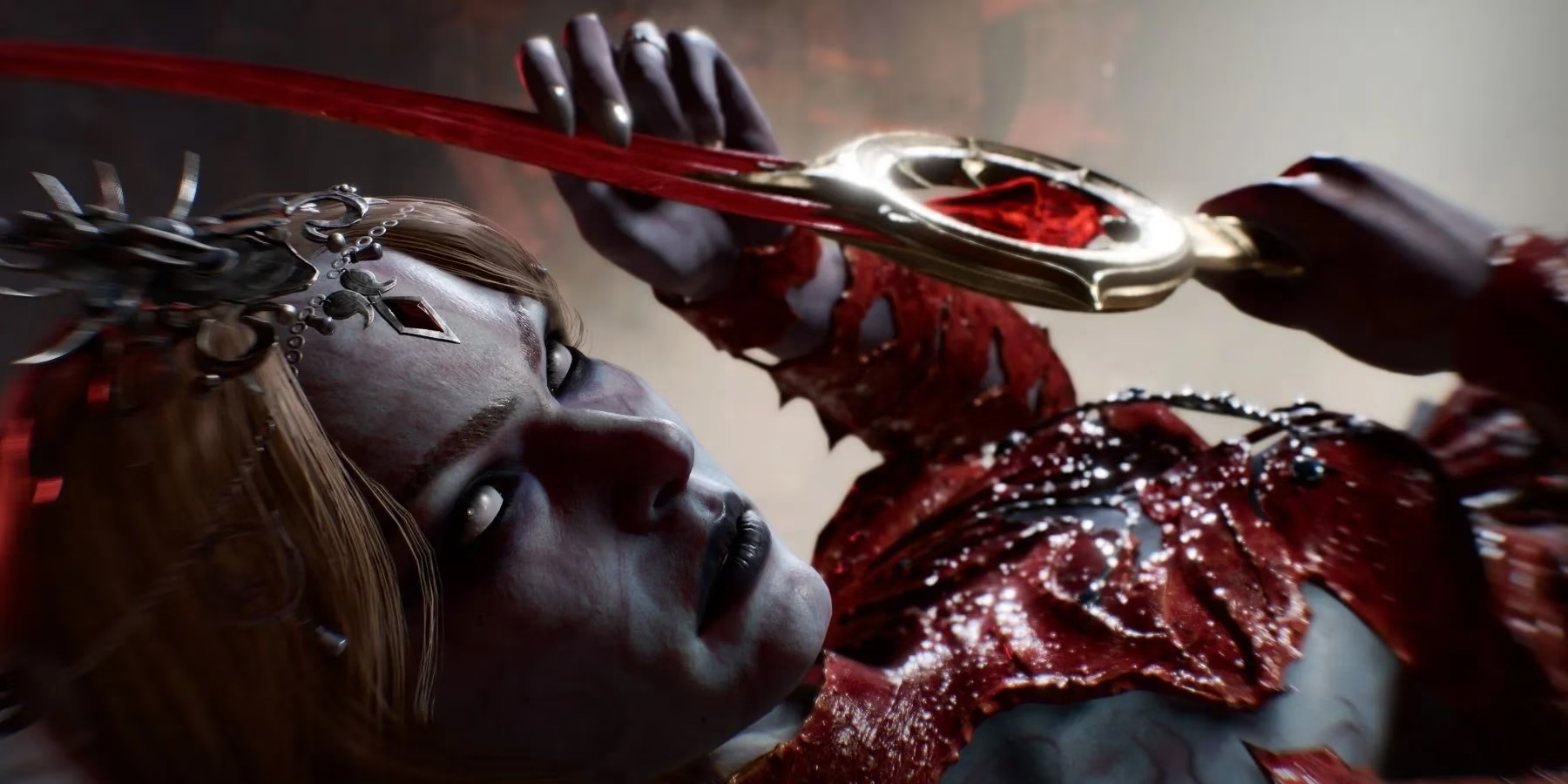
By 2026, the pinnacle of this complex villainy is arguably Baldur's Gate 3 🐙. Its Game of the Year acclaim is well-deserved, particularly for how it handles player agency. Here, evil isn't a cartoonish mustache-twirl; it's a role you can inhabit with terrifying depth. Will I side with the grotesque goblins to slaughter the druids of the Emerald Grove? Will I manipulate my companions, use them, and discard them for power? The game allows for a breathtaking range of malevolence, from the politically ruthless to the psychotically cruel. Every interaction is a potential step down a darker path, and the world—rich, reactive, and alive—remembers every one. Being a villain in Baldur's Gate 3 feels less like choosing a "bad" option and more like crafting your own tragic, terrifying legend.
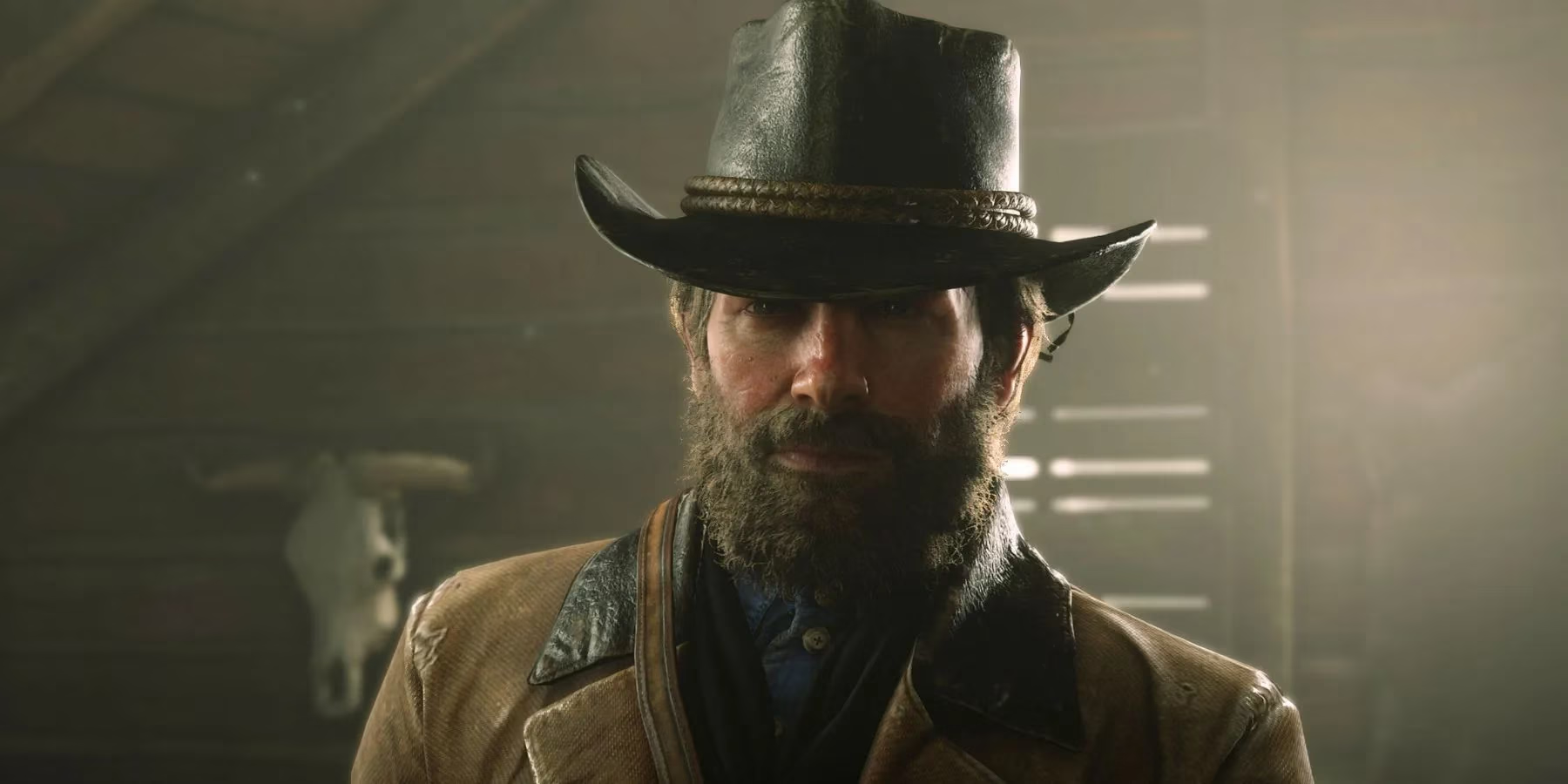
And then there is the melancholic wickedness of Red Dead Redemption 2 🤠. As Arthur Morgan, I am an outlaw in a world that has no place for us anymore. The game presents a choice: do I cling to the ruthless ways of a dying breed, or seek a sliver of redemption? Choosing to be the villain here is a poignant act. It's robbing struggling homesteaders, terrorizing towns, and being a brute because that's what the world expects of a Van der Linde gang member. It's a gritty, grounded evil, one born of habit, loyalty, and a refusal to change. Yet, even on this path, moments of humanity flicker through, making the villainy feel tragically human. It's not about world domination, but about surviving in a world that sees you as a monster, and sometimes deciding to live up to that name.
Conclusion: The Enduring Appeal of the Dark Path
So, why do we choose these paths? Is it mere curiosity, a desire to break rules in a consequence-free space? I believe it's deeper. Playing the villain allows us to explore facets of storytelling and power dynamics that the heroic journey often simplifies. It challenges us morally, asks us to sit with uncomfortable decisions, and, in doing so, often makes the world feel more real, more consequential. These open worlds are our laboratories for chaos, our stages for tragedy, and our canvases for a different kind of power fantasy. In 2026, as these worlds grow ever more expansive and reactive, the call of the villain's journey remains as potent as ever—a shadowy parallel road that promises not salvation, but a unforgettable, and uniquely personal, kind of infamy.