A 60FPS Ghost: Red Dead's Silent Divide
Red Dead Redemption's 60FPS patch only graces PS5, leaving Xbox at 30fps—a stark profit-driven gap.
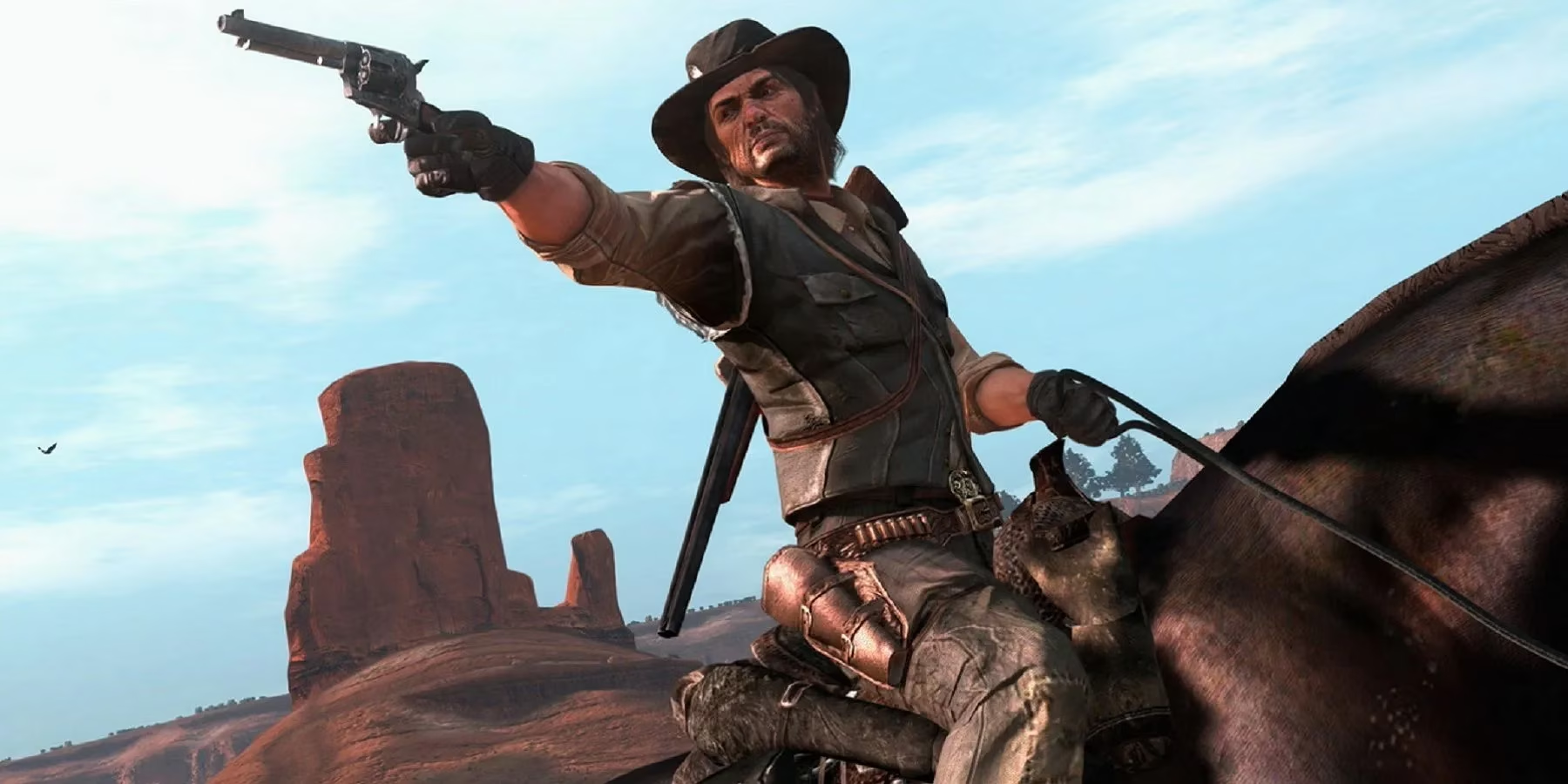
The sun-bleached plains of New Austin hold a thousand whispered promises, each tumbleweed a memory of gunpowder and regret. In the realm of pixels and dreams, John Marston’s journey across the dying West was always meant to be a ghost story—a tale of what once was, and what can never be again. Yet, in the year 2026, another ghost lingers on the frontier, one not of narrative but of frame rates: the elusive 60FPS patch for Red Dead Redemption, a boon granted to one camp and denied to another, carving a quiet canyon between consoles.
Just a few harvests ago, the gaming world was set alight with whispers of a full remaster. Would the original Red Dead Redemption be reborn in the mighty engine of its successor, its dust-choked towns rendered with the savagery and tenderness of Arthur Morgan’s saga? Those hopes were as fleeting as a desert mirage. In their place, Rockstar Games offered a port—faithful, clean, but largely unchanged—to the PS4 and Nintendo Switch. The announcement was met with a sigh, a collective lowering of expectations. But then, something unexpected happened: a shimmer of grace. A surprise patch descended upon the PS4 version, unlocking 60 frames per second for anyone wielding a PlayStation 5. The worn leather and galloping hooves of the old world suddenly moved with a fluidity that felt almost sacred, a prayer answered in sixty-beat rhythm.
And yet, across the divide, on the verdant hills of Xbox, the winds blew only at 30. Why? Why must the lawman’s ride be smoother on one side of the fence than the other? The question rings out across the plains, a plaintive cry from the campfire. Xbox players, who have kept Marston’s flame alive through the backwards compatibility of the Xbox 360 disc, found themselves staring at a locked gate. Their consoles, the potent Series X and Series S, capable of such cinematic grace, were left to run a relic of code unchanged, while their PlayStation brethren galloped into the sunset with almost unnatural serenity.
The reason, as cold as a saloon floor at dawn, is rooted in commerce rather than code. The upscaled port was never released natively on Xbox Series X|S; the only gateway was the Xbox 360 emulation. Rockstar, with an eye like an eagle for profit, saw no coin in offering a 60FPS update for a version of the game that required no new purchase. Why hand out honey when the beehive is already sold? Certain players on forums pointed this out with a bitterness as sharp as cactus spine: there was "little to no profit motive." The decision, or the omission, became a silent monument to the sometimes cruel arithmetic of business, a dance where art often stumbles over the ledger.
The community’s lament was neither quiet nor meek. Digital campfires on Reddit blazed with frustration. Players, who had walked countless miles in Marston’s worn boots, voiced a disappointment that was less anger and more a profound sadness. They criticized not the code, but the curators of the IP, questioning Rockstar’s handling of a narrative so precious. Was this the same reverence shown to the sequel, which received a comparable performance boost? The silence from Rockstar has been, and remains, a vast, starlit emptiness. As of this writing in 2026, no comment has drifted down from the tower. The night is still.
Yet, one must ask: does the frame rate truly alter the heart of the adventure? Is the soul of Red Dead Redemption—the aching loneliness of a man caught between his bloody past and a fragile hope for family—dimmed by a number? The answer, as those who have tasted the 60FPS nectar will tell you, is a resounding: yes, and no. No, because the story’s emotional thunder does not depend on silicon speed. The betrayal, the sacrifice, the final defiant stand—these roll like storm clouds regardless of silicon count. But yes, because in a medium where the player is the camera, the eye, and the hand, a smoother motion transforms the experience from a dusty history book into a living, breathing memory. The turn of a horse, the aim of a rifle, the subtle shift of a character’s weight—it all becomes more immediate, more tangible. To deny this to a loyal audience is to offer them a slightly blurred window onto a beautiful landscape.
The irony is as thick as molasses. The PS4 port, initially criticized for being a bare-bones effort, soared in the PlayStation Store rankings, its 60FPS patch a late-act redemption of its own. Fans seeking an experience aligned with contemporary standards found their satisfaction. Meanwhile, the Xbox faithful, who arguably had the most stable way to play the original for years, were left holding the very same disk, their memories locked at a slower cadence. It is a curious form of exclusivity, one that doesn’t sell a console but whispers of neglect.
In 2026, the landscape of gaming boasts ray-traced reflections on every puddle and forests that sway with physics so precise they mimic God’s own breath. Yet, here, in this small corner of the industry, a simple toggle lies dormant. The 60FPS patch for Red Dead Redemption on Xbox exists now only in the realm of what-ifs, a phantom feature that haunts the settings menus of the mind. The game itself remains a masterpiece, a sepia-toned elegy that will forever be worth revisiting, whether on PS3, Switch, or Xbox 360. But for those who have seen the smoother horizon, the question never quite fades: is it too much to ask, in a world remastered a thousand times over, for one more frame of redemption? The desert wind offers no reply, only the echo of hooves, some running at 30, some at 60, all destined for the same fading sunset.